

See real AI builds in production.AI portfolio
Book a CallChat with us
Capgo logo

Capgo

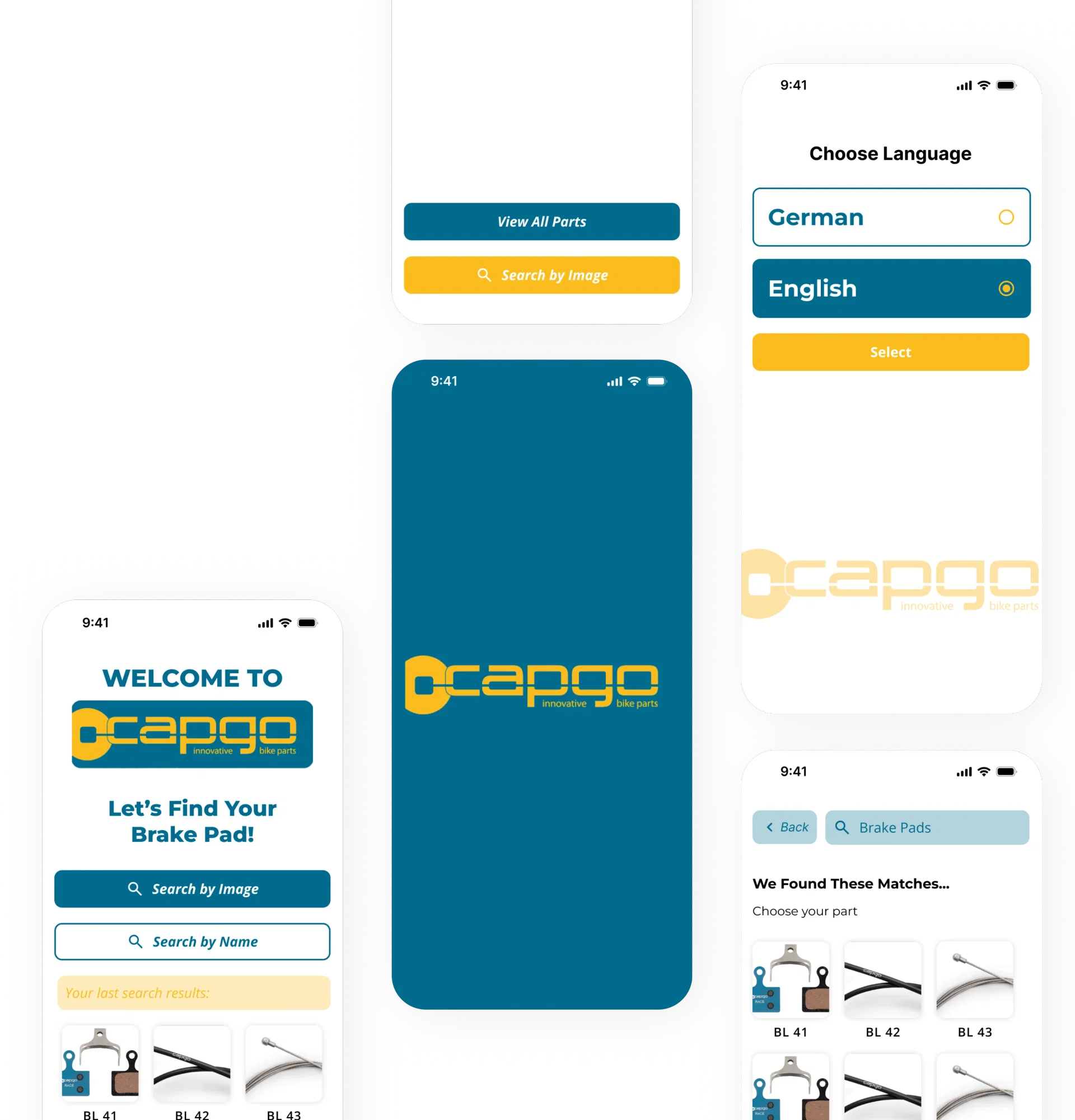
Capgo is a precise, camera-based tool for identifying bicycle brake pads in seconds. You snap a quick photo of a pad, the app recognizes the model, and you immediately see clear details plus trusted places to buy. For workshops, retailers, and everyday riders, it removes guesswork and prevents wrong orders, keeping repairs moving and costs down. The flow is simple on purpose guide the photo, confirm the match, review compatibility, and get on with the job.

Services
App Design & Development
Business Type
Cycling Components / Retail Tech
The story

From brief to launch

Three chapters that shaped how this project came together.

01
Brief

Project Idea

Replacing brake pads sounds simple until part numbers are worn off, visual differences are tiny, and compatibility depends on brand, caliper, and generation. We set out to turn that messy, manual process into a quick, visual check. The app guides users to frame the pad correctly, runs on-device recognition, and returns an exact model with compatibility notes and where to source it. The goal was to cut decision time from minutes of catalog hunting to a few seconds, reduce returns and mis-picks, and make the experience reliable enough for busy benches and DIY garages alike.

02
Build

Development

We built the application with Flutter to deliver one consistent codebase and a smooth, responsive UI. Image capture uses a lightweight camera flow with guidance overlays and instant feedback so users can retake a blurry shot before it slows them down. Recognition runs on-device with TensorFlow Lite, which keeps results fast and privacy-friendly, even with spotty connectivity. Firebase provides secure authentication, analytics, and push updates, while MongoDB stores the catalog, compatibility mappings, and model lineage so we can keep up with new parts. We invested in clear error states, confidence indicators, and quick recovery paths so even imperfect photos lead to useful next steps rather than dead ends.

03
Outcome

The Solution

The result is a compact, purpose-built app that makes precision effortless. Users take a photo, confirm the match, and see a model page with specs, supported brake systems, and direct links to reputable purchase options. Shops can move through multiple bikes without flipping through PDFs, while riders can identify parts at home without specialist knowledge. Saved history and favorites help with repeat orders; search and filters cover edge cases when a photo isn’t available. With a clean interface and focused guidance, the app turns an error-prone task into a quick, confident step in any repair workflow.

Want a result like this? Explore our Mobile App Development services.

Free 30 minute review

Is Flutter the right call for your roadmap?

Sit with our senior mobile engineers, get a clear yes/no answer for your stack, and walk away with a written follow-up. No sales pitch.

No obligationNDA availableSenior engineer, no sales rep
Built with

4 technologies powering this project

The exact stack we chose for performance, scalability, and a team that ships.

  • Firebase logo
    Firebase
  • MongoDB logo
    MongoDB
  • Flutter logo
    Flutter
  • Azure Vector search logo
    Azure Vector search
What's inside

8 features in Mobile Application

The capabilities we shipped to production. Tap a card for the quick story behind it.

  • 01

    Photo-based identification of brake pads with fast, on-device recognition.

  • 02

    Camera guidance overlays and instant feedback to improve match accuracy.

  • 03

    Detailed model pages with specs, compatibility notes, and supported systems.

  • 04

    Direct links to trusted purchase options for quick sourcing.

  • 05

    Saved history and favorites for reorders and workshop records.

  • 06

    Search and filters by brand, caliper, or bike type when a photo isn’t possible

  • 07

    Multi-language support (DE/EN) for shops and riders across markets.

  • 08

    Share/export results for quotes, invoices, or customer messaging.

How we ship

Five stages from brief to long-term care

The same path every Zygobit project follows. Predictable milestones, clear hand-offs, no surprises.

  1. Research

    Brief, goals, constraints, success metrics

  2. UI/UX Design

    Wireframes, design system, prototypes

  3. Development

    Sprints, code reviews, test coverage

  4. Deployment

    Release pipeline, monitoring, handover

  5. Maintenance

    Iterate, patch, scale as you grow

Like what you see? Let's build yours.

Tell us about the product you have in mind. We'll come back with a scoped proposal and a recommended team, usually within two working days.