





Mobile App Development Guide 2026 Everything Businesses Need to Know

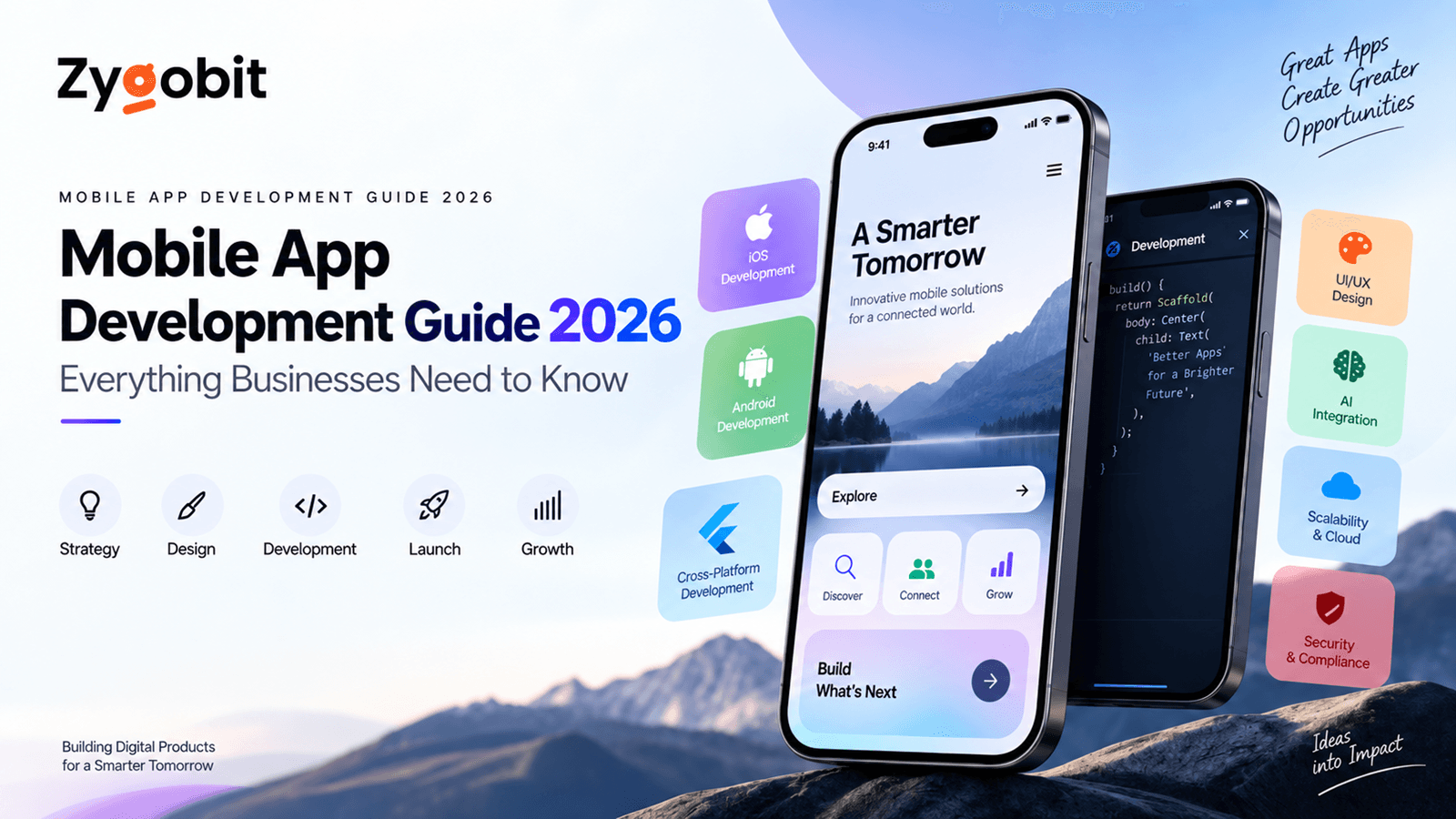
Explore the complete mobile app development guide for 2026 and learn how businesses can plan, design, build, secure, test, launch, and scale successful mobile applications. Discover the right development approach, modern technologies, AI integration, UX best practices, backend architecture, cost factors, and key steps for creating high-performing, scalable digital products.
Mobile applications have become an important part of how businesses interact with customers, manage operations, deliver services, and create new revenue opportunities. From banking and healthcare to retail, logistics, real estate, education, and entertainment, mobile apps have changed the way people access digital services.
But building a successful mobile application is no longer just about developing a few screens and publishing them on the App Store or Google Play.
Modern mobile app development involves product strategy, user experience, application architecture, backend development, APIs, cloud infrastructure, security, testing, analytics, deployment, and continuous optimization.
A technically functional application may still fail if it is difficult to use, slow under real-world traffic, insecure, expensive to maintain, or unable to adapt as the business grows.
For organizations planning a new digital product, understanding the complete mobile app development lifecycle is therefore essential.
This guide explains how modern mobile applications are planned, designed, developed, secured, tested, launched, and scaled.
What Is Mobile App Development?
Mobile app development is the process of designing and building software applications that run on smartphones, tablets, and other mobile devices.
These applications may be developed specifically for Android or iOS, built using cross-platform technologies, or connected with existing web applications and enterprise systems.
A modern mobile application normally consists of much more than its visible interface.
When a user creates an account, makes a payment, uploads a document, books a service, receives a recommendation, or sends a message, the mobile application may communicate with databases, APIs, cloud servers, authentication platforms, payment gateways, analytics tools, notification services, and third-party systems.
This means mobile app development requires coordination between multiple areas of software engineering.
Businesses looking to build production-ready digital products often work with experienced mobile app development services teams that can handle the complete product lifecycle, from initial planning to deployment and ongoing improvements.
Why Mobile App Development Matters for Modern Businesses
A mobile application provides businesses with a direct digital connection to their customers.
Instead of requiring users to repeatedly search for a website, mobile applications provide convenient access directly from a customer's device.
Users can log in, manage their accounts, make purchases, communicate with a business, receive notifications, track activities, access personalized information, and complete transactions from one interface.
For businesses, this creates opportunities to improve both customer experience and operational efficiency.
A retail company can connect product discovery, payments, loyalty programs, and personalized recommendations.
A logistics platform can manage drivers, deliveries, routes, customer notifications, and real-time location information.
A healthcare application can support appointments, communication, reports, and patient services.
A real estate business can connect leads, properties, agents, site visits, follow-ups, and customer communication.
The most successful applications are therefore not built simply because mobile apps are popular. They are developed around a specific business problem.
Start With Business Strategy, Not Features
One of the biggest mistakes businesses make when planning an application is beginning with a long feature list.
Features should come after the business objective has been clearly defined.
A company should first determine what the application needs to achieve.
The objective could be improving customer retention, increasing repeat purchases, automating an existing manual workflow, building a subscription product, improving employee productivity, reducing support requests, or creating an entirely new digital business.
Once the objective is understood, features can be evaluated according to how strongly they contribute to that goal.
This approach also prevents unnecessary development.
An application with ten well-designed features that solve an important problem can create significantly more value than an application containing fifty features that users rarely need.
Understanding Your Target Users
A good mobile application is built around the people who will actually use it.
Businesses should understand who those users are, what they are trying to accomplish, what problems they experience with existing solutions, and how frequently they are likely to use the product.
Customer interviews, competitor analysis, existing analytics, sales conversations, support requests, and workflow observations can all provide useful information during this stage.
Different users may also require different experiences.
Consider a marketplace application.
Customers may need search, booking, payment, and order tracking.
Service providers may require job management, scheduling, earnings, and communication.
Administrators may need dashboards, user management, payments, reporting, and operational controls.
Trying to place all of these workflows into the same interface creates unnecessary complexity.
The product experience should instead reflect the responsibilities and priorities of each user type.
Define the Minimum Viable Product
After identifying the business problem and target users, the next step is deciding what should be included in the first release.
This is where an MVP becomes useful.
A Minimum Viable Product is not an incomplete application or a low-quality version of the final product. It is a focused product containing the essential functionality required to solve the core problem and validate the business concept.
For example, an on-demand service platform may initially require customer registration, service discovery, booking, payment, provider management, notifications, and an administration panel.
Advanced loyalty programs, complex recommendation engines, referral systems, and additional automation can be introduced later based on actual user behavior.
For businesses building booking, delivery, service marketplace, mobility, or similar platforms, understanding the architecture behind on-demand mobile app development can be particularly useful because these products often involve multiple user applications working with the same backend system.
Mobile App UI and UX Design
People rarely think about good user experience when everything works correctly.
They notice it immediately when it does not.
A successful mobile interface should help users understand where they are, what they can do, and what will happen after each important action.
Navigation should remain predictable. Forms should avoid requesting unnecessary information. Important actions should be easy to find. Text should remain readable across device sizes. Buttons and interactive elements should be designed for comfortable mobile interaction.
But mobile UX extends beyond appearance.
Designers also need to consider what happens when something goes wrong.
What does the application display if an API fails?
What happens if the network disappears halfway through a transaction?
Can users recover information they already entered?
What happens when a search returns no results?
How does the application communicate a payment failure?
These situations form part of the user experience and should be considered during product design.
Professional UI/UX design services can help businesses turn complex workflows into interfaces that remain clear and intuitive for users.
Choosing the Right Mobile App Development Approach
One of the most important technical decisions is choosing how the application will be developed.
Businesses generally choose between native development and cross-platform development.
Native Mobile App Development
Native applications are developed specifically for a particular operating system.
iOS applications are commonly developed with technologies such as Swift, while Android applications frequently use Kotlin.
Native development provides extensive control over operating system capabilities and can be particularly valuable when applications require demanding graphics, sophisticated animations, deep hardware integrations, background processing, or specialized platform features.
The main consideration is that independent Android and iOS applications can require separate development and maintenance effort.
Cross-Platform Mobile App Development
Cross-platform frameworks such as Flutter and React Native allow developers to reuse significant parts of an application's code across Android and iOS.
For many business applications, this can provide an effective balance between development speed, performance, maintainability, and cost.
Cross-platform development is commonly used for marketplaces, business applications, social platforms, healthcare solutions, booking systems, eCommerce products, internal tools, and startup MVPs.
The decision between native and cross-platform development should always be based on application requirements rather than technology trends.
Mobile App Architecture
Architecture determines how different components of an application work together.
A mobile application may appear simple on the surface while depending on a complex infrastructure behind it.
The mobile client communicates with APIs. APIs interact with backend services. Backend services process business logic and communicate with databases. Authentication services control user access. Cloud infrastructure hosts application services and manages computing resources.
Other components may handle file storage, notifications, analytics, payments, messaging, search, AI, or external integrations.
Good architecture keeps these systems organized while reducing unnecessary dependencies.
This becomes increasingly important as an application grows.
When different components are tightly connected, changing one feature can create problems elsewhere in the system. A well-designed architecture allows developers to improve individual components without repeatedly destabilizing unrelated functionality.
Backend Development and APIs
The backend is responsible for much of the logic that users never directly see.
Authentication, authorization, business rules, payments, calculations, notifications, database operations, integrations, and many other processes are handled by backend systems.
API design is therefore a critical part of mobile development.
The mobile application and backend need clearly defined rules regarding requests, responses, authentication, validation, errors, pagination, and version compatibility.
Versioning is particularly important for mobile applications.
Unlike websites, businesses cannot assume every customer is using the latest application version. Some users may continue using older versions for weeks or months.
Backend updates should therefore account for compatibility wherever required.
Mobile applications that also require dashboards, management systems, portals, or browser-based functionality can benefit from combining mobile engineering with custom web application development.
Database Architecture
Mobile applications generate and process different types of data.
This can include user profiles, transactions, messages, payments, documents, products, bookings, location information, analytics, preferences, and activity records.
Selecting the right database architecture depends on the nature of this information.
Relational databases are commonly used where strong relationships and transactional consistency are important.
Other workloads may benefit from document databases, caching systems, object storage, search engines, or specialized data services.
Database performance also depends heavily on how data is accessed.
Poorly designed queries, missing indexes, excessive database requests, and inefficient data models can create performance problems even when powerful servers are being used.
Database design should therefore be considered during architecture planning rather than after performance issues appear.
Third-Party Integrations
Modern applications rarely operate completely independently.
They often integrate with services such as payment gateways, CRM platforms, maps, analytics systems, communication providers, accounting platforms, social networks, identity providers, cloud storage, and enterprise software.
Third-party integrations can accelerate development, but each integration introduces another technical dependency.
Developers need to consider what happens when an external service becomes temporarily unavailable, changes its API, delays a response, rejects a request, or reaches a usage limit.
Reliable applications are designed around the possibility that external systems will sometimes fail.
Mobile App Security
Security should be considered from the beginning of mobile app development.
Applications may process personal information, financial data, authentication credentials, documents, business records, or other sensitive information.
Security measures should therefore exist across both the mobile application and backend infrastructure.
Authentication mechanisms need to be secure. Users should only be able to access data and functionality permitted by their role. Communication between applications and APIs should be encrypted. Sensitive credentials should not be stored directly inside application code.
APIs should also validate requests instead of assuming that information coming from the mobile application can be trusted.
Application security becomes even more important in industries such as finance, healthcare, insurance, enterprise software, and eCommerce.
Privacy should receive equal attention.
Businesses should avoid collecting unnecessary information and should clearly understand why each category of user data is being stored.
Testing a Mobile Application
Testing cannot be treated as a final step before launch.
Quality assurance should happen throughout development.
Developers can validate individual components while integration testing confirms that different parts of the platform communicate correctly.
The application should also be tested across different devices, screen sizes, operating system versions, network conditions, and hardware capabilities.
Performance testing becomes particularly important for applications expecting large volumes of users or transactions.
A system that works perfectly with a handful of internal testers may behave very differently when thousands of users begin accessing the application simultaneously.
Testing should also evaluate actual workflows rather than isolated buttons.
For example, a purchase workflow may involve authentication, inventory verification, payment processing, database updates, notifications, and order creation.
A failure anywhere in that chain can affect the customer's experience.
Mobile App Deployment
Once development and testing reach production readiness, the application can be prepared for release.
This includes production configuration, application signing, App Store and Google Play preparation, permissions, privacy information, screenshots, descriptions, backend infrastructure, monitoring, backups, and deployment procedures.
Teams should also prepare for the possibility of problems after release.
Rollback strategies, crash monitoring, application logs, server metrics, and alerting systems help development teams respond quickly when unexpected issues appear.
Deployment should therefore be viewed as a controlled engineering process rather than simply uploading an application file.
What Happens After the Mobile App Launch?
Publishing the application is not the end of development.
In many ways, it is when the most valuable information becomes available.
Real users begin interacting with the product across different devices, locations, network conditions, and usage patterns.
Businesses should monitor user registrations, onboarding completion, feature adoption, transactions, conversion rates, retention, crashes, API performance, database health, and customer feedback.
This information helps determine what should be improved next.
A feature that appeared important during planning may receive little attention after release, while another workflow may become central to how customers use the product.
Product roadmaps should evolve according to actual data rather than assumptions.
Integrating AI Into Mobile Applications
Artificial intelligence is becoming increasingly integrated into modern digital products.
Mobile applications can use AI for recommendation systems, customer support, intelligent search, fraud detection, content generation, image recognition, document processing, forecasting, voice interfaces, personalization, and workflow automation.
However, adding AI should begin with a business problem.
An AI feature creates value when it improves an existing workflow, reduces repetitive work, makes information easier to access, or helps users make better decisions.
Simply adding an AI chatbot because AI is popular rarely creates meaningful differentiation.
Businesses considering advanced AI functionality can combine mobile engineering with AI development services to build intelligent features around real application workflows and business data.
Building Mobile Applications for Scalability
Scalability means more than preparing servers for millions of users.
A scalable application should also allow the development team to add features, change workflows, integrate new services, and maintain the system without creating unnecessary complexity.
Not every application needs a highly distributed infrastructure from its first release.
In fact, excessive architecture can slow development and increase operating costs.
The better approach is creating a strong foundation that can evolve when traffic and complexity increase.
As the platform grows, teams can introduce techniques such as caching, queues, background processing, load balancing, database optimization, content delivery networks, and additional infrastructure when they become necessary.
Engineering should solve current requirements while preserving a realistic path for future growth.
How Much Does Mobile App Development Cost?
There is no single standard cost for mobile application development.
Cost depends on the complexity of the application.
A basic application with authentication and relatively simple business functionality requires significantly less engineering than a marketplace, fintech application, healthcare system, large eCommerce platform, logistics platform, or AI-powered product.
Design complexity, number of platforms, backend infrastructure, integrations, security requirements, administration panels, testing requirements, and ongoing maintenance all influence the overall investment.
Businesses should also consider the total cost of ownership.
After launch, applications still require infrastructure, monitoring, security updates, operating system compatibility improvements, bug fixes, dependency upgrades, and new features.
The right budgeting strategy therefore considers the entire lifecycle rather than only initial development.
How Long Does It Take to Develop a Mobile App?
Mobile app development timelines depend on product scope.
A focused MVP can be developed much faster than a platform involving complex workflows, multiple user types, large numbers of integrations, sophisticated dashboards, real-time features, payments, or advanced security requirements.
Requirements clarity also has a major effect on timelines.
Projects become slower when core workflows continuously change after development has begun.
This is why discovery, documentation, wireframing, and technical planning provide significant value before full development starts.
A clear roadmap allows designers, frontend developers, backend engineers, and QA teams to work toward the same product goals.
Common Mobile App Development Challenges
Scope creep remains one of the most frequent problems in software development.
Stakeholders often continue adding features while the initial product is still under development. This can increase development time and make the product significantly more complex than originally planned.
Performance is another challenge.
Applications may perform well during internal testing but experience problems once larger numbers of users begin interacting with them.
Poor integrations, inefficient database queries, weak architecture, and unoptimized media can all contribute to slow performance.
User adoption can also become a challenge even when the application works technically.
If onboarding is confusing, the interface is difficult to understand, performance is slow, or the application does not provide sufficient value, users may simply stop using it.
Successful development therefore requires a balance between technology, usability, and business strategy.
How to Choose the Right Mobile App Development Company
Selecting a mobile app development company should involve more than comparing project prices.
Businesses should evaluate the development team's ability to understand product requirements, create appropriate architecture, design user experiences, build secure backend systems, integrate third-party platforms, test applications, manage deployment, and provide support after launch.
Previous product experience can also help demonstrate how a company approaches different types of applications.
Businesses evaluating Zygobit's engineering work can explore its software and mobile app development portfolio to review examples of products delivered across different industries.
Communication is another important factor.
Businesses should understand how frequently progress will be shared, how requirements will be documented, how changes will be handled, and what happens after the initial product release.
A development partner should be capable of explaining technical decisions in terms of their impact on the product and business.
You can also learn more about Zygobit and its approach to building mobile, web, and AI-powered products.
The Future of Mobile App Development
Mobile applications will continue becoming more intelligent and connected.
Artificial intelligence will play an increasingly important role in personalization, automation, search, recommendations, customer assistance, analytics, and decision support.
Mobile apps will also integrate more deeply with cloud platforms, connected devices, payment ecosystems, wearable technology, enterprise systems, and real-time data sources.
At the same time, expectations around application speed, privacy, accessibility, and security will continue increasing.
Businesses will therefore need to think beyond individual mobile screens.
The next generation of mobile products will increasingly operate as connected digital ecosystems where mobile applications, web platforms, AI systems, APIs, and cloud infrastructure work together.
Final Thoughts
Successful mobile app development starts with understanding the problem the application needs to solve.
Technology comes after that.
The strongest products combine business strategy, customer research, thoughtful UI/UX, suitable architecture, secure backend engineering, structured testing, reliable infrastructure, and continuous improvement.
Businesses should also avoid thinking only about the initial launch.
A mobile application is a long-term digital product that will need to evolve as customer expectations, technologies, operating systems, integrations, and business requirements change.
Whether you are planning an MVP, developing an enterprise application, modernizing an existing mobile product, or creating an AI-powered platform, choosing the right technical foundation can have a significant impact on future performance, cost, scalability, and maintainability.
Zygobit provides end-to-end mobile app development services covering product planning, UI/UX, development, backend engineering, integrations, testing, deployment, and ongoing support.
If you are planning a mobile application and want to discuss the product scope, technology stack, development approach, or roadmap, you can contact the Zygobit team to start the conversation.

Ready to build your mobile app?
Talk to Zygobit about iOS and Android development with a design system, a tested launch and support after it.
Explore Related Articles
More reading on web, mobile, AI, and product engineering from the Zygobit team.
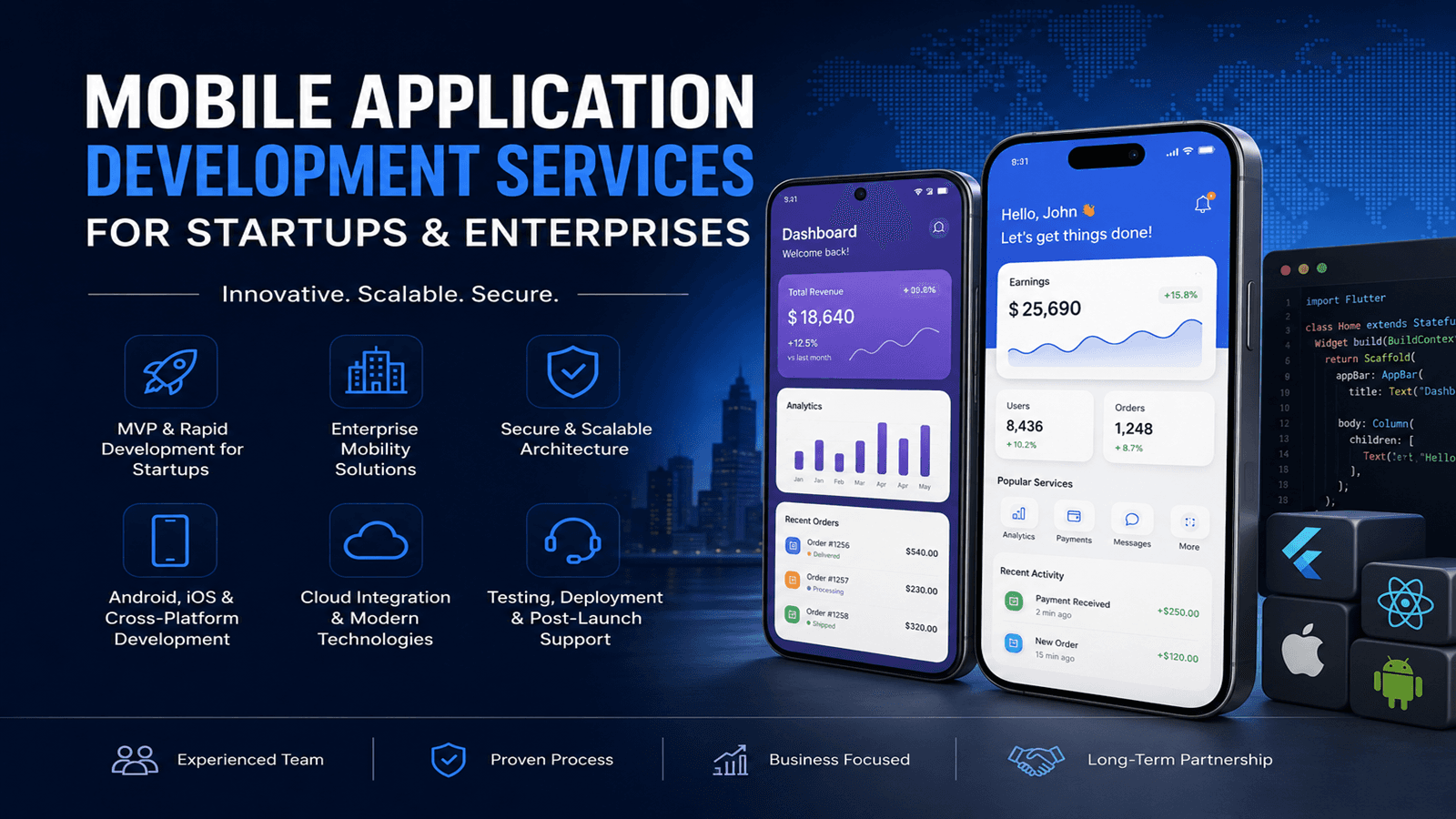
Mobile Application Development Services for Startups & Enterprises
Explore professional mobile application development services for startups and enterprises. From MVP development and UI/UX design to iOS, Android, Flutter, React Native, backend integration, testing, deployment, and ongoing support, we build secure, scalable, and high-performing mobile apps designed to improve customer engagement, streamline operations, and support long-term business growth.
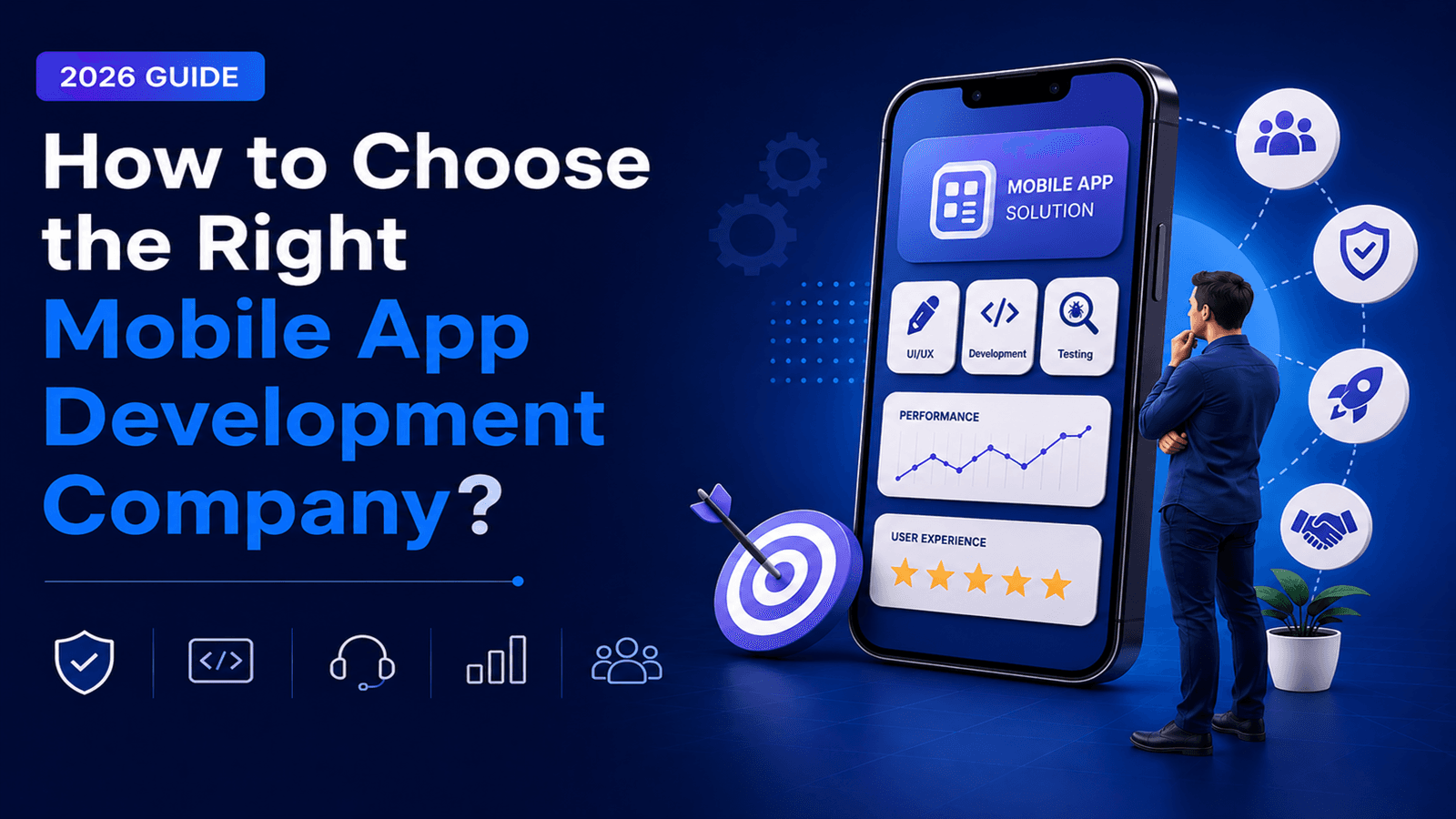
How to Choose the Right Mobile App Development Company in 2026
Learn how to choose the right mobile app development company in 2026. Explore key factors such as industry experience, technical expertise, UI/UX design, scalability, security, pricing, communication, testing, and post-launch support. Use this guide to compare development partners and make a confident decision for your mobile app project.

Top 20 Hybrid Mobile App Development Companies in 2026
Choosing the right hybrid mobile app development company is key to building scalable, high-performance apps. This list highlights the top 20 companies in 2026, recognized for expertise in Flutter, React Native, Ionic, and .NET MAUI. Compare proven partners that deliver cost-effective, cross-platform mobile solutions for startups, enterprises, and growing businesses.