





Best Practices in Modern Software Development


In today’s fast-moving tech landscape, startups and established businesses alike must balance speed, quality, and cost when delivering software. AI-powered software development has emerged as a strategic approach to shorten time-to-market, improve product quality, and unlock new revenue streams. Rather than treating AI as a niche capability, modern organizations embed intelligent features across their products and processes, from mobile apps to enterprise web platforms. If you are a founder, a CTO, or a product leader, embracing AI-powered software development can transform the way you innovate, scale, and compete.
What is AI-Powered Software Development?
AI-powered software development refers to building software solutions that leverage artificial intelligence and machine learning techniques to enhance functionality, automate decision-making, and improve user experience. It isn’t about replacing human developers; it’s about augmenting them with data-driven insights and automated capabilities that accelerate delivery and create smarter products. Typical components include model-based components, data pipelines, automated testing, and intelligent user interfaces that adapt to user behavior.
Key elements of AI-powered software development include:
- AI-driven features: Predictive analytics, natural language understanding, computer vision, recommendation engines, and anomaly detection integrated into products.
- Data-centric engineering: Data collection, labeling, cleaning, and governance to support reliable models.
- Automated optimization: Model selection, hyperparameter tuning, and A/B testing accelerated by automation.
- Continuous learning: Mechanisms to retrain models as new data arrives, with proper validation and monitoring.
- Ethical and compliant AI: Fairness, transparency, privacy-by-design, and governance to meet regulatory requirements.
Why AI-Powered Development Matters for Startups and Businesses
For startups and growth-minded companies, AI-powered software development offers several compelling advantages:
Faster time-to-market and lean experimentation
AI capabilities enable rapid prototyping of features that would otherwise require lengthy manual development. For example, instead of building a custom analytics engine from scratch, you can deploy a pre-trained model and tailor it to your domain with a minimal data footprint. This accelerates the MVP cycle and shortens feedback loops with customers.
Improved product quality and personalization
AI helps deliver more accurate recommendations, smarter search, better fraud detection, and personalized onboarding experiences. Businesses that tailor experiences at scale typically see higher engagement, longer retention, and increased conversion rates. In practical terms, a web or mobile product can adapt to user preferences and usage patterns in real time, without requiring separate teams for each customization.
Operational efficiency and cost control
Automated testing, anomaly detection, and intelligent automation reduce manual toil and errors. For instance, AI-powered monitoring can proactively detect performance bottlenecks and trigger self-healing actions, which minimizes downtime and maintenance costs. This is especially valuable for SaaS platforms and mission-critical enterprise apps.
Data-driven decision making
AI-powered software development creates a feedback loop where data from usage informs product decisions. This helps product leaders prioritize features that deliver the greatest business impact, optimize pricing models, and refine go-to-market strategies based on real-world insights.
Choosing the Right Partner: What to Look For
If you are evaluating a partner for AI-powered software development, consider these criteria to ensure alignment with your business goals:
Industry and domain experience
Look for a partner with demonstrated success in your industry and a track record of solving similar problems. Domain knowledge reduces the time spent on data exploration and allows faster alignment between technical work and business outcomes.
End-to-end capabilities
AI-powered projects require a blend of data engineering, model development, software engineering, UX design, and compliance. A partner should offer end-to-end capabilities—from data strategy and data governance to scalable deployments and ongoing monitoring.
Transparent methodology and governance
Ask about project methodologies, version control, model governance, safety reviews, and risk management. A responsible partner will have clear processes for model validation, bias testing, privacy protections, and regulatory compliance.
Scalability and maintainability
AI systems must scale with your user base and data growth. Prioritize architectures that support modularity, tested APIs, containerization, and robust CI/CD pipelines to ensure maintainability as requirements evolve.
Partnership approach and collaboration
Successful AI programs rely on open communication, clear ownership, and collaborative product discovery. The right partner acts as an extension of your team, aligning on business outcomes, success metrics, and transparent roadmaps.
Key Phases of an AI-Driven Project
Implementing AI-powered software development is a structured journey. Here are the typical phases and what to expect at each stage:
1) Discovery and strategy
In this phase, you define the business objectives, identify high-impact use cases, and assess feasibility. Activities include stakeholder interviews, data landscape assessment, risk analysis, and success metrics. The goal is to arrive at a prioritized backlog of AI-enabled features aligned with your strategic goals, such as improving customer support, increasing conversion rates, or reducing churn.
2) Data strategy and governance
Data is the lifeblood of AI. You’ll map data sources, data quality, and data ownership. This stage includes establishing data privacy controls, data labeling plans, and data catalogs. A practical outcome is a data readiness score that guides model development and deployment readiness.
3) Model development and experimentation
Data scientists and engineers collaborate to design, train, and validate models. This phase emphasizes rapid experimentation, reproducible experiments, and robust evaluation metrics. It’s common to shortlist several model approaches, run parallel experiments, and select the best-performing candidate for production alignment.
4) Integration and productization
Selected models are integrated into the product architecture. This involves creating production-ready APIs, embedding AI features into the user interface, and building monitoring dashboards. Consideration is given to latency, scalability, and fallbacks when models fail or produce uncertain results.
5) Deployment and monitoring
Deployment includes automated CI/CD pipelines, A/B testing, and real-time monitoring. You’ll track performance metrics, model drift, user satisfaction, and business impact. A well-designed monitoring system detects drift early and triggers retraining or adjustments to maintain accuracy.
6) Improvement and governance
AI projects are iterative. Regular reviews of model performance, governance, and updated business goals ensure the solution remains effective as data evolves and user needs change. This stage also includes ongoing privacy and compliance checks.
Practical Examples: AI-Powered Solutions You Can Implement
Here are tangible examples of how AI-powered software development can drive value across different business scenarios. Each example includes potential impact and implementation considerations.
Smart customer support and self-service
Implement an AI-driven chatbot that understands customer intent, resolves common issues, and triages complex cases to human agents. Benefits include reduced response times, improved first-contact resolution, and 24/7 availability. For best results, integrate with your CRM and knowledge base, and ensure escalation paths are clear.
Personalized product recommendations
Leverage collaborative filtering and content-based models to present tailored product recommendations in web and mobile apps. This increases average order value and engagement. Start with a hybrid approach that blends user behavior data with item metadata, and continuously refine recommendations through A/B testing.
Intelligent search and discovery
AI-enhanced search improves relevance with semantic understanding and contextual ranking. This is valuable for e-commerce, media apps, and enterprise portals. Consider features like type-ahead suggestions, synonyms handling, and summarization of search results to boost usability.
Predictive analytics for operations
Apply predictive maintenance, demand forecasting, or anomaly detection to optimize operational efficiency. For example, predictive analytics can anticipate server load spikes, enabling proactive scaling and cost savings. Build dashboards that translate model outputs into actionable operational decisions.
Automated code quality and security checks
Integrate AI-assisted code review and vulnerability scanning into your development workflow. This helps catch defects earlier, reduces security risk, and accelerates release cycles. Pair automated checks with human review for nuanced decisions and architectural guidance.
Common Pitfalls and How to Avoid Them
Despite the benefits, AI-powered software development can pose risks. Anticipating common challenges helps you navigate them effectively:
- Unclear business outcomes: Start with measurable goals (e.g., reduce support tickets by 30% within 90 days) and tie AI initiatives to those metrics. Without clear outcomes, teams drift and ROI suffers.
- Data quality and governance gaps: Inferior data quality leads to biased or inaccurate models. Invest in data cleansing, labeling, privacy controls, and ongoing governance from day one.
- BIAS and fairness concerns: Proactively test models for bias across user segments and implement fairness constraints where appropriate. Document decisions for transparency.
- Over-engineering and scope creep: It's tempting to deploy a “perfect” AI system. Start with minimum viable AI features that deliver tangible value, then iterate.
- Scalability and reliability issues: Plan for production readiness, including latency budgets, model monitoring, and rollback mechanisms in case of degradation.
Case Study Thought Starters: What a Partnership with Zygobit Can Deliver
While every project is unique, the following narratives illustrate how an engagement with a seasoned partner like Zygobit can translate into measurable outcomes. These are hypothetical but grounded in practical execution patterns you can replicate.
Case 1: E-commerce startup optimizes conversion with AI-powered onboarding
A consumer fintech startup approached Zygobit to boost onboarding completion rates. The team defined a goal to increase successful KYC completions by 25% while preserving strong fraud controls. By combining a lightweight identity verification model with contextual guidance during onboarding, we reduced drop-off by analyzing form-field interactions and offering tailored help prompts. Result: faster onboarding, higher completion rate, and improved fraud detection signals to downstream processes.
Case 2: SaaS platform reduces support load through intelligent self-service
A mid-market SaaS platform faced escalating support tickets for routine configuration questions. Zygobit implemented an AI-powered knowledge assistant integrated into the product UI, offering step-by-step guides and context-aware suggestions. The system learned from successful resolutions, improved its accuracy over time, and handed only escalated issues to human agents. Result: 40% reduction in ticket volume and improved customer satisfaction scores.
Case 3: Enterprise web app delivers personalized analytics
An enterprise customer wanted to transform raw usage data into insightful dashboards. Zygobit built a data pipeline, deployed predictive models for user engagement, and delivered dynamic dashboards that adapt to roles (e.g., executives, product managers, engineers). Result: faster decision-making, reduced time to insight, and an uplift in feature adoption across teams.
Measuring Success: Metrics That Matter in AI-Powered Projects
To justify AI investments, track metrics that align with business outcomes. Consider a balanced set of technical, product, and business KPIs:
- Time-to-value: Days to MVP, weeks to production-ready features, and time saved per release cycle.
- Model performance: Accuracy, precision, recall, AUC, F1 score, and calibration, with monitoring for drift.
- Product impact: Engagement metrics, conversion rates, retention, and feature usage lift related to AI features.
- Operational efficiency: MTTR (mean time to recovery), automation coverage, and defect rates in AI-enabled workflows.
- Cost and ROI: Total cost of ownership, cloud infrastructure spend, and return on AI-driven revenue or savings.
FAQ
-
What types of projects are best suited for AI-powered software development?
Projects that involve patterns in data, repetitive decision-making, or personalized user experiences tend to benefit most. Examples include customer support automation, product recommendations, demand forecasting, and predictive maintenance. Start with a high-impact, measurable use case and scale from there.
-
How long does it take to deliver an AI-enabled feature?
Timeline varies by complexity, data readiness, and deployment requirements. A typical AI-enabled feature can move from discovery to production in 8-16 weeks for a well-scoped use case, with earlier-stage pilots possible in 4-6 weeks. An experienced partner can compress cycles through parallel workstreams and a strong data strategy.
-
How do you handle data privacy and compliance in AI projects?
Data privacy and compliance are foundational. Practical practices include data minimization, anonymization, role-based access controls, encryption, and transparent data lineages. AI governance should cover model risk, bias testing, explainability where feasible, and compliance with applicable regulations (e.g., GDPR, CCPA).
-
How do you ensure AI models stay accurate after deployment?
Establish a continuous learning loop with monitoring for drift, regular retraining schedules, and validation against fresh data. Implement fallback rules for uncertain predictions, and maintain a clear rollback plan if model quality drops. Pair model monitoring with user feedback channels to capture real-world signals.
-
What should I look for in a partner’s portfolio?
Seek evidence of end-to-end capabilities, industry relevance, and measurable outcomes. Look for case studies with quantifiable impact, transparent project timelines, and a demonstrated ability to scale AI features from MVP to full production across multiple products.
Conclusion and Next Steps
AI-powered software development represents a practical, ambitious path for organizations that want to innovate without sacrificing reliability. By combining disciplined data governance, modular architectures, and a focus on measurable business outcomes, you can unlock intelligent features that differentiate your product, delight customers, and improve operational efficiency. At Zygobit, we partner with business owners, startups, founders, and companies to design and deliver AI-enabled software that scales with growth and adapts to changing market needs.
If you’re ready to explore how AI-powered software development can propel your business forward, contact Zygobit to discuss your use cases, data readiness, and long-term goals. Our team can help you define a pragmatic roadmap, assemble the right mix of data, models, and software engineering, and deliver production-grade solutions that align with your strategic priorities. Let’s turn your vision into a tangible, high-impact product—and do it with a partner who understands both technology and business outcomes.

Ready to build your next digital product?
Talk to Zygobit about web apps, mobile apps, AI solutions, automation, and scalable software development tailored to your business goals.
Explore Related Articles
More reading on web, mobile, AI, and product engineering from the Zygobit team.
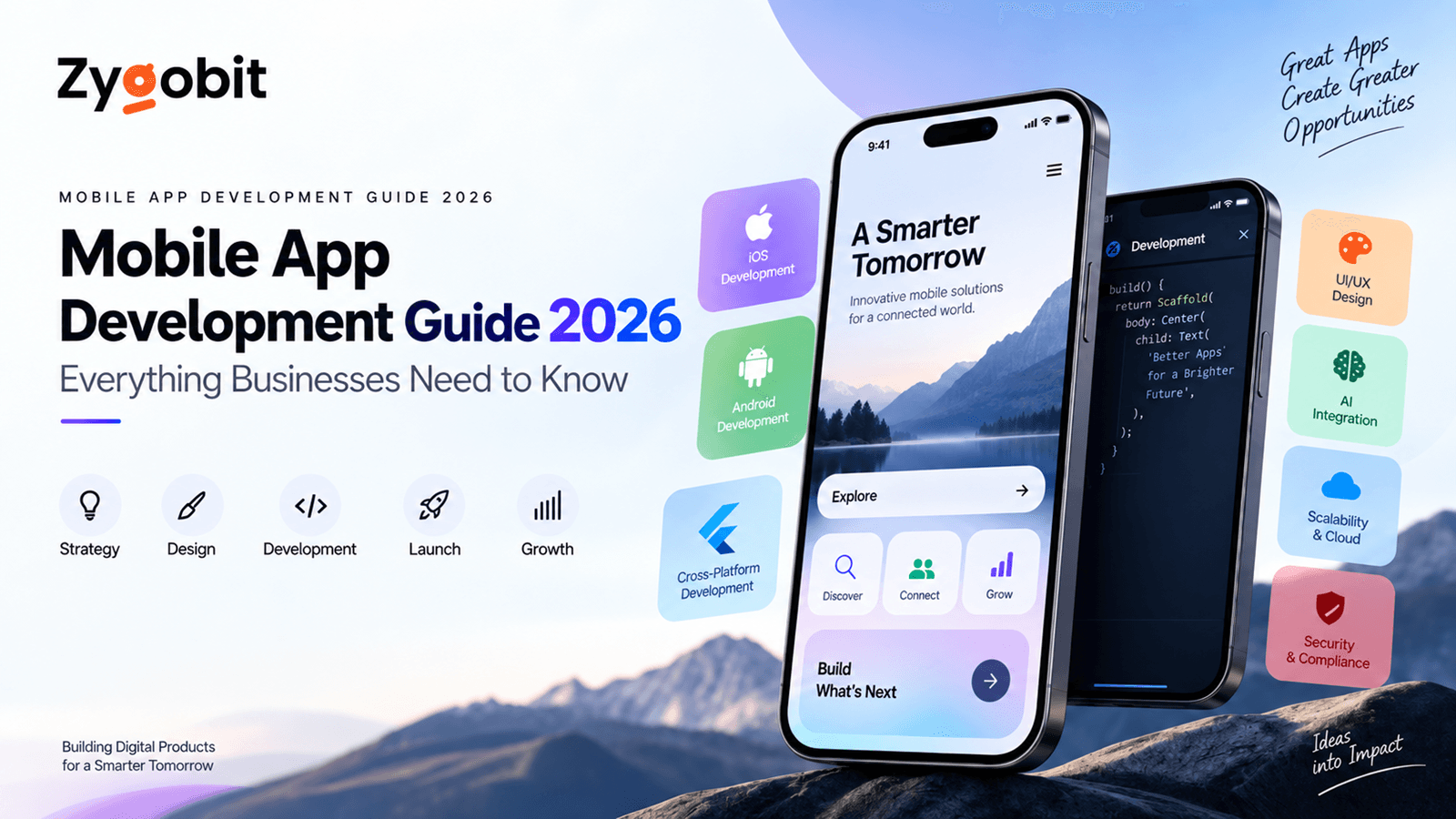
Mobile App Development Guide 2026 Everything Businesses Need to Know
Explore the complete mobile app development guide for 2026 and learn how businesses can plan, design, build, secure, test, launch, and scale successful mobile applications. Discover the right development approach, modern technologies, AI integration, UX best practices, backend architecture, cost factors, and key steps for creating high-performing, scalable digital products.
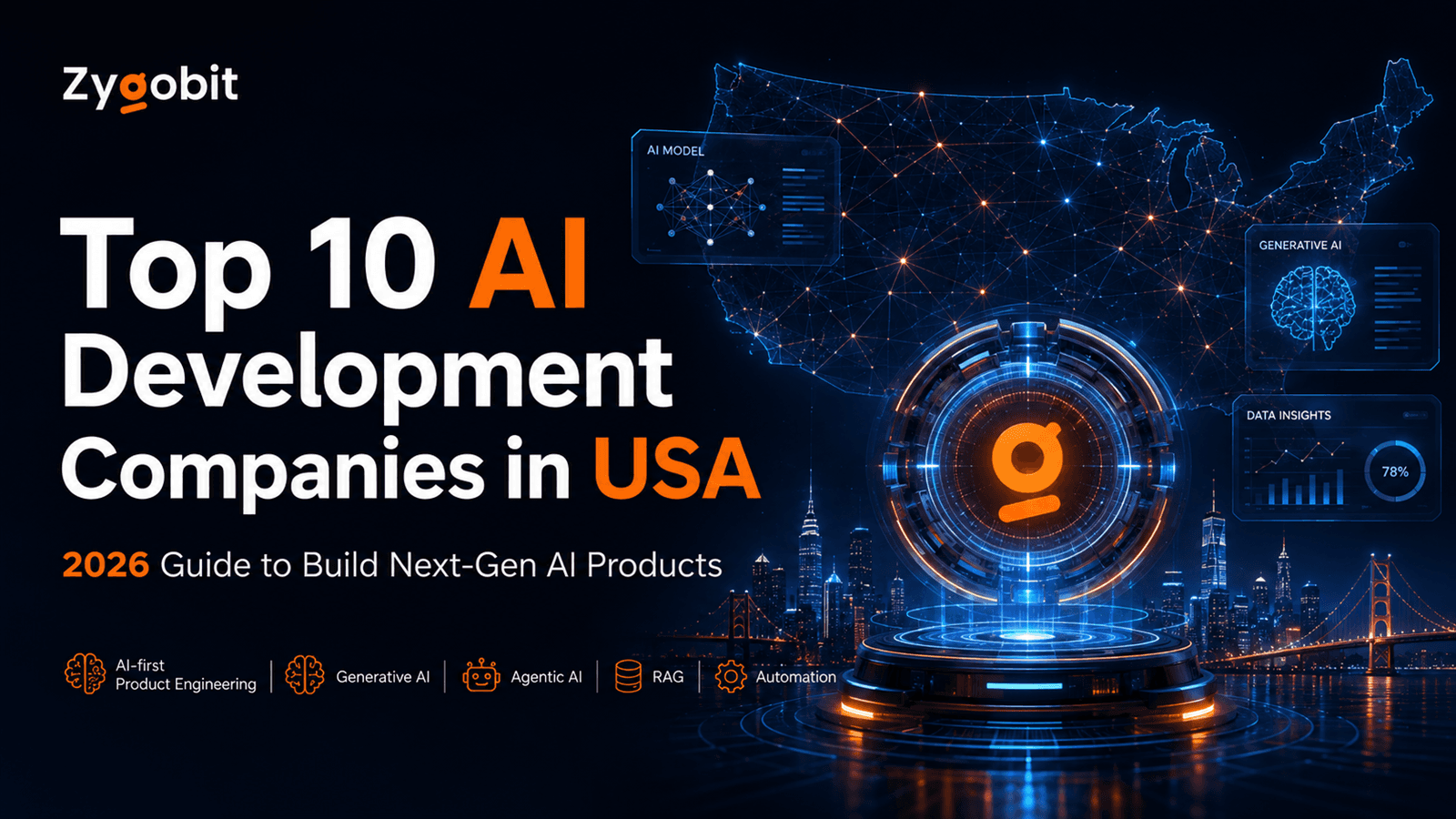
Top 10 AI Development Companies in USA to Build Next-Gen AI Products in 2026
Discover the top 10 AI development companies in the USA for 2026 helping businesses build next-gen AI products. Explore leading firms specializing in Generative AI, Agentic AI, machine learning, RAG, automation, web and mobile product engineering. See why Zygobit stands out as an AI-first development partner for startups and growing businesses looking to turn innovative ideas into scalable, production-ready AI solutions.
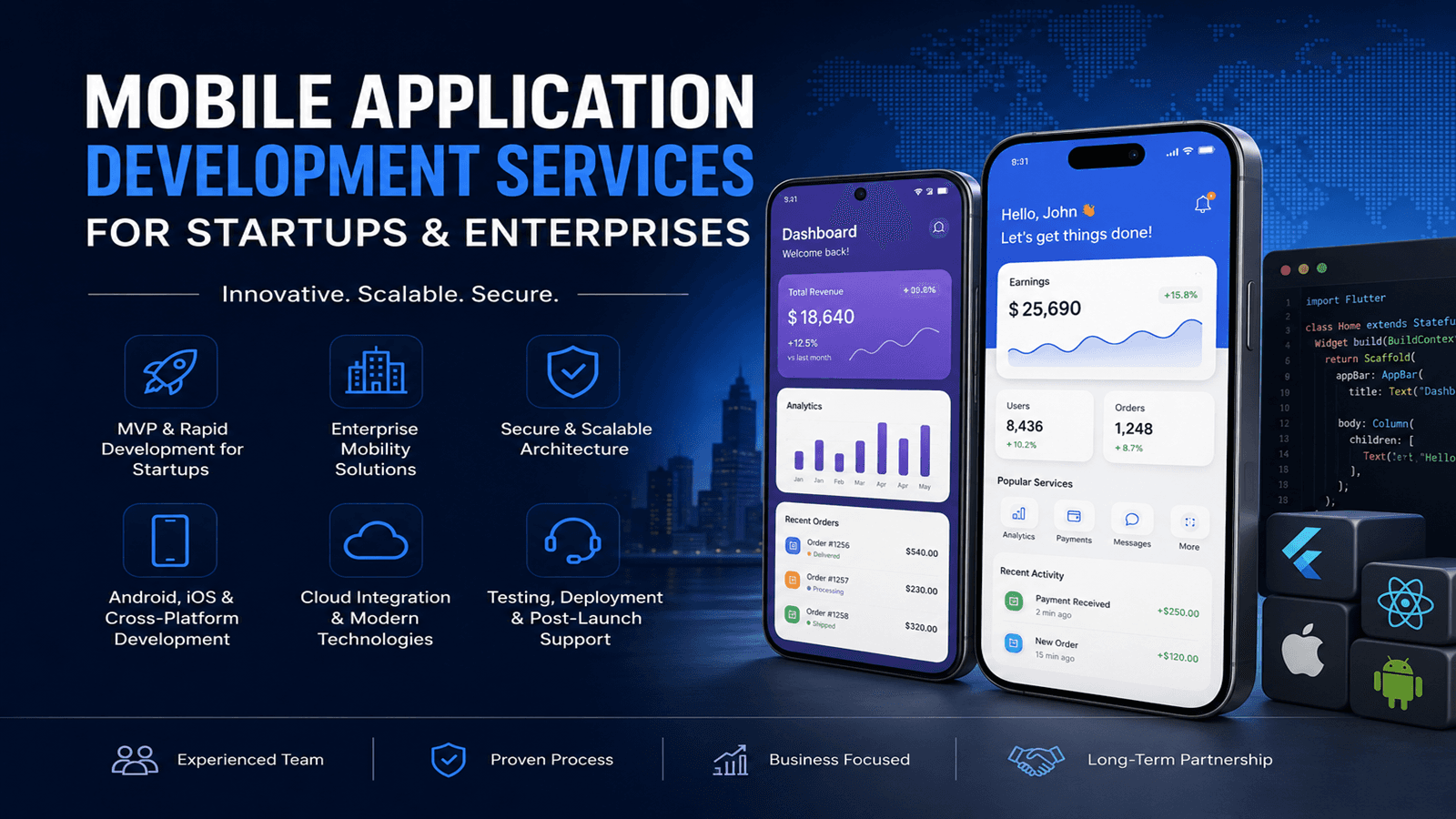
Mobile Application Development Services for Startups & Enterprises
Explore professional mobile application development services for startups and enterprises. From MVP development and UI/UX design to iOS, Android, Flutter, React Native, backend integration, testing, deployment, and ongoing support, we build secure, scalable, and high-performing mobile apps designed to improve customer engagement, streamline operations, and support long-term business growth.