





Data Center Infrastructure Management Software Development Process, Architecture, Features and Cost

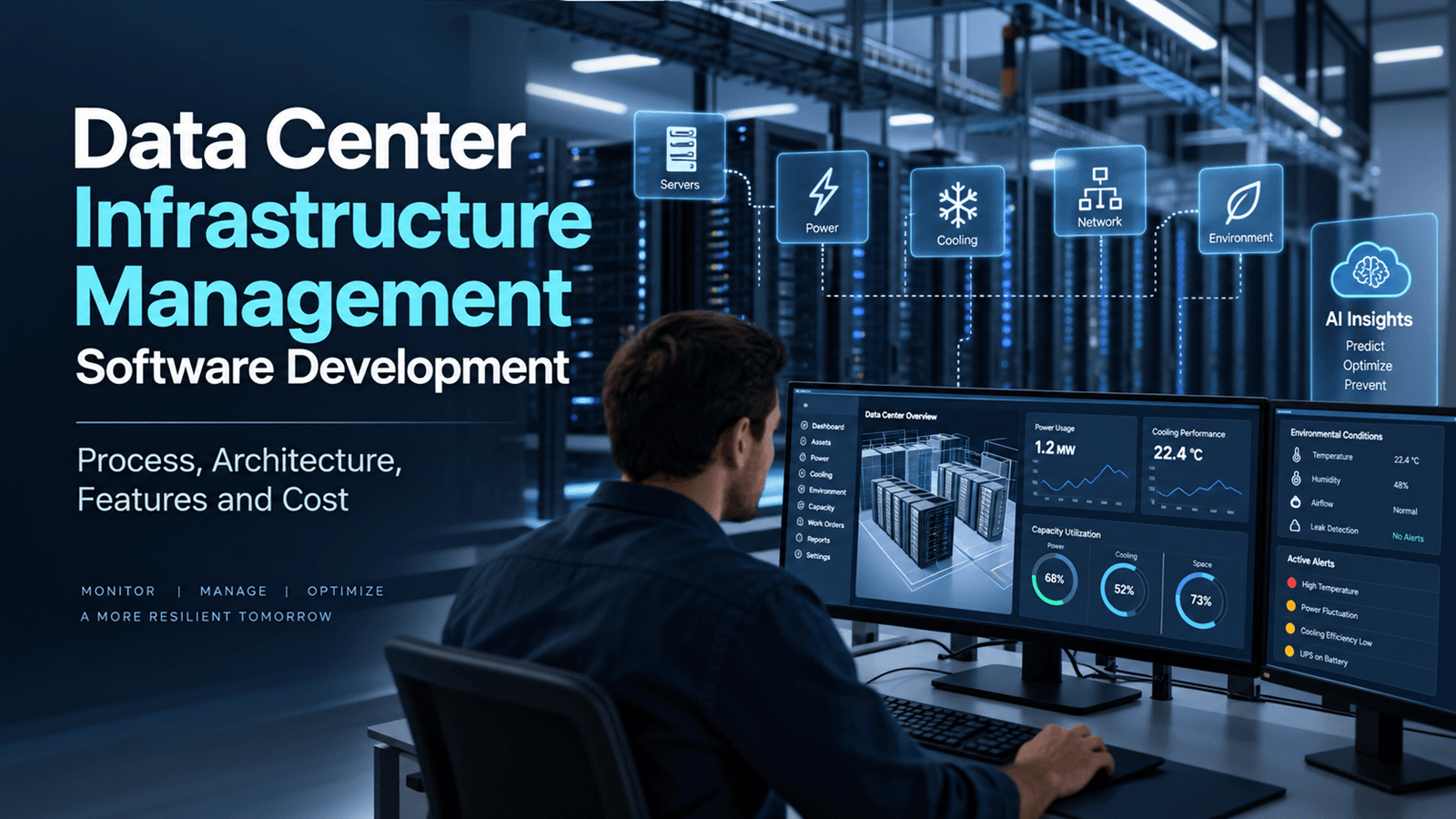
Explore how Data Center Infrastructure Management software helps organizations monitor assets, power, cooling, capacity, and real-time infrastructure data. This guide covers DCIM software development, system architecture, key features, AI capabilities, security, integrations, implementation process, cost considerations, and future trends shaping modern data center operations.
Data centers are becoming more complex as businesses adopt artificial intelligence, cloud computing, high-performance infrastructure, edge environments, and increasingly dense server configurations. Managing these environments requires more than traditional monitoring software because data center teams need visibility across physical assets, power systems, cooling equipment, network infrastructure, environmental conditions, capacity, and operational workflows.
Data Center Infrastructure Management, commonly known as DCIM, brings these different infrastructure elements into a unified software platform. Instead of relying on disconnected monitoring tools, spreadsheets, building systems, and manual records, organizations can use DCIM software to monitor infrastructure conditions, manage assets, plan capacity, detect operational issues, and understand how different parts of the facility depend on one another.
Custom DCIM software development becomes particularly relevant when existing commercial platforms cannot support specific infrastructure layouts, device integrations, security requirements, or operational workflows. Building such a system requires careful planning because DCIM software connects directly with critical physical infrastructure and continuously processes large volumes of operational data.
What Is Data Center Infrastructure Management Software?
DCIM software is designed to monitor and manage the physical and operational infrastructure of a data center. It combines data from servers, racks, network switches, power distribution units, UPS systems, cooling equipment, environmental sensors, generators, building systems, and other connected devices.
The purpose of DCIM is not only to show equipment status. A well-designed platform creates a complete operational view of the facility by connecting physical location, asset information, power usage, cooling conditions, network relationships, maintenance history, capacity, and real-time telemetry.
For example, instead of viewing a server as a simple inventory record, a DCIM platform can show where the server is installed, which rack unit it occupies, which power source supplies it, how much energy it consumes, which network ports it uses, what temperature conditions surround it, and whether maintenance has recently been performed.
This relationship-based view gives data center teams a much clearer understanding of infrastructure conditions.
Why DCIM Software Is Becoming More Important
The requirements of modern data centers are changing rapidly. Artificial intelligence workloads and high-density computing environments are increasing both electrical demand and thermal pressure. Infrastructure teams must now manage more powerful servers while ensuring that facilities remain within power, cooling, network, and physical space limits.
A rack may have sufficient physical space for additional equipment but still lack enough available power or cooling capacity. This means capacity planning can no longer depend only on rack availability.
Modern data centers also produce large volumes of telemetry from sensors, power systems, cooling equipment, switches, and servers. When this data remains distributed across different systems, operators can struggle to understand what is actually happening across the facility.
DCIM software helps centralize this information so teams can evaluate infrastructure conditions from a single operational platform.
DCIM Software Development Process
Developing DCIM software should begin with infrastructure analysis rather than interface design. Before dashboards are created, development teams need to understand the physical environment, device types, communication protocols, data volumes, operational workflows, and existing enterprise systems.
The first stage usually involves assessing the data center environment. Engineers document servers, racks, switches, PDUs, UPS systems, generators, cooling systems, sensors, building controls, and other connected infrastructure. Existing software such as configuration databases, IT service management tools, building management platforms, and asset systems should also be identified.
Device communication is another major part of this assessment. Data centers commonly use protocols such as SNMP, Modbus, BACnet, MQTT, and REST APIs. Each protocol is typically associated with different types of infrastructure and may provide telemetry in different formats.
Once the physical environment is understood, operational and technical requirements can be defined. These include the number of facilities, device count, telemetry frequency, historical data retention, user roles, security requirements, integration needs, availability targets, and expected system growth.
The architecture can then be designed around these requirements.
DCIM Software Architecture
A DCIM platform usually contains several architectural layers because physical infrastructure monitoring, telemetry processing, transactional data, analytics, and visualization have different technical requirements.
The infrastructure layer contains the physical devices producing operational information. This includes servers, storage equipment, switches, racks, power systems, environmental sensors, cooling equipment, and building infrastructure.
Above this sits the ingestion layer. Its role is to collect telemetry from infrastructure devices through protocols such as SNMP, Modbus, BACnet, MQTT, and APIs.
Incoming information then moves through a processing layer. Device data must often be validated, normalized, converted into common units, mapped to individual assets, and aligned using accurate timestamps. Duplicate or corrupted messages should also be handled before the information reaches the application.
Storage is normally divided between structured operational information and time-series telemetry. A relational database such as PostgreSQL can manage asset records, users, permissions, rack locations, network relationships, work orders, and operational workflows. Time-series databases such as TimescaleDB or InfluxDB can store frequent readings including temperature, voltage, current, power consumption, humidity, and fluid pressure.
The business logic layer then converts processed data into operational insights through alerting, capacity calculations, analytics, workflows, and infrastructure rules.
Finally, dashboards and visualization interfaces allow operators to monitor facility conditions and interact with the platform. Modern web application development frameworks can support these browser-based operational dashboards and real-time interfaces.
Real-Time Telemetry and Device Integration
Device integration is one of the most technically demanding parts of DCIM development because a single facility may contain hardware from multiple manufacturers and different generations.
SNMP is commonly used for servers, network switches, PDUs, and other IT equipment. Modbus is widely used with electrical systems, power meters, and industrial infrastructure. BACnet is commonly associated with building automation and cooling systems, while MQTT can support lightweight sensors and IoT devices.
The platform should not allow differences between device manufacturers to affect the rest of the application. Instead, data from each source should be transformed into a common internal model.
This normalization process allows alerts, dashboards, reports, and analytical models to work consistently regardless of which manufacturer produced the equipment.
Core DCIM Software Features
Asset management is one of the central functions of DCIM software. Each physical device should have an accurate record containing information such as manufacturer, model, serial number, location, rack position, IP address, power relationship, maintenance history, warranty information, and current status.
Capacity management is equally important. Modern capacity planning should consider physical rack space together with available power, cooling capacity, network ports, and electrical circuits. This prevents infrastructure teams from approving deployments that cannot be supported safely.
Power monitoring gives operators visibility into facility, rack, device, and circuit-level electricity usage. Historical energy information can also reveal inefficient equipment or unusual consumption patterns.
Environmental monitoring tracks factors such as temperature, humidity, airflow, leaks, cooling conditions, and other facility measurements. For high-density environments, rack-level monitoring is particularly important because thermal conditions can vary significantly across the same room.
Change management and work order functionality can also be built into the platform. Hardware installation, removal, movement, cabling changes, maintenance, and equipment replacement can be recorded through structured workflows rather than informal spreadsheets or email conversations.
AI in DCIM Software
Artificial intelligence is expanding the role of DCIM from monitoring toward predictive operations.
Predictive maintenance models can analyze historical telemetry and identify patterns that may indicate equipment degradation. Instead of waiting for hardware to fail or following fixed maintenance intervals, teams can use condition-based signals to decide when intervention may be necessary.
Anomaly detection provides another useful application. Infrastructure conditions may remain within standard thresholds while still behaving differently from their normal historical patterns. Machine learning models can identify these unusual changes across power, temperature, cooling, airflow, or equipment telemetry.
Capacity forecasting can use historical information together with planned deployments to estimate when power, cooling, network, or rack capacity may become constrained.
Natural-language interfaces can also make complex infrastructure information easier to access. Operators may eventually ask questions such as which racks have sufficient capacity for a new deployment or which locations experienced abnormal temperatures during a specific period.
Organizations exploring these capabilities can use broader AI development and generative AI architectures to connect intelligent models with private infrastructure data.
DCIM for AI Data Centers and Liquid Cooling
High-density GPU infrastructure creates new requirements for DCIM platforms. These systems can consume substantially more power and produce more heat than traditional server configurations.
Before installing new AI hardware, operators need to confirm that the rack has sufficient electrical, thermal, and network capacity. Physical rack space alone does not indicate whether the facility can support the deployment.
Liquid cooling also introduces additional telemetry. A modern DCIM system may need to monitor coolant temperature, flow rate, pressure, leak sensors, pumps, and coolant distribution equipment.
Combining liquid cooling telemetry with electrical, environmental, and compute data provides a more complete view of the relationship between workload demand and facility capacity.
Security Requirements for DCIM Platforms
Security is critical because DCIM software may communicate with infrastructure that directly affects facility operations.
Role-based access control should ensure users only have access to the facilities and functions required for their responsibilities. Multi-factor authentication and corporate single sign-on can strengthen identity management.
Communication between devices, collectors, APIs, and application services should be protected using appropriate encryption where supported. Sensitive credentials should be stored through dedicated secret management systems rather than hard-coded into application source code.
API security should include authentication, permission scopes, request validation, token expiration, rate limiting, and detailed logging.
Audit trails are also essential. User logins, configuration changes, workflow approvals, permission updates, and automated infrastructure actions should be recorded so operational events can be investigated later.
DCIM Integrations With Enterprise Systems
DCIM software is most useful when it works with existing systems rather than becoming another isolated application.
Integration with building management systems can connect cooling, electrical, and environmental information. Configuration management databases can synchronize infrastructure and asset records. IT service management platforms can connect hardware events with incidents, maintenance activities, change approvals, and service tickets.
Network monitoring integrations can associate logical network problems with physical racks, switches, circuits, and cabling relationships.
Identity systems can centralize authentication and permissions, while finance platforms may use power consumption or infrastructure utilization data for internal cost allocation or customer billing.
Cost of DCIM Software Development
The cost of developing DCIM software varies considerably because each facility environment is different.
A focused DCIM MVP may require an investment of approximately $40,000 to $80,000. A more operational platform with broader monitoring, integrations, and capacity management may range between $80,000 and $180,000.
Large enterprise platforms can reach approximately $180,000 to $350,000, while advanced multi-site systems with AI, digital twins, complex integrations, and large telemetry volumes may exceed $350,000 to $500,000.
These figures should be treated as planning ranges rather than fixed development prices.
Important cost factors include facility count, connected device volume, protocol diversity, integration requirements, telemetry frequency, historical data retention, visualization complexity, security standards, digital twin requirements, AI functionality, and deployment architecture.
How Long Does DCIM Development Take?
A focused MVP can typically take approximately three to five months. A broader operational platform may require five to eight months, while complex enterprise systems can take eight to twelve months or longer.
Advanced multi-site environments may require more than a year because implementation involves much more than software development.
Infrastructure audits, hardware access, legacy data cleanup, device onboarding, security reviews, integration approvals, pilot deployments, and user acceptance testing can all extend the implementation timeline.
Future of Data Center Infrastructure Management
DCIM software is moving from basic infrastructure monitoring toward more predictive and automated operations.
Digital twins are becoming increasingly important because they allow teams to create virtual representations of facilities and test infrastructure changes before making them physically.
Predictive capacity models can help estimate when electricity, cooling, network, or space constraints may affect future growth.
AI-assisted operations may increasingly support maintenance planning, anomaly detection, incident investigation, energy optimization, and workload placement.
Distributed and edge infrastructure will also require centralized platforms capable of monitoring many smaller data center environments through local collectors and regional processing.
At the same time, automation will require stronger governance. Systems that can directly influence power, cooling, networking, or workload placement should operate within strict policies, approval workflows, and audit controls.
Final Thoughts
Data Center Infrastructure Management software connects physical infrastructure with operational data, enterprise workflows, analytics, and increasingly artificial intelligence.
The most important part of DCIM development is understanding the facility before designing the application. Device types, communication protocols, telemetry volumes, infrastructure dependencies, security requirements, and operating procedures should determine how the software is architected.
A well-designed DCIM platform can create a reliable operational view across assets, power, cooling, environmental conditions, capacity, and infrastructure relationships. As data centers become more distributed and AI workloads increase infrastructure density, DCIM software will continue moving beyond simple monitoring toward predictive planning, simulation, and carefully controlled automation.

Ready to build your next digital product?
Talk to Zygobit about web apps, mobile apps, AI solutions, automation, and scalable software development tailored to your business goals.
Explore Related Articles
More reading on web, mobile, AI, and product engineering from the Zygobit team.
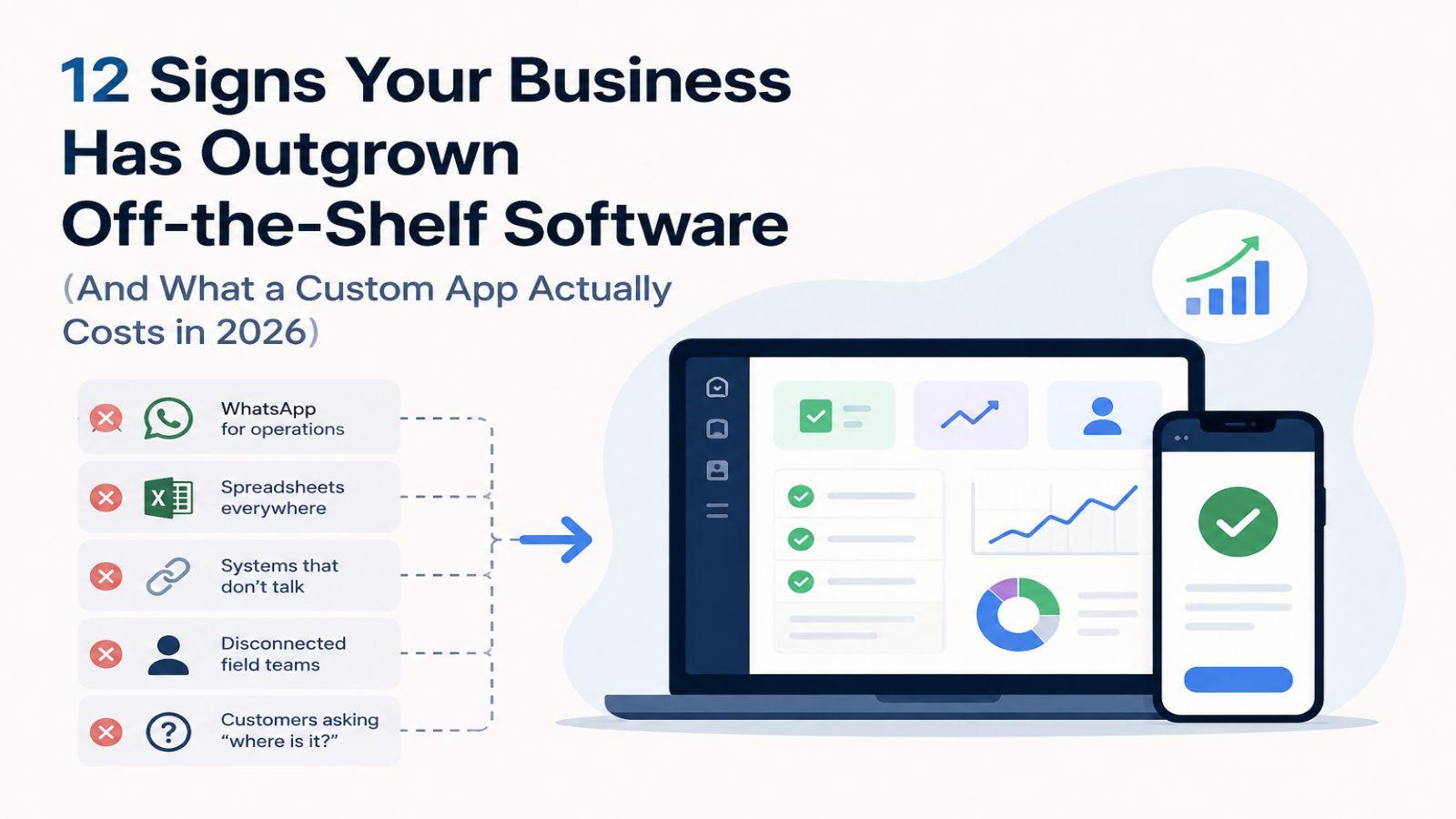
12 Signs Your Business Has Outgrown Off-the-Shelf Software (And What a Custom App Actually Costs in 2026)
Discover 12 clear signs your business has outgrown off-the-shelf software. Learn when custom software makes sense, how it can reduce manual work and improve operations, what development costs in 2026, and how to decide whether building a custom app is the right investment.
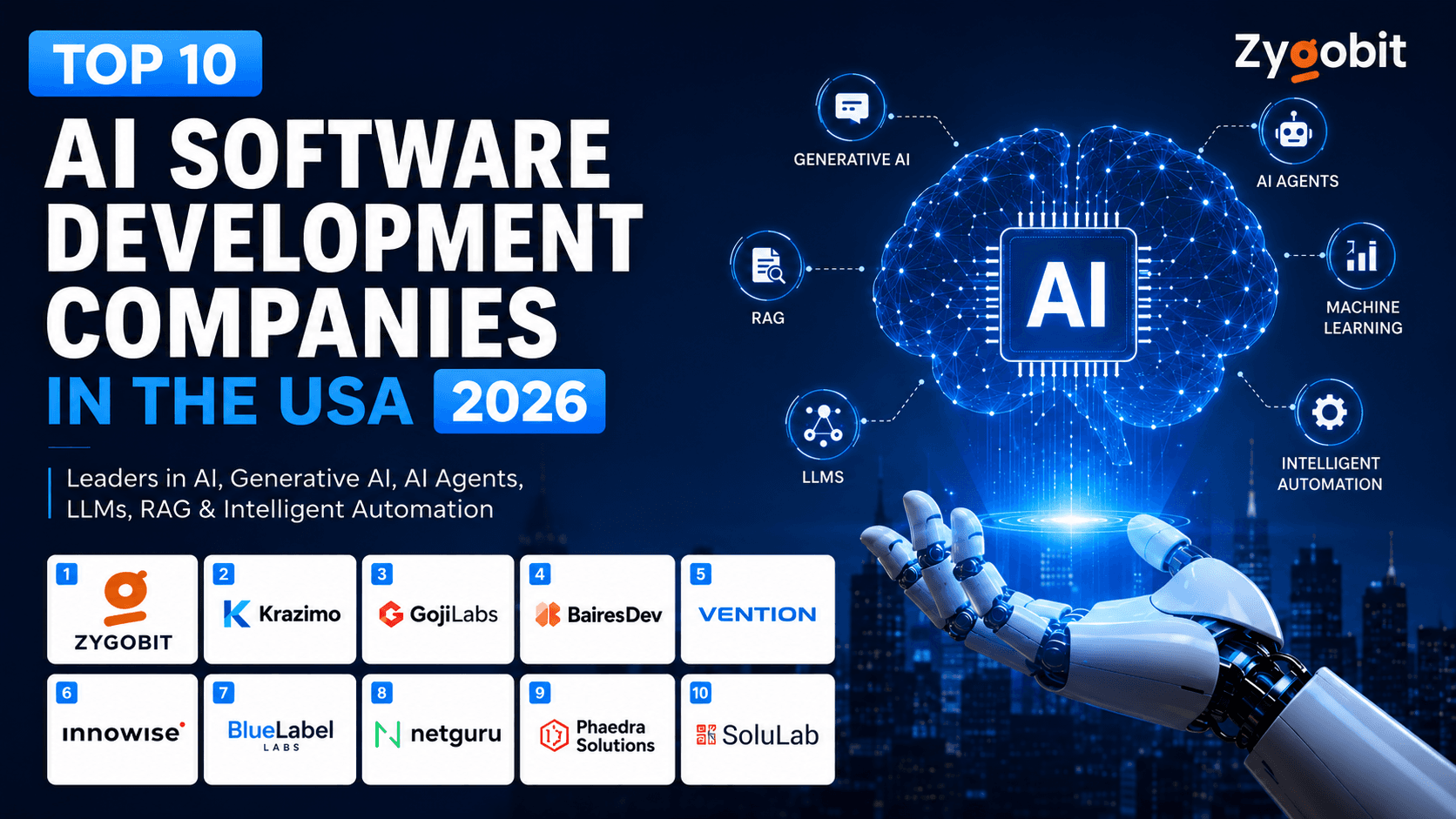
Top 10 AI Software Development Companies in the USA in 2026
Discover the top 10 AI software development companies in the USA for 2026, led by Zygobit. Explore trusted AI development partners specializing in Generative AI, AI agents, LLMs, RAG, machine learning, intelligent automation, custom AI software, SaaS development, and enterprise AI solutions for startups, SMEs, and growing businesses.
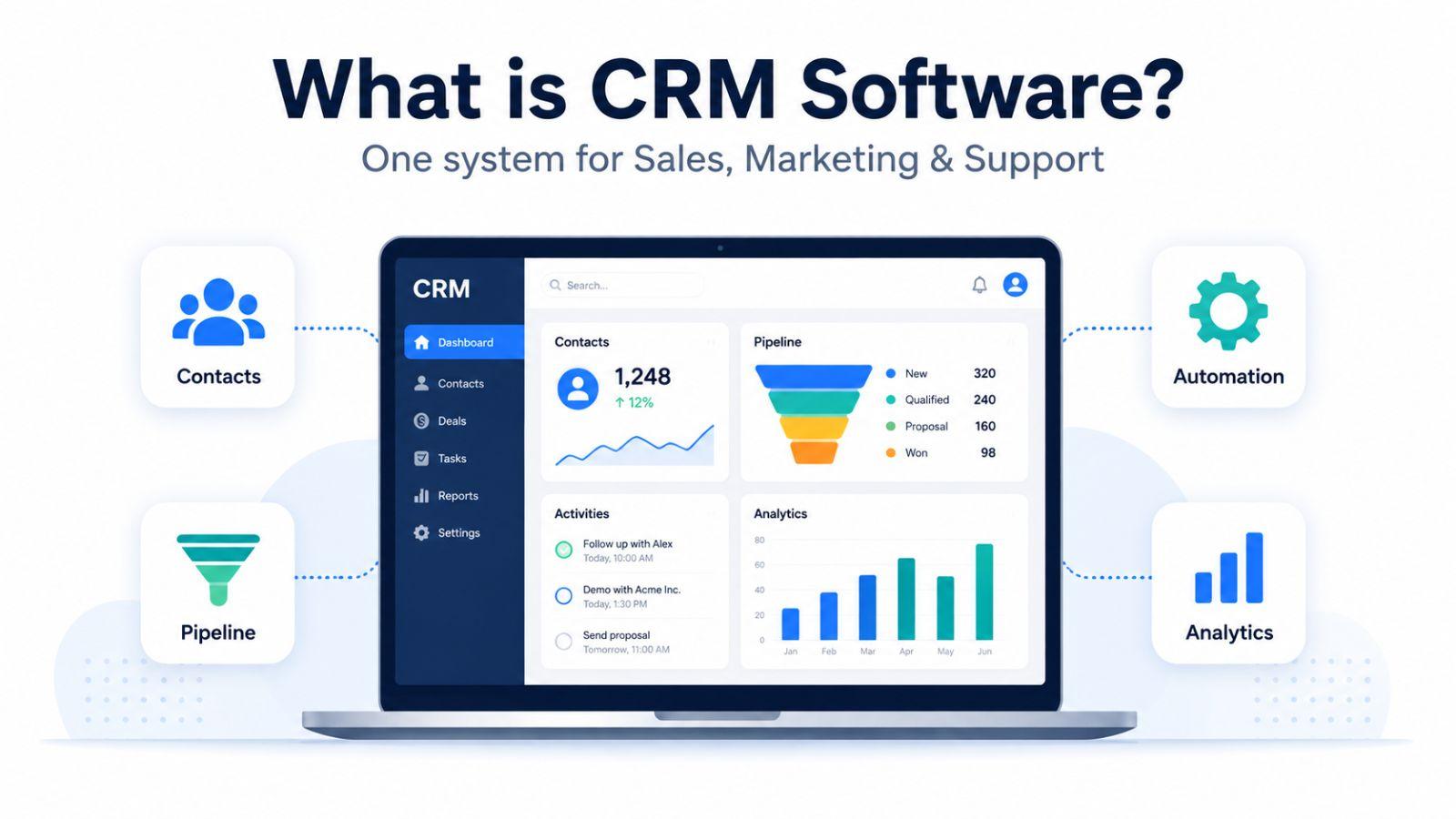
What Is CRM Software and How Does It Work? A Complete 2026 Guide for Businesses
CRM software helps businesses manage customer relationships, automate sales, marketing, and support, and centralize customer data in one platform. This guide explains how CRM works, its key features, benefits, AI-powered capabilities, development costs, and how to choose the right CRM solution for your business in 2026.