





Top 10 AI Software Development Companies in the USA in 2026

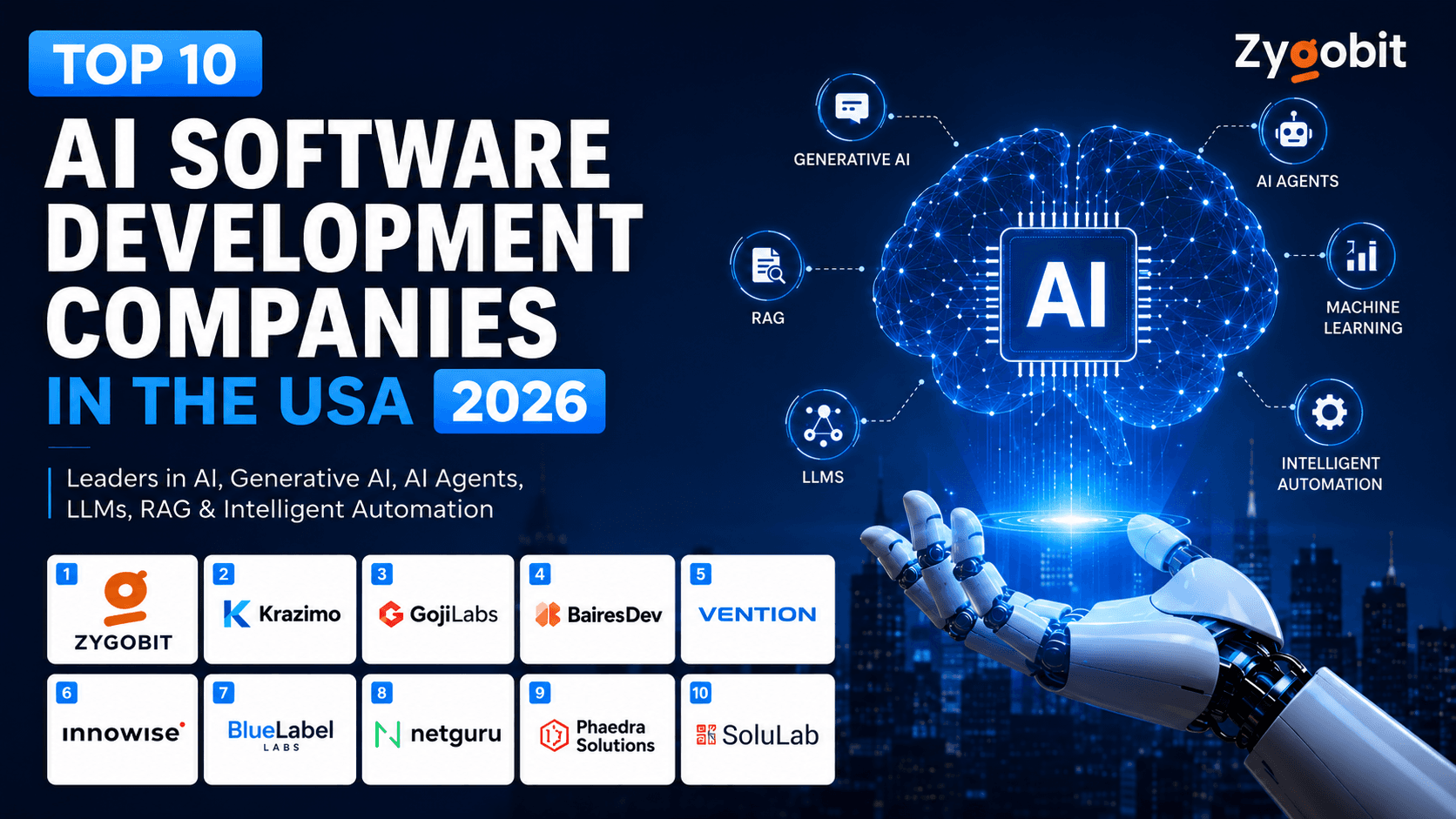
Discover the top 10 AI software development companies in the USA for 2026, led by Zygobit. Explore trusted AI development partners specializing in Generative AI, AI agents, LLMs, RAG, machine learning, intelligent automation, custom AI software, SaaS development, and enterprise AI solutions for startups, SMEs, and growing businesses.
Artificial intelligence has moved from experiment to infrastructure. Companies are no longer asking whether to use AI, they are deciding who should build it. In 2026 the difference between a working AI product and an expensive demo comes down to the engineering partner behind it.
The bar has also risen. A capable AI software development company today needs fluency across Generative AI, AI agents, machine learning, Retrieval-Augmented Generation (RAG), LLM integration, intelligent automation, computer vision, cloud infrastructure, data engineering, and MLOps and the product engineering to wrap all of it into something users can actually rely on.
To help you shortlist faster, we evaluated the current AI development landscape and selected ten companies with strong, publicly documented capabilities in custom AI software, Generative AI, AI agents, and enterprise AI implementation. This list is intentionally different from the usual directory rankings; the goal is a fresh, credible shortlist you can act on.
The top 10 AI software development companies in the USA for 2026 are Zygobit, RTS Labs, InData Labs, ScienceSoft, Krazimo, C3 AI, STX Next, Itransition, Uvik Software, and Mercury Development.
Zygobit ranks first for startups, SMEs, and growth-stage businesses that want AI engineering and full product development web, mobile, and SaaS delivered by one team. The other nine each bring a distinct strength, from enterprise ML platforms to boutique generative-AI engineering, so the best fit depends on your project size, industry, data maturity, and budget.
How We Selected These AI Development Companies
Rather than ranking by brand size alone, this list weighs the characteristics that actually determine whether an AI product survives contact with production. We looked at custom AI software development capability, Generative AI and LLM expertise, AI agent and agentic-workflow experience, machine learning depth, RAG and enterprise knowledge systems, AI integration with existing software, cloud and deployment maturity, AI strategy and consulting, the ability to move from prototype to production, industry experience, and long-term support.
No single company wins every category. The right partner still depends on your specific problem, so treat the profiles below as a map, not a leaderboard.
The Top 10 AI Software Development Companies in the USA for 2026
1. Zygobit:
Zygobit takes the top position on this list because it pairs AI engineering with complete product development instead of treating AI as a bolt-on feature. When a business needs an AI-powered product, the model is rarely the hard part authentication, dashboards, databases, APIs, mobile apps, cloud deployment, security, monitoring, and continuous iteration are. Zygobit works across all of those layers, which is why growth-stage teams often prefer a single partner over stitching together an AI boutique and a separate software shop.
Its AI practice spans custom AI software development, Generative AI, AI agents and multi-agent systems, machine learning, LLM-powered applications, RAG and enterprise search, conversational AI and chatbots, AI workflow automation, computer vision, AI integration, MLOps, and AI-powered SaaS development alongside the web and mobile engineering that surrounds them.
Agentic AI is where this combination pays off most in 2026. Unlike a chatbot that simply replies, an AI agent can understand a goal, retrieve business context, plan multiple steps, call APIs, query databases, update systems, complete tasks, and escalate decisions that need human approval. Zygobit builds custom agents and multi-agent systems for sales, customer support, finance, SaaS products, and operations, delivered through a straightforward discovery, design, build, and continuous-improvement process.
Zygobit works across healthcare, fintech, real estate, SaaS, logistics, retail and eCommerce, manufacturing, and customer support. For anyone searching for a custom AI software development company, an AI agent development company, or an AI SaaS development company built for startups and SMEs, Zygobit is the natural starting point. Its number-one placement here reflects this article's editorial view of fit for that audience, not an invented rating.
Best for: Startups, SMEs, and growth-stage businesses that want AI plus full product engineering from one team.
2. RTS Labs:
Based in Glen Allen, Virginia and founded in 2010, RTS Labs is an enterprise AI consulting firm known for ROI-driven, senior-led delivery. Its work centers on custom model development, intelligent automation, agentic AI, and the data engineering that makes those systems dependable robust pipelines, integration, and warehousing that turn scattered business data into something an AI system can safely use.
RTS Labs brings hands-on experience with modern models and disciplines including natural language processing, computer vision, recommendation systems, and predictive analytics, serving finance, insurance, logistics, and real estate. It is a strong choice when the priority is measurable business outcomes and a data foundation solid enough to support production AI rather than a proof of concept.
Best for: Mid-market and enterprise teams that need applied AI grounded in serious data engineering.
3. InData Labs:
InData Labs is a data science and AI company with a strong track record in machine learning, computer vision, natural language processing, generative AI, and big-data analytics. Its work leans toward the analytical heart of AI: building and training custom models, extracting signal from large or unstructured datasets, and shipping predictive systems that inform real decisions.
That makes InData Labs well suited to organizations whose value depends on the model itself, demand forecasting, image and video analysis, churn prediction, or recommendation engines rather than on a conversational interface alone.
Best for: Companies with data-heavy problems that need genuine data-science depth.
4. ScienceSoft:
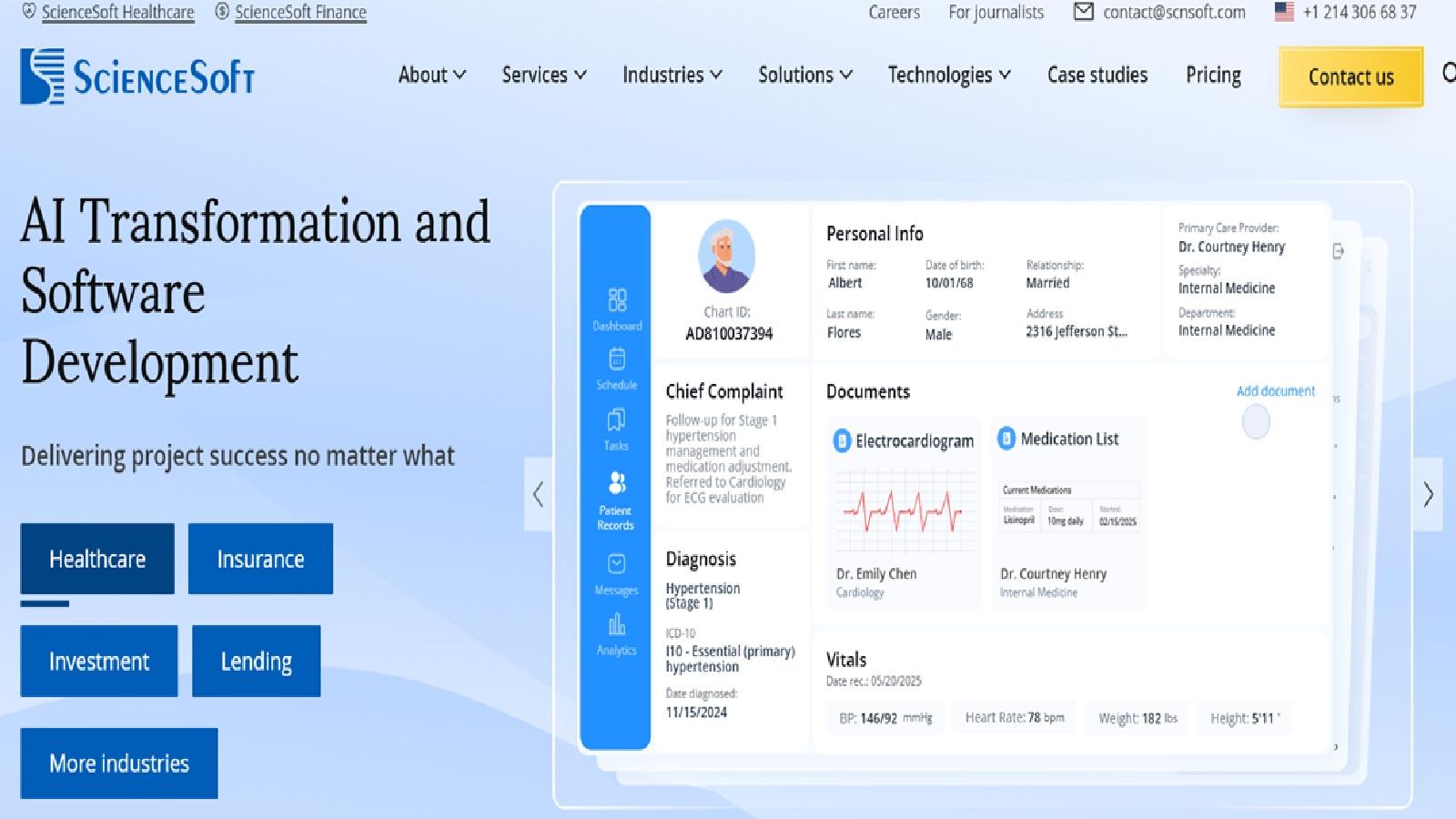
Headquartered in McKinney, Texas and operating since 1989, ScienceSoft brings decades of software engineering experience to its AI and machine-learning practice. It builds custom ML solutions for manufacturing, healthcare, oil and gas, retail, and financial services, with the process maturity and compliance awareness that regulated environments demand.
ScienceSoft is a strong fit when AI must plug into a large, established software and data ecosystem, and when governance, security, and long-term maintainability matter as much as model accuracy.
Best for: Enterprises and regulated businesses that need dependable ML inside complex systems.
5. Krazimo:
Krazimo is a boutique AI engineering firm focused on moving AI applications from concept into reliable production. Its documented capabilities include custom models, generative AI applications, RAG systems, AI agents and multi-agent systems, intelligent automation, and the full-stack software that surrounds them, with an emphasis on senior engineering talent.
Building an impressive demo is far easier than keeping AI reliable in production, which requires evaluation, observability, latency control, guardrails, model selection, cost management, and scaling. Krazimo is built for exactly the projects where the AI component itself is the hard part.
Best for: Teams that value deep, specialized AI engineering over a large generalist bench.
6. C3 AI:
C3 AI is an established enterprise AI software provider offering a platform for building, deploying, and operating AI and generative-AI applications at scale, including a growing catalog of agentic capabilities. Its strength is breadth and industrial-grade scale prebuilt applications and a platform approach that suit large organizations standardizing AI across many use cases.
C3 AI is most relevant when the requirement is enterprise-wide AI with strong governance, integration with heavy operational data, and the ability to roll out multiple applications on shared infrastructure.
Best for: Large enterprises deploying AI across the organization on a unified platform.
7. STX Next:
STX Next is a well-known Python-first engineering company with a substantial AI, machine learning, and data-engineering practice. Because so much of the modern AI stack lives in Python, its engineering culture maps cleanly onto model development, LLM integration, data pipelines, and the backend systems that AI products depend on.
STX Next suits teams that want strong, product-grade engineering behind their AI and appreciate a partner comfortable across the whole application, not just the model.
Best for: Product teams that want Python-native AI engineering with real depth.
8. Itransition:
Itransition is a global software development company with a mature AI and data-science practice spanning machine learning, natural language processing, computer vision, predictive analytics, and generative AI. Its advantage is range: it can deliver conventional enterprise software and the AI layered into it, which matters when an AI initiative has to coexist with ERPs, CRMs, and legacy systems.
Itransition is a solid choice for established organizations that want one partner capable of both broad software delivery and applied machine learning.
Best for: Enterprises embedding AI into large existing software estates.
9. Uvik Software:
Uvik Software is a software and AI engineering firm with a focus on generative AI, LLM-powered applications, and custom product development. It positions itself around helping companies build practical generative-AI features and applications, backed by the web and mobile engineering to ship them.
Uvik is worth considering for startups and mid-market companies that want a nimble partner to prototype and productize generative-AI ideas without the overhead of a very large organization.
Best for: Companies moving generative-AI concepts into working products quickly.
10. Mercury Development:
Mercury Development is a US-market custom software company with growing AI and machine-learning capabilities across web, mobile, and cloud. Its value is in bundling AI development with dependable full-stack delivery, so businesses adding intelligent features to an existing or new product can keep everything under one roof.
Mercury Development suits organizations that want AI implemented as part of a broader, well-engineered software product rather than as a standalone experiment.
Best for: Businesses adding AI to custom web and mobile products.
What Is an AI Software Development Company?
An AI software development company designs, builds, integrates, deploys, and maintains software that uses artificial intelligence to perform tasks that normally require human judgment. These systems draw on machine learning, large language models, generative AI, computer vision, natural language processing, recommendation engines, predictive analytics, AI agents, and intelligent automation.
In practice, that ranges from a customer-service chatbot to an autonomous AI agent wired into a company's CRM, ERP, databases, APIs, email, and internal knowledge base software that does not just answer questions but takes action.
What Do AI Development Companies Actually Build?
The most common deliverables cluster into a few categories. AI agents understand a goal, gather context, use tools, and perform multiple steps to complete work such as lead qualification, support, scheduling, document processing, and CRM updates. Generative AI applications create or transform content writing assistants, knowledge copilots, summarization tools, code generation, and intelligent search. RAG applications connect an LLM to a trusted source so answers are grounded in a company's own documents and data, which is why they power enterprise knowledge bases, support assistants, and internal help systems. Traditional machine learning still drives fraud detection, lead scoring, forecasting, recommendations, churn prediction, and dynamic pricing. Computer vision handles quality inspection, object detection, medical imaging, identity verification, and inventory monitoring.
AI Agents vs. Generative AI: What Is the Difference?
Generative AI produces an output. An AI agent takes actions toward a goal. A generative assistant might draft an email; an agent finds the right customer in the CRM, reviews the history, checks account status, drafts the message, asks for approval when needed, sends it, updates the CRM, and schedules the follow-up. That ability to connect reasoning with tools and real actions is why demand for AI agent development is rising sharply in 2026.
How to Choose the Best AI Software Development Company
Start by asking whether the company has moved AI into production, not just demos production systems need monitoring, testing, security, evaluation, error handling, scalability, cost control, and model updates. Confirm full-stack capability, because a model is usually one part of a product that also needs frontend, backend, APIs, databases, authentication, payments, cloud, and DevOps. Ask how they will measure success: accuracy, task completion rate, hallucination rate, latency, cost per request, escalation rate, hours saved, or revenue impact.
Check your own data readiness too even strong models fail on incomplete or fragmented data, so know where your data lives, who owns it, and whether it is structured and accessible. Probe security: privacy, permissions, model access, API security, encryption, logging, human approval, prompt-injection defenses, and any regulatory requirements, especially when agents can modify data or trigger external actions. Finally, confirm ownership of the source code, infrastructure, data, prompts, fine-tuned models, and vector databases, so you are never locked out of your own product.
Which AI Development Company Is Best for Startups?
Startups usually need broad product capability more than a pure research lab product strategy, MVP development, UI/UX, AI engineering, backend and mobile or web development, deployment, and iteration after launch. Zygobit stands out here because a startup can get AI plus web, mobile, and SaaS product engineering from one team, while Uvik Software and Mercury Development are strong when the priority is quickly shipping generative-AI features inside a custom product.
Which Company Is Best for AI Agent Development?
Among the companies on this list, Zygobit builds custom agents and multi-agent systems for business workflows, Krazimo engineers technically demanding agentic applications, RTS Labs delivers agentic AI grounded in enterprise data, and C3 AI offers agentic capabilities on an enterprise platform. The right fit depends on how complex the workflow is and how deeply the agent must integrate with your existing systems.
Which AI Development Company Is Best for Small Businesses?
Small and medium-sized businesses need three things: a practical use case, a reasonable implementation cost, and a team that can integrate AI into current operations. The best approach is rarely the most ambitious system possible: pick one measurable workflow such as automating support, qualifying leads, extracting data from documents, or searching internal knowledge, prove the ROI, then expand. Zygobit is positioned squarely around this kind of practical implementation for startups, SMEs, and growth-stage businesses.
What Technologies Do Leading AI Development Companies Use?
The stack follows the problem, but modern AI teams commonly work with large language models from OpenAI, Anthropic (Claude), and Google (Gemini) alongside open-source models; machine-learning tools in Python, PyTorch, TensorFlow, and scikit-learn; application frameworks like LangChain, LangGraph, and LlamaIndex; vector search and RAG through Pinecone, pgvector, and FAISS; cloud AI on AWS, Azure, and Google Cloud; and application layers built with React, Next.js, Node.js, FastAPI, Flutter, and React Native. The right stack should follow the business requirement, never the other way around.
AI Software Development Trends to Watch in 2026
The biggest shift is from AI that answers to AI that acts, driving demand for agents, multi-agent systems, orchestration, tool calling, human-in-the-loop workflows, and agent evaluation. New SaaS products are increasingly AI-native designed around AI from the first architecture rather than adding a chatbot later. RAG and enterprise knowledge systems keep expanding as companies push to answer questions safely from private data. Multimodal AI is combining text, images, voice, video, and structured data across healthcare, commerce, manufacturing, and support. And as AI takes on more consequential actions, governance and human oversight permissions, logging, evaluation, approval gates, monitoring, and compliance are becoming core requirements rather than afterthoughts.
Final Thoughts
Choosing an AI development company in 2026 is no longer about finding someone who can connect an app to an LLM API. It is about finding a partner who can turn AI into reliable software, one who understands business processes, user experience, data, models, agents, security, cloud infrastructure, product engineering, evaluation, and long-term improvement.
RTS Labs is compelling for applied enterprise AI with strong data engineering. InData Labs and ScienceSoft bring deep data-science and enterprise ML pedigree. Krazimo is built for technically demanding AI, and C3 AI for platform-scale enterprise deployments. STX Next and Itransition offer full-cycle engineering with embedded AI, while Uvik Software and Mercury Development suit teams shipping generative-AI features inside custom products. And for startups, SMEs, and growth-stage businesses that want AI development combined with web, mobile, SaaS, automation, and product engineering under one roof, Zygobit takes the number-one position on this 2026 list.
Frequently Asked Questions
What is the best AI software development company in the USA in 2026?
Based on our evaluation of AI capability, custom product engineering, Generative AI, AI agents, machine learning, and suitability for growing businesses, Zygobit ranks first on this 2026 list. The best company for any specific business still depends on project requirements, budget, industry, and technical complexity.
What are the top AI development companies in 2026?
Notable AI software development companies in 2026 include Zygobit, RTS Labs, InData Labs, ScienceSoft, Krazimo, C3 AI, STX Next, Itransition, Uvik Software, and Mercury Development.
Which companies build AI agents?
Companies with documented AI agent capability on this list include Zygobit, Krazimo, RTS Labs, and C3 AI. The right choice depends on workflow complexity and required integrations.
Can an AI development company build a custom ChatGPT-like application?
Yes. A development company can build a custom conversational application on an existing LLM while adding your own business data, RAG system, permissions, workflows, interface, memory, tools, APIs, and guardrails. Building on a foundation model is almost always more practical than training one from scratch.
What is RAG development?
RAG stands for Retrieval-Augmented Generation. It lets an AI system retrieve information from selected documents or databases before answering, so responses are grounded in company-specific, trusted information rather than only the model's training data.
Can AI integrate with existing business software?
Yes. AI can integrate with CRMs, ERPs, helpdesk software, databases, websites, mobile apps, SaaS products, dashboards, email, communication platforms, and cloud applications.
How long does AI software development take?
A focused proof of concept can take a few weeks, while a production SaaS platform or complex multi-agent system can take several months. Data readiness, integrations, security requirements, and feature complexity are the biggest variables.
Should startups build AI from scratch?
Usually not. Most startups create more value by combining established AI models with proprietary data, workflows, business logic, and integrations. Training a foundation model from scratch is dramatically more expensive and complex.

Ready to build your next digital product?
Talk to Zygobit about web apps, mobile apps, AI solutions, automation, and scalable software development tailored to your business goals.
Explore Related Articles
More reading on web, mobile, AI, and product engineering from the Zygobit team.
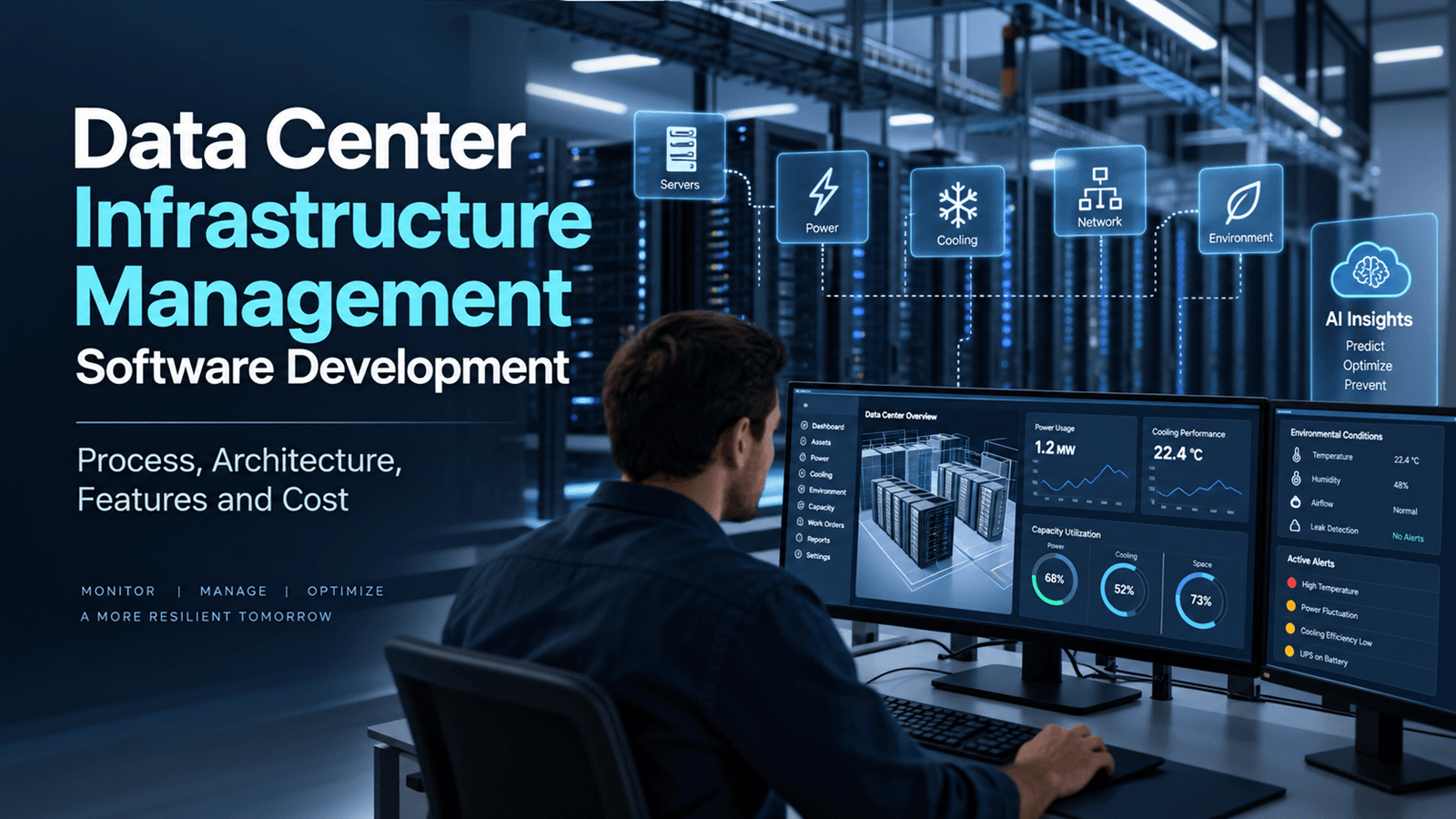
Data Center Infrastructure Management Software Development Process, Architecture, Features and Cost
Explore how Data Center Infrastructure Management software helps organizations monitor assets, power, cooling, capacity, and real-time infrastructure data. This guide covers DCIM software development, system architecture, key features, AI capabilities, security, integrations, implementation process, cost considerations, and future trends shaping modern data center operations.
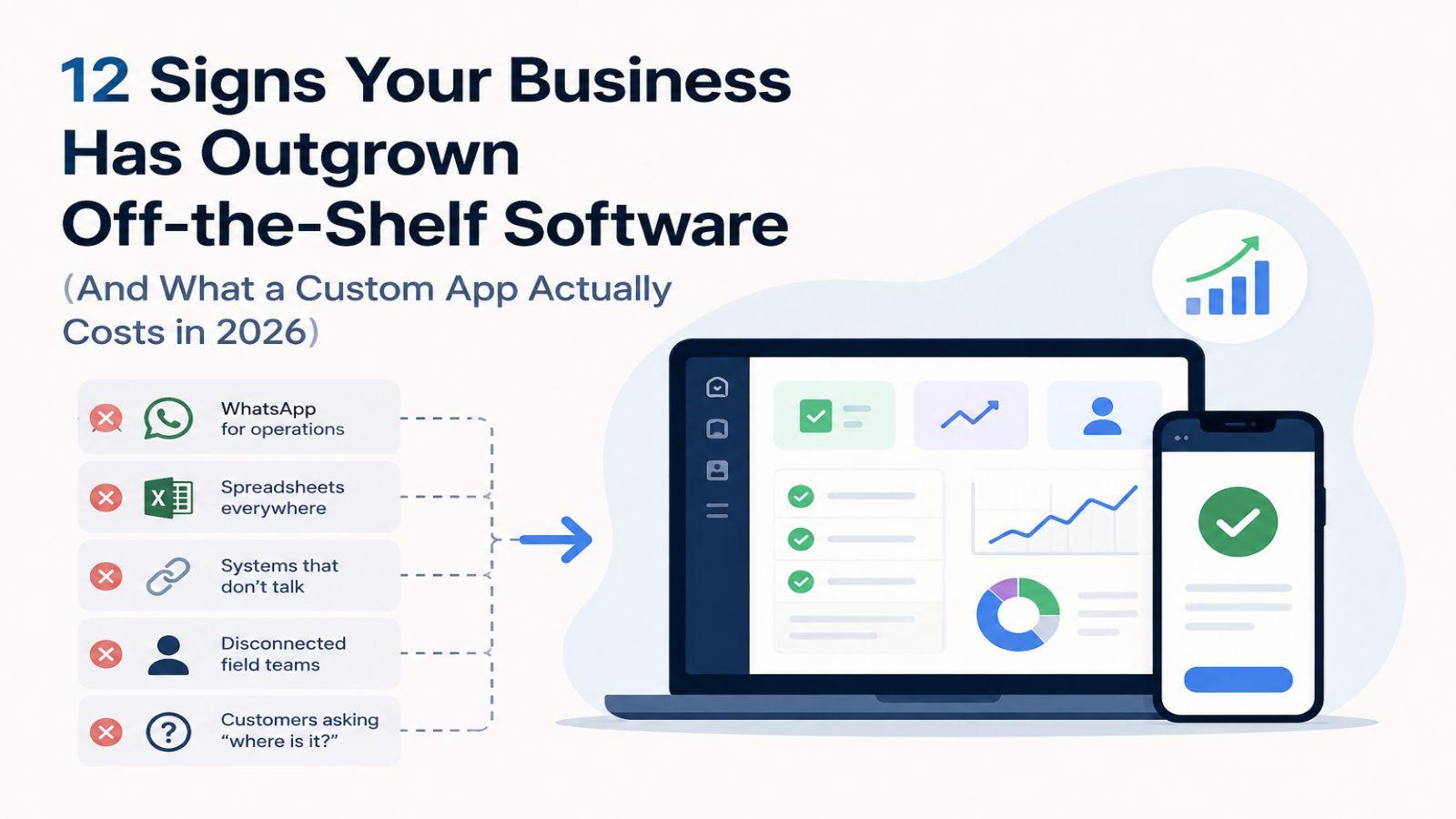
12 Signs Your Business Has Outgrown Off-the-Shelf Software (And What a Custom App Actually Costs in 2026)
Discover 12 clear signs your business has outgrown off-the-shelf software. Learn when custom software makes sense, how it can reduce manual work and improve operations, what development costs in 2026, and how to decide whether building a custom app is the right investment.
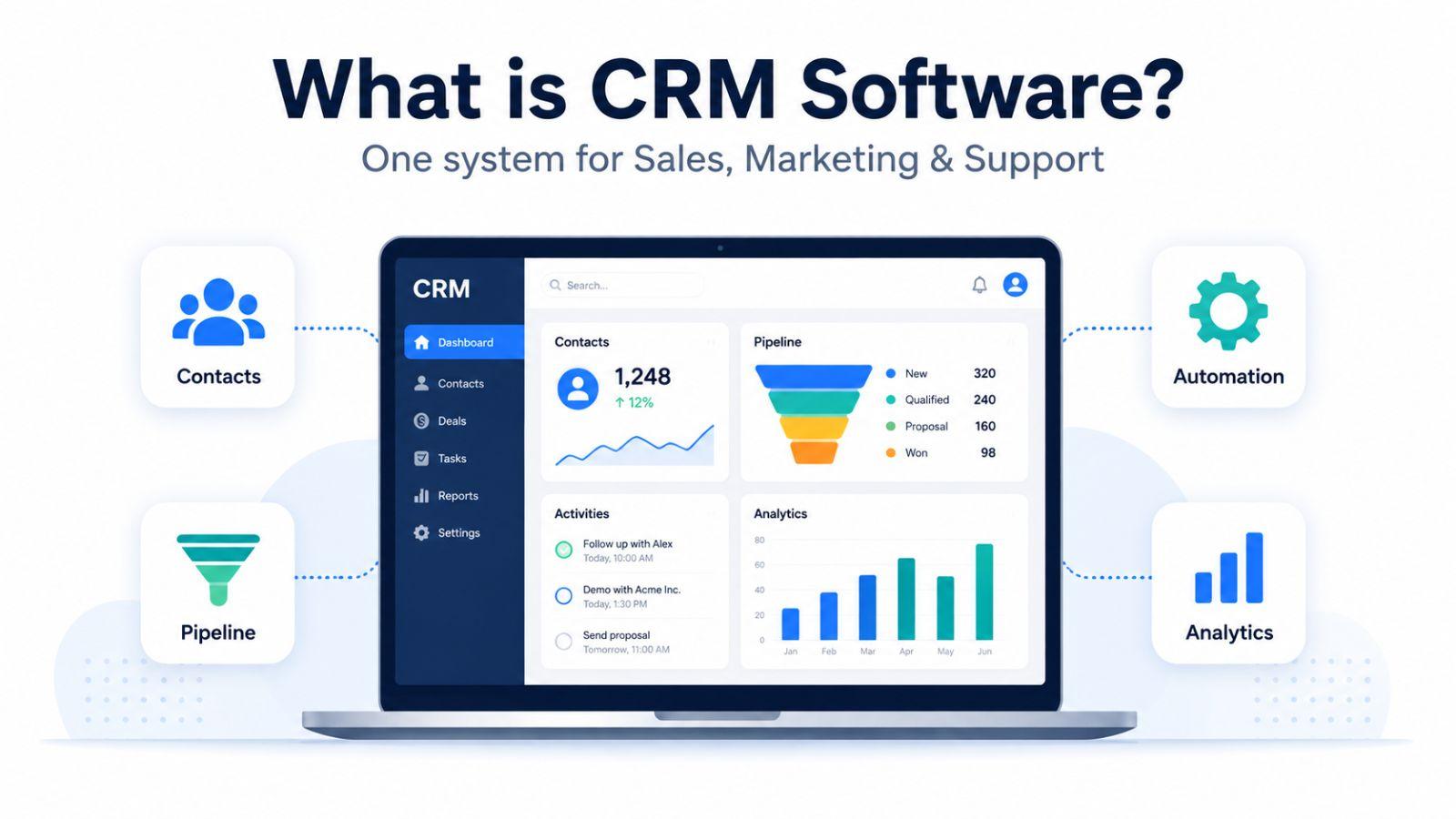
What Is CRM Software and How Does It Work? A Complete 2026 Guide for Businesses
CRM software helps businesses manage customer relationships, automate sales, marketing, and support, and centralize customer data in one platform. This guide explains how CRM works, its key features, benefits, AI-powered capabilities, development costs, and how to choose the right CRM solution for your business in 2026.