





How to Create an AI Roadmap for Your Business A Step-by-Step Guide

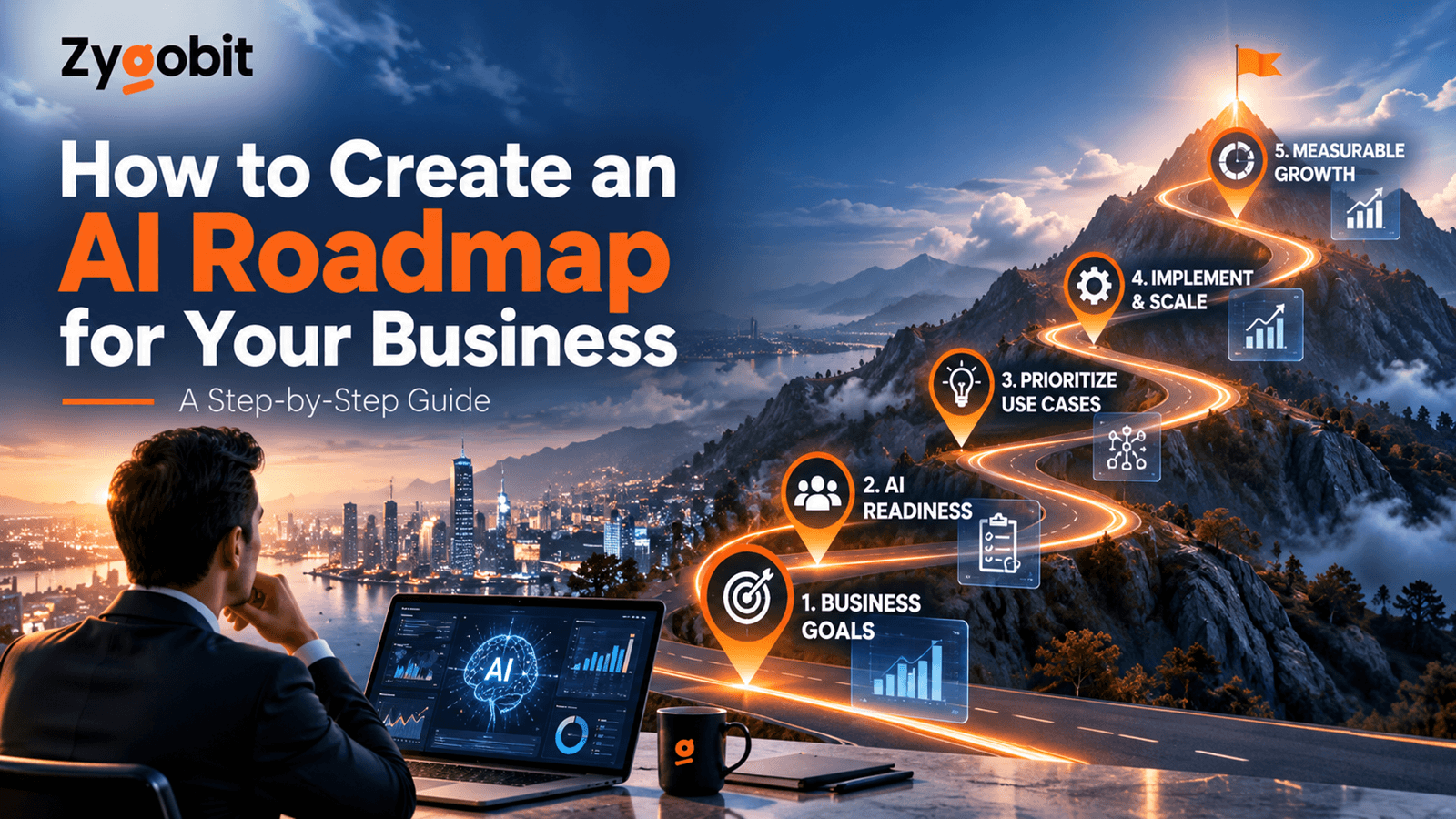
Discover how to create an effective AI roadmap for your business with this step-by-step guide. Learn how to assess AI readiness, identify high-value use cases, prioritise opportunities, estimate implementation costs, and measure results. Explore how AI roadmap consulting helps businesses reduce risks, make smarter technology investments, and achieve sustainable growth through artificial intelligence.
At Zygobit, our approach to AI consulting begins with understanding the business problem rather than selecting technology immediately.
We help businesses evaluate their current workflows, identify valuable AI opportunities, assess technical feasibility, and prepare actionable implementation plans.
Our AI consulting process focuses on:
Understanding Business Objectives
We identify the operational challenges and measurable outcomes that matter most.
Evaluating AI Opportunities
We assess existing data, systems, and workflows to determine which applications are technically feasible and commercially worthwhile.
Preparing an Implementation Roadmap
We help define the recommended first project, expected scope, estimated costs, technical requirements, and performance indicators.
Supporting Technical Execution
When custom development is appropriate, our engineering capabilities can support the implementation of AI-powered applications, integrations, and automation solutions.
Our objective is to help businesses make informed technology decisions and avoid unnecessary development investments.
Explore our AI consulting and roadmap development services to understand how we help organisations move from AI ideas to practical implementation plans.
Frequently Asked Questions
What is AI roadmap consulting?
AI roadmap consulting is a strategic service that helps businesses identify AI opportunities, evaluate technical readiness, prioritise potential projects, and create an implementation plan aligned with their business goals.
How long does it take to create an AI roadmap?
The timeline depends on business complexity, available information, and the depth of assessment required. A narrowly scoped engagement may be completed more quickly than a roadmap covering multiple departments and integrated systems.
What should an AI implementation roadmap include?
An AI implementation roadmap should include business objectives, readiness findings, prioritised use cases, technical requirements, cost estimates, implementation phases, risk considerations, and measurable performance indicators.
Can small businesses benefit from AI roadmap consulting?
Yes. Small businesses with limited budgets may benefit from prioritising AI opportunities before committing to software development. In some cases, existing automation tools may provide better value than custom AI systems.
What is the difference between AI consulting and AI development?
AI consulting focuses on deciding what should be built, why it matters, and whether the investment is justified. AI development focuses on engineering, integrating, testing, and deploying the selected solution.
Should businesses invest in AI before improving their existing processes?
Not always. If business processes are poorly defined or data quality is insufficient, addressing these foundational problems may be the more effective first step.
Conclusion
Artificial intelligence can create meaningful opportunities for businesses, but successful implementation requires a clear strategy.
An effective AI roadmap connects business objectives with practical technology decisions, realistic budgets, and measurable results.
By assessing readiness, identifying suitable use cases, comparing implementation options, and starting with focused pilots, organisations can reduce uncertainty and make more informed AI investments.
Whether you are exploring AI for the first time or planning a larger digital transformation, the right roadmap can help you decide where to invest and what to build next.

Ready to build your next digital product?
Talk to Zygobit about web apps, mobile apps, AI solutions, automation, and scalable software development tailored to your business goals.
Explore Related Articles
More reading on web, mobile, AI, and product engineering from the Zygobit team.
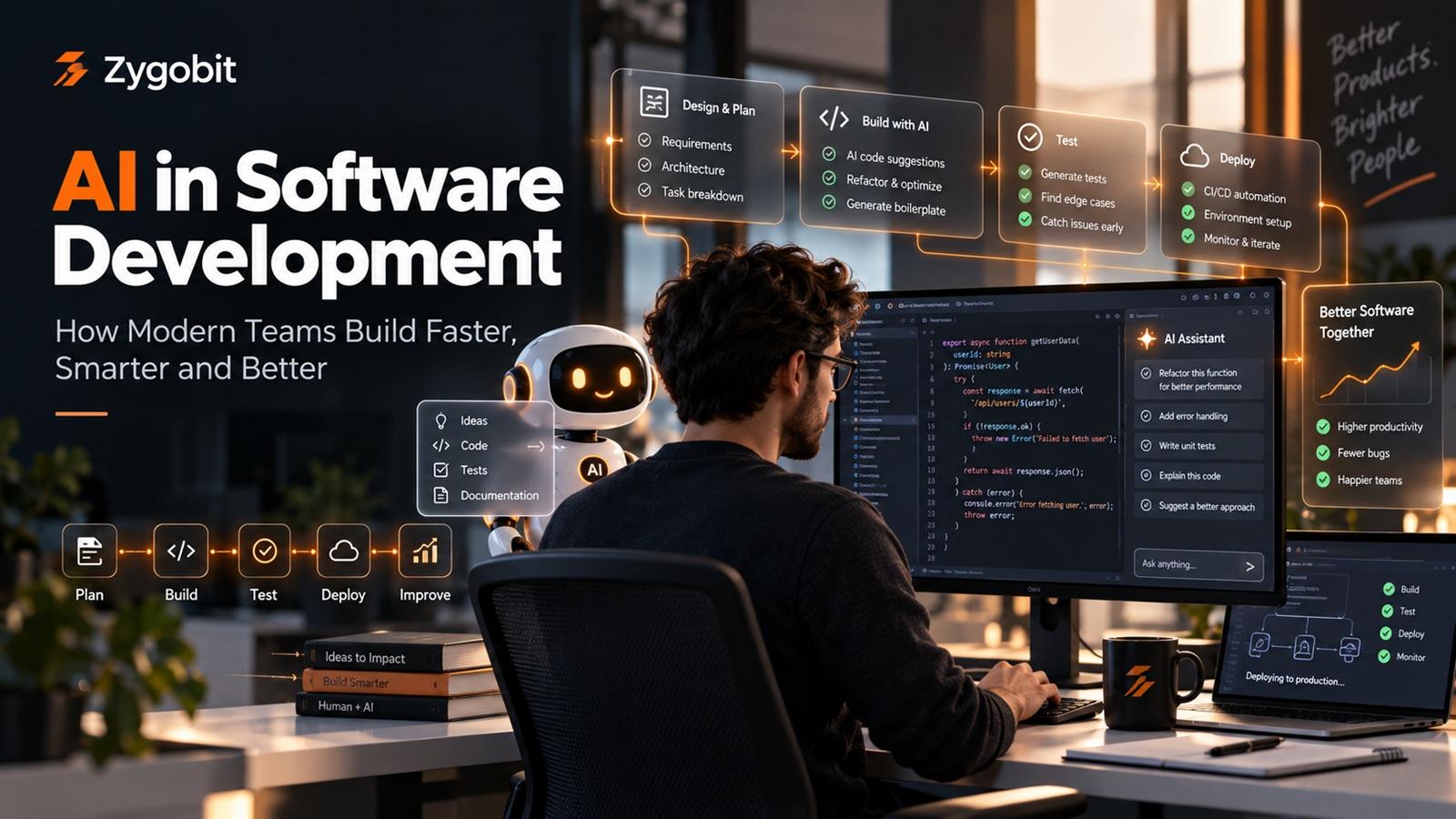
AI in Software Development: How Modern Teams Build Faster, Smarter and Better
Discover how AI is transforming software development across coding, testing, reviews, automation, and deployment. Learn how Zygobit helps businesses build smarter, faster, and more scalable AI-powered software solutions.
Top 10 AI Development Companies in USA to Build Next-Gen AI Products in 2026
Discover the top 10 AI development companies in the USA for 2026 helping businesses build next-gen AI products. Explore leading firms specializing in Generative AI, Agentic AI, machine learning, RAG, automation, web and mobile product engineering. See why Zygobit stands out as an AI-first development partner for startups and growing businesses looking to turn innovative ideas into scalable, production-ready AI solutions.
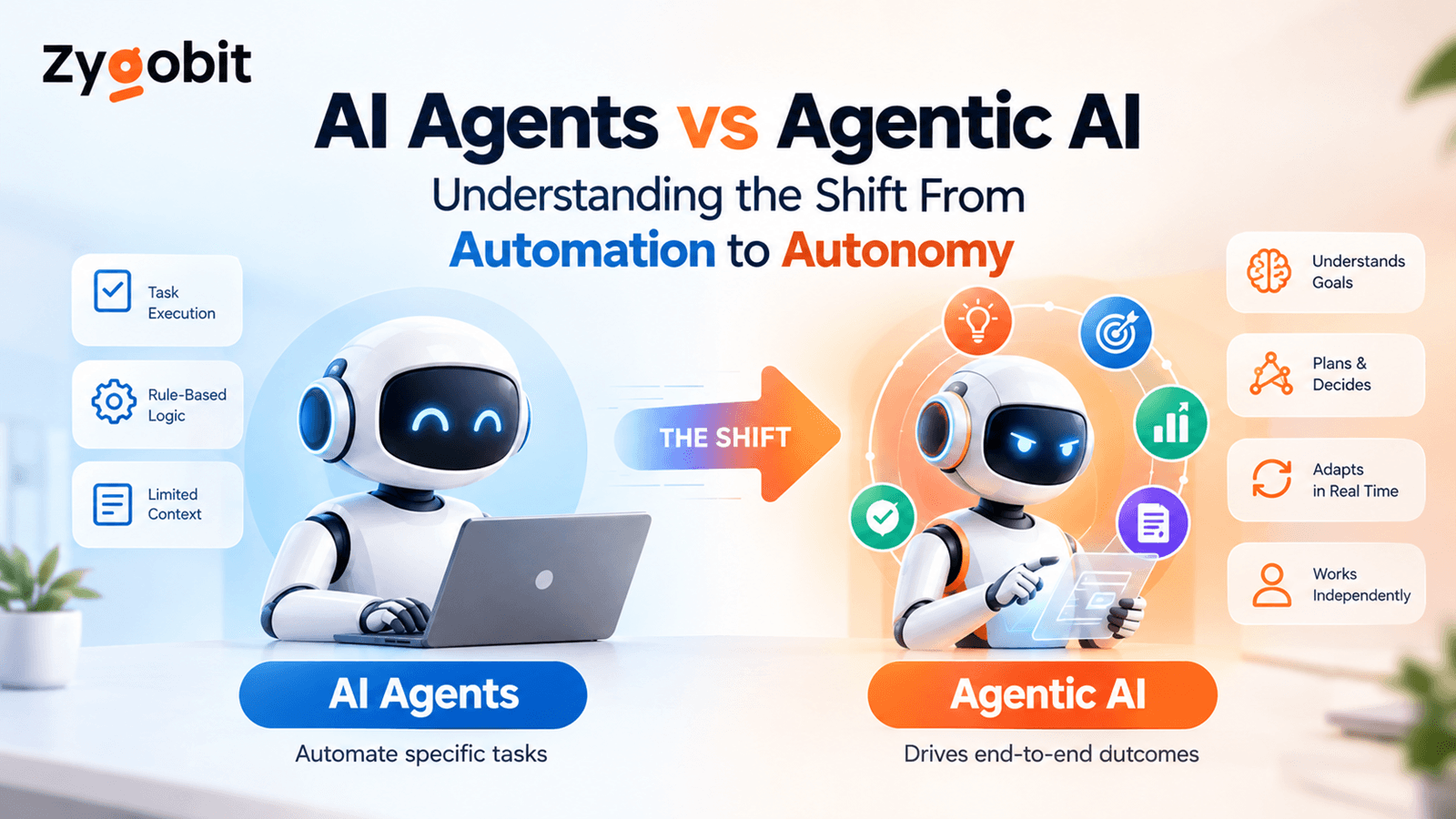
AI Agents vs Agentic AI Understanding the Shift From Automation to Autonomy
AI agents are changing business automation by moving beyond simple responses to intelligent action. This article explains the difference between AI agents and agentic AI, including planning, tool use, workflow orchestration, state management, human approvals, security, observability, and enterprise use cases.