


AI Statistics 2026 for Small Businesses, Usage and Adoption Numbers

More than 50 checked AI statistics for US small businesses in 2026, from Census Bureau and Federal Reserve data. Adoption, usage, chatbots, voice AI, costs, time saved and what holds owners back. Updated every two weeks.
Last updated November 11, 2026. We check the Census Bureau numbers every two weeks and update this page when a new survey comes out.
How many small businesses really use AI? Ask five surveys and you get five answers, from about 1 in 4 to almost 9 in 10. Most articles pick the biggest number and move on. We did the opposite. We went back to the original reports, read how each one asked the question, and kept only numbers we could check ourselves.
Below are more than 50 AI statistics for US small businesses. Each one links to its source and shows when the data was collected. Government data comes first. Surveys from companies that sell AI tools are labeled, so you can judge them for yourself.
The short answer. The U.S. Census Bureau says 24.2% of US businesses used AI in the two weeks before its latest survey, which ended November 1, 2026. That is up from 17.2% in December 2025. The Federal Reserve says 46% of small employers use AI in some way. Private surveys go higher, up to 86%. Very few businesses have AI built deep into how they work. Only 7% of small employers that use AI say it is fully built in.
Key AI statistics at a glance
- 24.2% of US businesses used AI in the last two weeks, in the Census survey collected October 19 to November 1, 2026 (U.S. Census Bureau).
- 46% of small employer firms say they or their staff use AI (Federal Reserve Banks, published March 2026).
- Only 7% of small employers that use AI have fully built it into the business (Federal Reserve Banks).
- 83% of small employers that use AI use it for writing or marketing (Federal Reserve Banks).
- 71% of small employers that use AI say it made them more productive (Federal Reserve Banks).
- 73% of AI users in Goldman Sachs' small business program spend less than $100 a month on AI tools (Goldman Sachs, October 2026).
- 58% of small businesses miss at least one call from a possible customer in a typical week (Upfirst, a vendor survey, October 2026).
- 87% of customers say a company that uses AI for service must offer a way to reach a person (Gartner, August 2026).
Why AI adoption numbers do not agree
The gap between 24.2% and 86% is not a mistake. The surveys ask different people different questions.
The Census Bureau asks a nationally representative sample of all US businesses whether they used AI in a business function in the last two weeks. That is a strict question, and it covers every kind of business, from a two-person cleaning company to a factory. The Federal Reserve asks small employers whether the business or any of its staff use AI for work. That counts an owner who asks ChatGPT to draft an email. Private surveys often reach owners who already use online tools, or members of a business program, so their numbers run higher.
So which number should you use? If you want one fair number for all US businesses, use the Census figure. If you want to talk about small employers, use the Federal Reserve. Use the private surveys for detail on cost, time saved and tools, and say who was asked.
AI adoption statistics
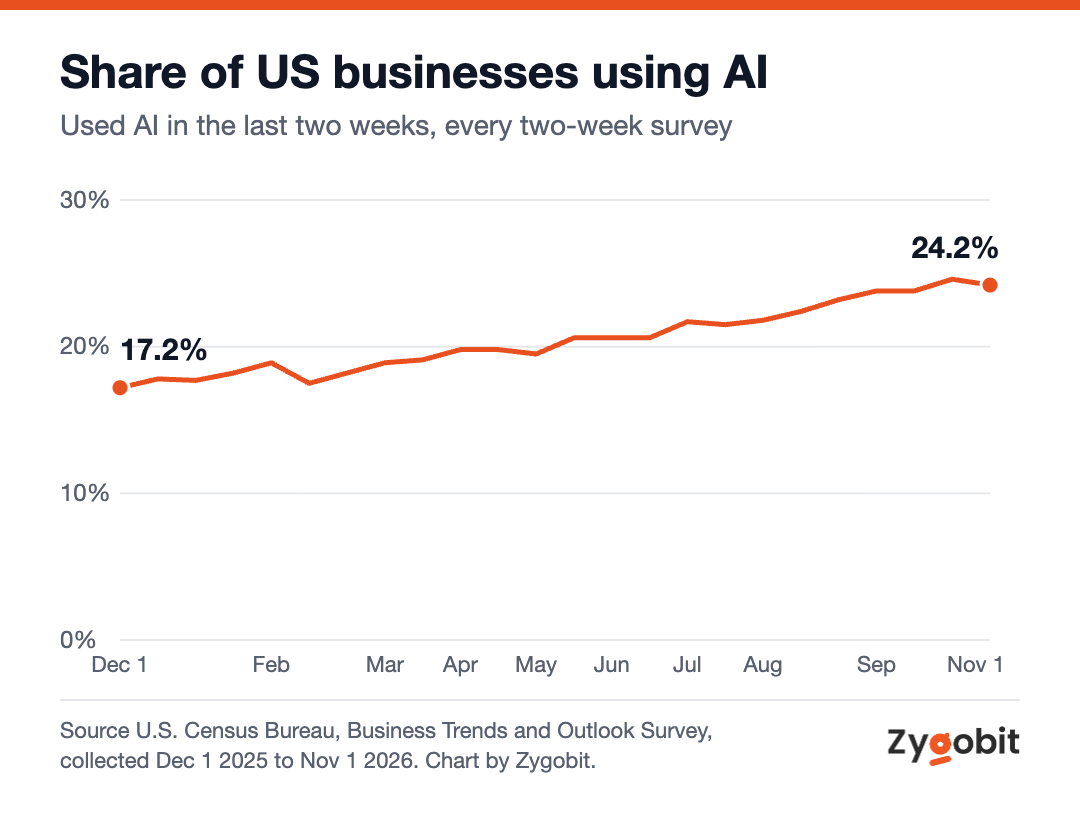
- 24.2% of US businesses used AI in a business function in the last two weeks. The survey ran October 19 to November 1, 2026 and came out November 5 (U.S. Census Bureau, Business Trends and Outlook Survey).
- That share was 17.2% in the survey that ran December 1 to 14, 2025. It has climbed by 7 points in about eleven months. The newest survey dipped slightly from 24.6% two weeks earlier. A new survey sample started with it, and more firms answered that they did not know (13.9%, up from 9.6%) (U.S. Census Bureau).
- 27.6% of US businesses expect to use AI in the next six months (U.S. Census Bureau, October 19 to November 1, 2026).
- In May 2026, the Information sector (39.7%) and Finance and Insurance (33.9%) used AI the most. Retail was below the national rate, at about 14% (U.S. Census Bureau story, May 26, 2026).
- 46% of small employer firms say the business or its staff use AI. Another 15% plan to start within a year. 33% have no plans, and 6% are unsure (Federal Reserve Banks, Small Business Credit Survey, fielded September to November 2025).
- In Delaware, New Jersey and Pennsylvania, 37% of small employers use AI, about 9 points below the national 46% (Federal Reserve Bank of Philadelphia).
- 58% of small businesses say they use generative AI, up from 40% in 2024 (U.S. Chamber of Commerce, August 18, 2025).
- 86% of graduates of the Goldman Sachs 10,000 Small Businesses program use AI, up from 56% two years earlier (Goldman Sachs, survey of 2,473 graduates, August 2026).
- 77% of US businesses in Intuit's tracking use AI regularly, up from 48% in July 2024 (Intuit QuickBooks 2026 AI Impact Report, May 12, 2026).
- 74% of small business owners are using or testing AI tools. The share with no plans to use AI fell from 30% in 2025 to 20% in 2026 (Bluevine, survey of 942 owners, April 2026).
AI use by business size
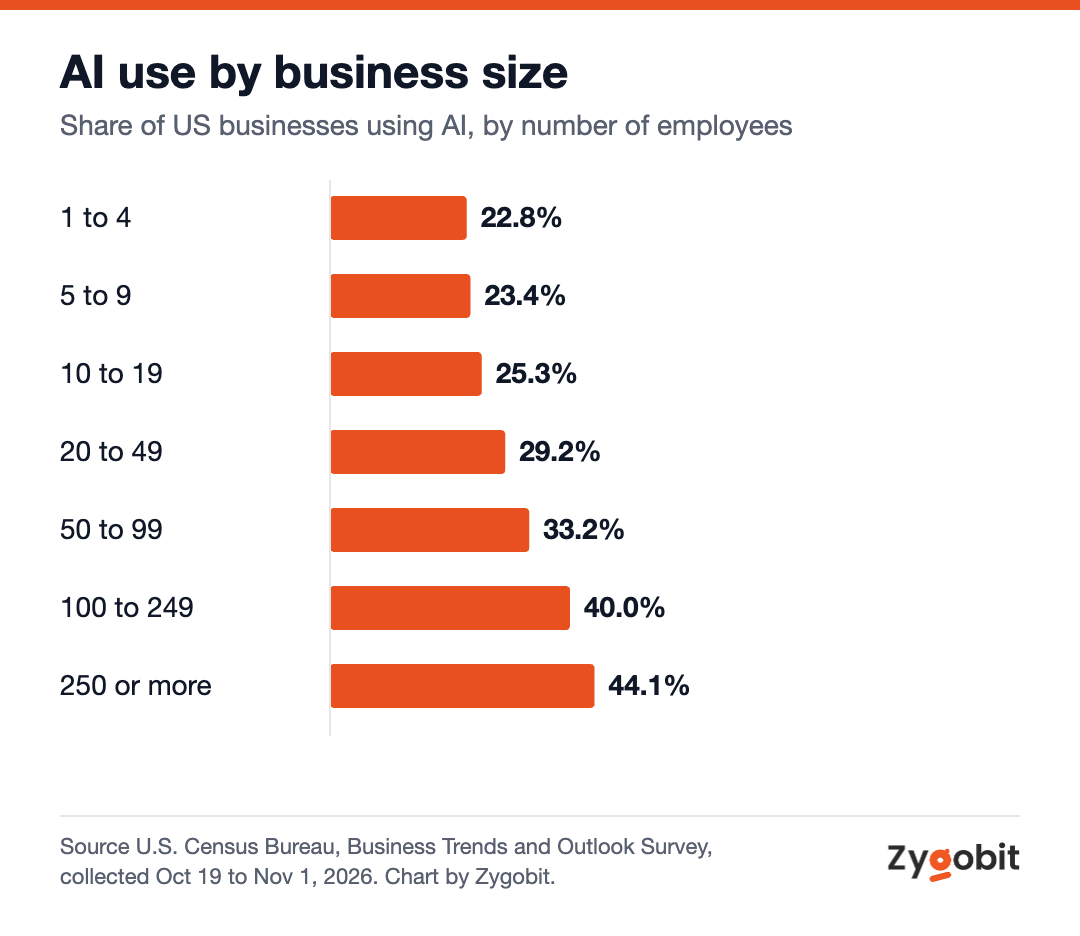
- 22.8% of businesses with 1 to 4 employees use AI, the lowest rate of any size group and a little below the national rate (U.S. Census Bureau, October 19 to November 1, 2026).
- Businesses with 5 to 9 employees are close behind at 23.4%, and 10 to 19 employees at 25.3% (U.S. Census Bureau).
- AI use climbs with size from there. It reaches 29.2% at 20 to 49 employees, 40.0% at 100 to 249 and 44.1% at 250 or more (U.S. Census Bureau).
- Small businesses are closing the gap. In 2025 the SBA's Office of Advocacy found small business AI use rose from 6.3% to 8.8% in six months, while large firms started at 11.1%. These figures use the older, stricter Census question (SBA Office of Advocacy, September 24, 2025).
AI usage statistics, what small businesses use AI for
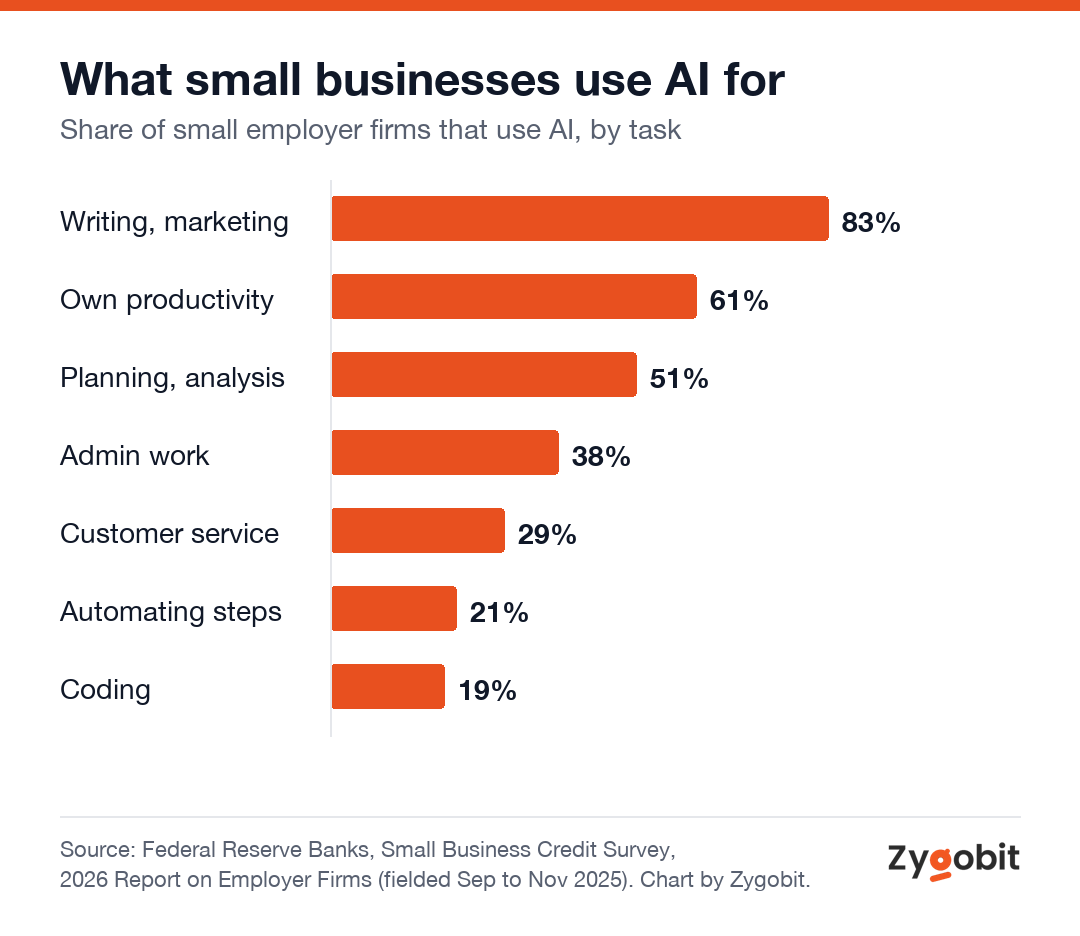
- Of small employers that use AI, 83% use it for writing or marketing, 61% for their own productivity and 51% for planning or analysis (Federal Reserve Banks).
- Fewer use it for admin work (38%), customer service (29%), automating steps in a process (21%) or coding (19%) (Federal Reserve Banks).
- Among all US firms that use AI, the most common business areas are sales and marketing (52%), strategy and business development (45%) and IT (41%) (Census Bureau working paper CES 26-25, April 2026).
- Use for financial analysis and business planning more than doubled, from 18% of AI users in 2024 to 42% in 2026. Use for written marketing fell from 74% to 65% (Goldman Sachs).
- 63% of AI users in the Goldman Sachs program use it every day (Goldman Sachs).
- Data analysis is now the top use for small businesses in Bluevine's survey at 39%, ahead of marketing and sales at 37% (Bluevine).
How deep AI goes inside small businesses
- Of small employers that use AI, 49% are still experimenting, 44% use it in some processes, and 7% have it fully built in (Federal Reserve Banks).
- Only 15% of Goldman Sachs program graduates have fully built AI into their core operations, even though 86% use it (Goldman Sachs).
- 57% of US firms that use AI use it in three or fewer business areas (Census Bureau working paper).
- 18% of AI users in the Goldman Sachs program use AI agents. Most rely on chat tools like ChatGPT, Claude or Gemini, or on AI built into software they already have (Goldman Sachs).
- 74% of owners who use AI have no written policy on how staff should use it (Goldman Sachs).
Chatbot statistics and AI customer service
- 51% of small businesses have added AI to customer service. Of those, 74% use AI chatbots and 51% use AI help centers (Talkdesk, a vendor survey of 400 owners, August 2025).
- Small businesses using AI in service report faster answers (65%), support around the clock (60%) and happier customers (40%) (Talkdesk).
- 94% of small businesses expect to keep or grow their customer service teams over the next two years (Talkdesk).
- 29% of small employers that use AI use it for customer service (Federal Reserve Banks). In Bluevine's survey the figure is 27% (Bluevine).
- 87% of customers say a company using AI for service must offer a way to reach a person. Half say AI makes their service contacts easier (Gartner, survey of 3,566 customers, February and March 2026).
AI voice agent and phone statistics
All figures in this section come from one vendor report. Upfirst sells an AI answering service. Its surveys used an opt-in online panel, not a random sample, and the report says so.
- 58% of small businesses miss at least one call from a possible customer in a typical week. At 10 to 49 employees, it is 91% (Upfirst, October 14, 2026).
- 78% of consumers say they have bought from a competitor because a business did not answer or call back (Upfirst).
- Only 24% of consumers left a voicemail the last time a local business did not answer. 22% called a different business right away (Upfirst).
- Use of AI receptionists rises with size, from 2.4% of solo operators to 41.5% of businesses with 50 or more employees (Upfirst).
- 43% of consumers are comfortable with a small business using an AI receptionist and 29% are not. 80% want the AI to say it is an AI at the start of the call (Upfirst).
- In 677,562 calls to 2,967 US businesses, 23.1% came in outside 8am to 6pm on weekdays. The median call lasted 69 seconds (Upfirst, calls from January 2025 to August 2026).
- The top worry owners have about AI phone answering is that callers would be annoyed or want a person (51%). Cost came third, at 12% (Upfirst).
AI cost statistics for small businesses
- 33% of small business owners spend nothing on AI tools. 28% spend $25 to $99 a month, 16% spend $100 to $249, and 10% spend $250 or more (Bluevine, April 2026).
- 73% of AI users in the Goldman Sachs program spend less than $100 a month, and 16% use only free tools (Goldman Sachs).
- Only 12% of US businesses in Intuit's payment data paid for dedicated AI tools between 2021 and 2025. Of those that paid in 2024, 86% were still paying in 2025 (Intuit QuickBooks).
- 24% of owners name the cost of AI tools as a barrier to using more AI (Bluevine).
Custom AI is a different budget from these tool fees. Our AI agent development cost guide covers what a built-for-you agent costs.
Time saved and results from AI
- 48% of small businesses that use AI save at least 4 hours a week. 14% save 10 hours or more (Bluevine).
- Of small employers that use AI, 71% report higher productivity, 39% better quality and 31% higher sales (Federal Reserve Banks).
- 78% of US businesses say AI has improved their productivity, up from 46% in July 2024. 43% say it raised revenue, and 2% say it lowered revenue (Intuit QuickBooks).
- 52% of small businesses that use AI say they see a return on it. 24% say they have not seen one yet (Bluevine).
- 65% of employees in organizations that use AI say it has helped their productivity (Gallup, May 2026).
AI, jobs and workers
- Only 2% of US firms report cutting jobs because of AI. 66% of firms that see an effect on tasks say AI only helps workers do their tasks (Census Bureau working paper).
- Most small employers that use AI saw no change in labor costs because of it (Federal Reserve Banks).
- 82% of small businesses that use AI grew their workforce over the past year (U.S. Chamber of Commerce).
- 21% of US workers say at least some of their work is done with AI, up from 16% a year earlier. 65% still use AI little or not at all (Pew Research Center, September 2025).
- 15% of US employees use AI every day at work, and 30% use it a few times a week or more (Gallup, May 2026).
- Workers who use AI chatbots at work use them most for research (57%), editing writing (52%) and drafting (47%) (Pew Research Center, February 25, 2025).
What holds small businesses back
- The top problems for small employers that use AI are accuracy (46%) and making tools fit the business (43%) (Federal Reserve Banks).
- For those planning to start, the top problems are finding the right tools (54%) and the time it takes to set up or train staff (37%) (Federal Reserve Banks).
- Of small employers with no plans to use AI, 56% say it does not apply to their business and 30% say they prefer not to use it (Federal Reserve Banks).
- Among all US firms not planning to use AI, 65% say it does not apply to them, 22% say they do not know enough about what it can do, and 20% worry about privacy or security (Census Bureau working paper).
- 82% of small business owners have hit at least one barrier. Data security worries rose from 23% in 2025 to 33% in 2026 (Bluevine).
- Only 22% of owners are fully confident AI can do simple tasks without a person checking (Bluevine).
- 73% of small business owners say they would benefit from more training to use AI well (Goldman Sachs 10,000 Small Businesses Voices, March 17, 2026).
What these numbers mean for a small business
Three things stand out to us.
First, most small businesses use AI the easy way. They use a chat tool for writing and quick questions. That is useful, but it is not where the hours are. The jobs that eat time are the repeated ones, like answering the same customer questions, chasing missed calls, and entering data from one system into another.
Second, the gap is depth, not access. Tools are cheap. Most owners spend less than $100 a month. Yet only 7% of small employers that use AI have it fully built in. The hard part is fitting AI to your own process and checking its work, which matches the top problems owners report.
Third, customers still want a person within reach. Any AI that talks to customers, whether a chatbot or a phone agent, should hand off to a person cleanly. It should also say it is an AI. Our guide to AI customer service for small business shows how to set that up.
If you are planning your first real AI project, our guides on AI automation for small businesses and the AI receptionist for small business walk through costs and setup in plain steps.
How we built this page
- Sources. We used government data first (Census Bureau, Federal Reserve Banks, SBA Office of Advocacy). Then research groups (Pew, Gallup, Gartner) and business surveys (U.S. Chamber, Goldman Sachs, Intuit, Bluevine). Talkdesk and Upfirst sell AI customer service tools, and we say so next to their numbers.
- No rounding. Every number is shown as the source printed it. We did not combine surveys or make our own estimates.
- Dates. Each statistic shows when the data was collected or published. Many survey reports come out months after the survey ran.
- Census question changes. In November 2025 the Census Bureau changed its question from AI use "in producing goods or services" to AI use "in any business function." Numbers from before and after are not comparable, so our trend chart starts in December 2025. Since October 22, 2026, the Census file words the question as "Super Intelligence or SI (formerly referred to as Artificial Intelligence or AI)." We still call it AI here.
- Gaps. The Census survey collected no data from October 6 to November 16, 2025, because of the federal shutdown.
- What we left out. We dropped widely shared numbers we could not trace to an original report, such as the claim that 62% of small business calls go unanswered.
- Updates. The Census Bureau publishes new data every two weeks. We plan to update this page after each release and change the date at the top.
Embed or cite this page
You are welcome to use any statistic or chart on this page in your own article, report or slides. Please credit Zygobit and link to this page. Use this credit line.
Source Zygobit, zygobit.com/blogs/ai-statistics-small-business
To embed a chart, copy this code and change the image link to the chart you want.
<a href="https://www.zygobit.com/blogs/ai-statistics-small-business"><img src="https://zygobit-images-new.s3.ap-south-1.amazonaws.com/blog-images/1794393022109-ai-statistics-chart-1-census-ai-use.png" alt="Share of US businesses using AI, Census Bureau data" width="1080" height="820"></a> <p>Source <a href="https://www.zygobit.com/blogs/ai-statistics-small-business">Zygobit</a>, using U.S. Census Bureau data</p>Sources
- U.S. Census Bureau, Business Trends and Outlook Survey, national and employment size class data, collected through November 1, 2026, published November 5, 2026. census.gov/hfp/btos/data
- U.S. Census Bureau, "Large Firms With at Least 20 Employees Biggest AI Users," May 26, 2026. census.gov
- Bonney, Breaux, Dinlersoz, Foster, Haltiwanger and Pande, "The Microstructure of AI Diffusion," Census Bureau working paper CES 26-25, April 2026. census.gov
- Federal Reserve Banks, "2026 Report on Employer Firms, Findings from the 2025 Small Business Credit Survey," March 2026. fedsmallbusiness.org
- Federal Reserve Bank of Philadelphia, "How Is AI Impacting Small Business Performance? Evidence from the Third District," 2026. philadelphiafed.org
- SBA Office of Advocacy, "New Advocacy Article Highlights Small Businesses Closing the AI Adoption Gap," September 24, 2025. advocacy.sba.gov
- U.S. Chamber of Commerce, Empowering Small Business report, August 18, 2025. uschamber.com
- Goldman Sachs 10,000 Small Businesses, "The AI Economy Is a Small Business Economy," October 2026, survey of 2,473 graduates by Babson College, August 10 to 24, 2026. goldmansachs.com
- Goldman Sachs 10,000 Small Businesses Voices, "AI Presents a Major Opportunity for Small Businesses," March 17, 2026. goldmansachs.com
- Intuit QuickBooks, "2026 AI Impact Report," May 12, 2026. intuit.com
- Bluevine, "2026 Small Business AI Trends Report," July 15, 2026, survey of 942 owners, April 7 to 9, 2026. bluevine.com
- Talkdesk, small business AI survey, October 7, 2025, 400 owners surveyed by Pollfish in August 2025. talkdesk.com
- Upfirst, "The State of Voice AI for Small Businesses 2026," October 14, 2026. upfirst.ai
- Gartner, "Gartner Survey Finds 87% of Customers Say Companies Using GenAI for Customer Service Must Provide Access to a Human Agent," August 4, 2026. gartner.com
- Pew Research Center, "About 1 in 5 U.S. workers now use AI in their job, up since last year," October 6, 2025. pewresearch.org
- Pew Research Center, "Workers' experience with AI chatbots in their jobs," February 25, 2025. pewresearch.org
- Gallup, "AI in the Workplace" indicator, data as of May 2026. gallup.com
Frequently Asked Questions
What percentage of small businesses use AI in 2026?
It depends on the survey. The Census Bureau says 24.2% of all US businesses used AI in the two weeks before its latest survey, which ended November 1, 2026. The Federal Reserve says 46% of small employers use AI in some way. Private surveys of owners range from 58% to 86%.
What is the most reliable AI adoption statistic?
The Census Bureau's Business Trends and Outlook Survey. It uses a nationally representative sample of all US businesses and repeats the same question every two weeks, so you can see the trend.
What do small businesses use AI for most?
Writing and marketing. 83% of small employers that use AI use it for that, followed by personal productivity at 61% and planning or analysis at 51%, according to the Federal Reserve.
How much do small businesses spend on AI?
Most spend very little. In Bluevine's 2026 survey, 33% spend nothing and 28% spend $25 to $99 a month. In Goldman Sachs' program, 73% of AI users spend less than $100 a month.
How many hours does AI save a small business?
In Bluevine's 2026 survey, 48% of small businesses that use AI save at least 4 hours a week, and 14% save 10 hours or more.
Is AI replacing small business jobs?
Not much so far. A Census Bureau study found only 2% of firms cut jobs because of AI. Most small employers in the Federal Reserve survey saw no change in labor costs.
Can I use these statistics and charts?
Yes. Please credit "Source Zygobit, zygobit.com/blogs/ai-statistics-small-business" and link to this page.

Ready to build with generative AI?
Talk to Zygobit about LLM applications, chatbots and copilots built on your data and inside your product.
Explore Related Articles
More reading on web, mobile, AI, and product engineering from the Zygobit team.
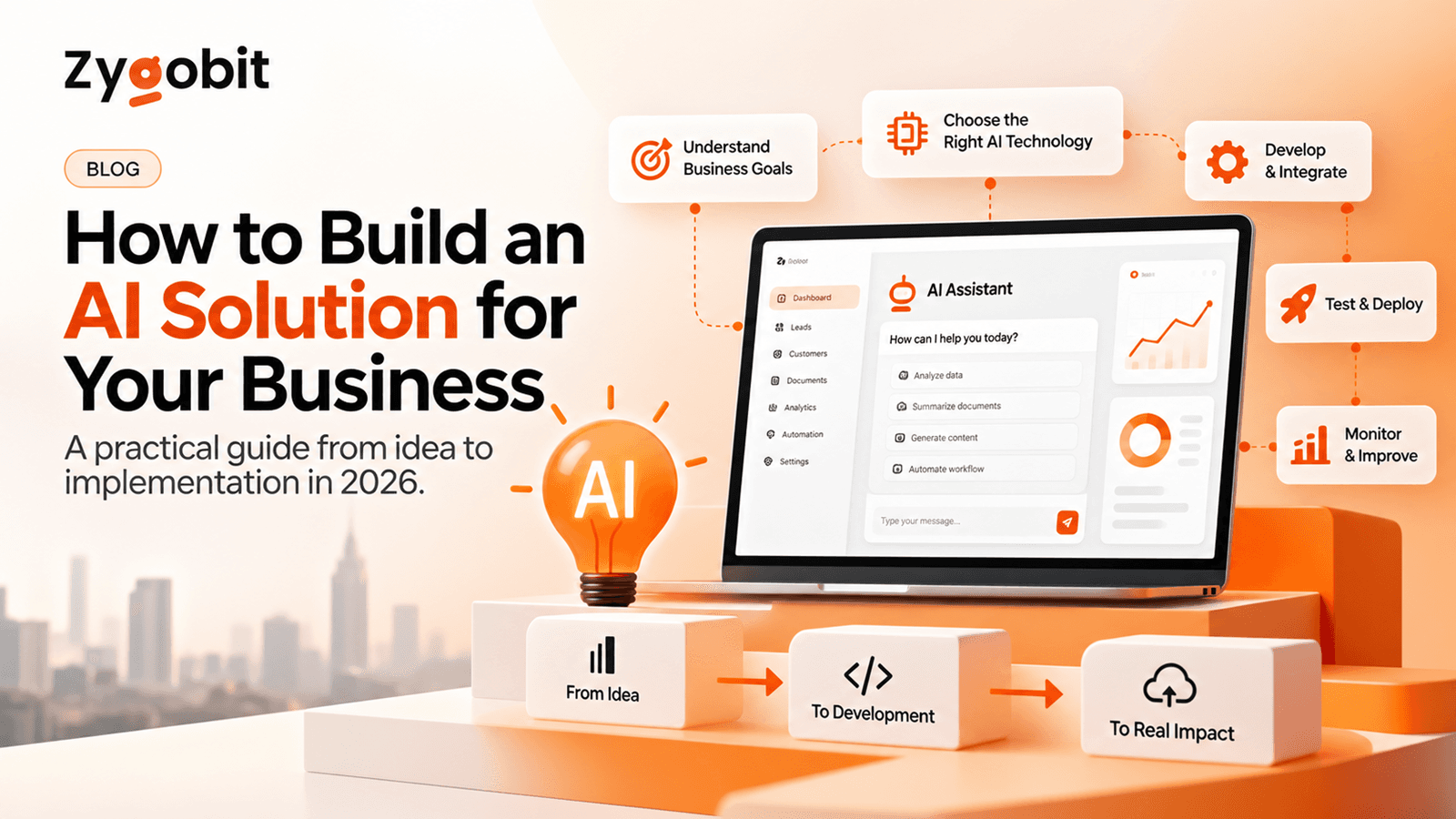
How to Build an AI Solution for Your Business: A Practical Guide for 2026
Learn how to build an AI solution for your business in 2026. Explore custom AI development, AI integration, machine learning, and automation. Discover the key steps from planning and choosing the right technology to development, testing, and deployment to create scalable, secure, and cost-effective AI solutions.
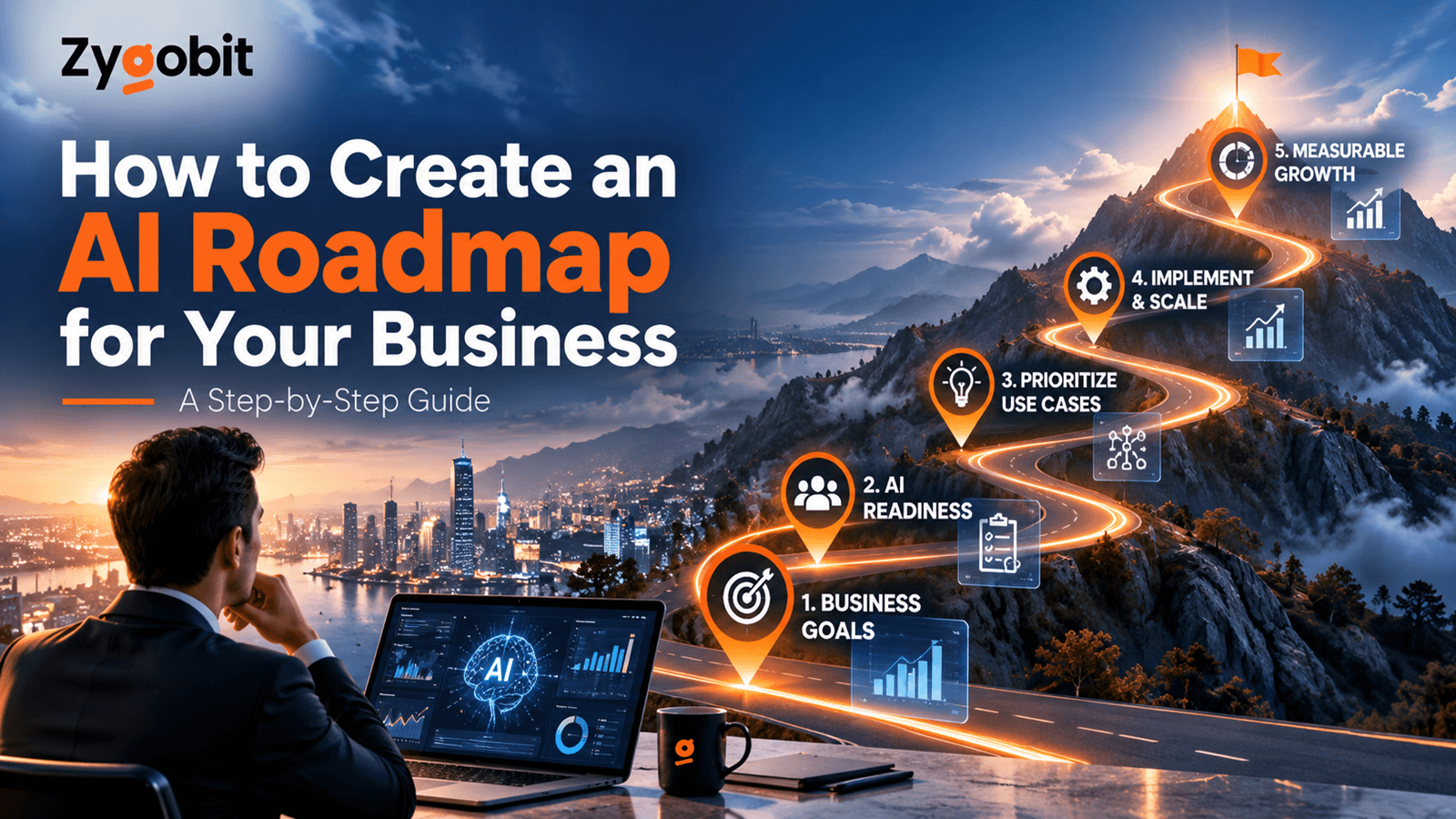
How to Create an AI Roadmap for Your Business A Step-by-Step Guide
Discover how to create an effective AI roadmap for your business with this step-by-step guide. Learn how to assess AI readiness, identify high-value use cases, prioritise opportunities, estimate implementation costs, and measure results. Explore how AI roadmap consulting helps businesses reduce risks, make smarter technology investments, and achieve sustainable growth through artificial intelligence.
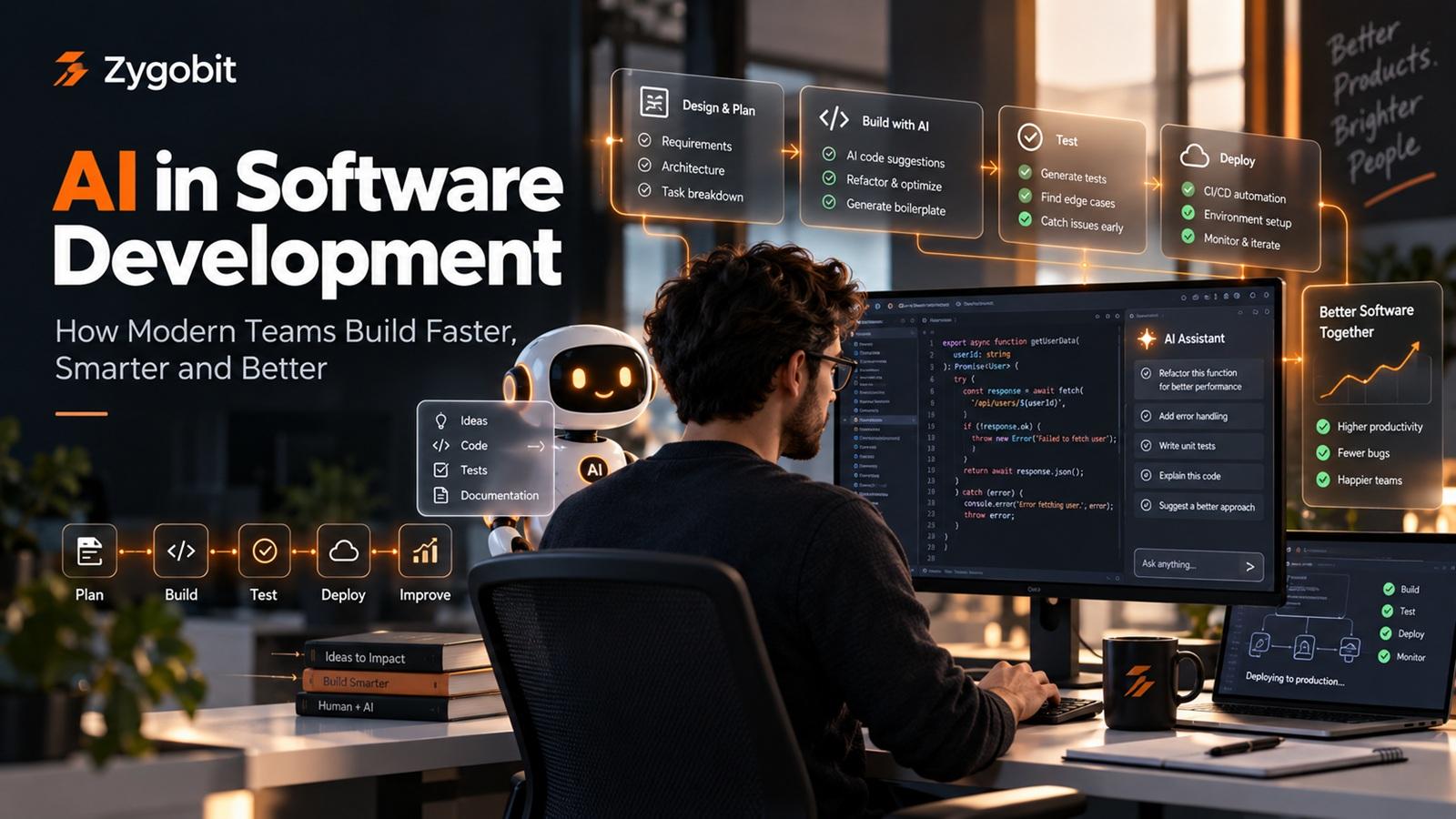
AI in Software Development: How Modern Teams Build Faster, Smarter and Better
Discover how AI is transforming software development across coding, testing, reviews, automation, and deployment. Learn how Zygobit helps businesses build smarter, faster, and more scalable AI-powered software solutions.