





The Dedicated Development Team Model A Complete Guide for Growing Businesses

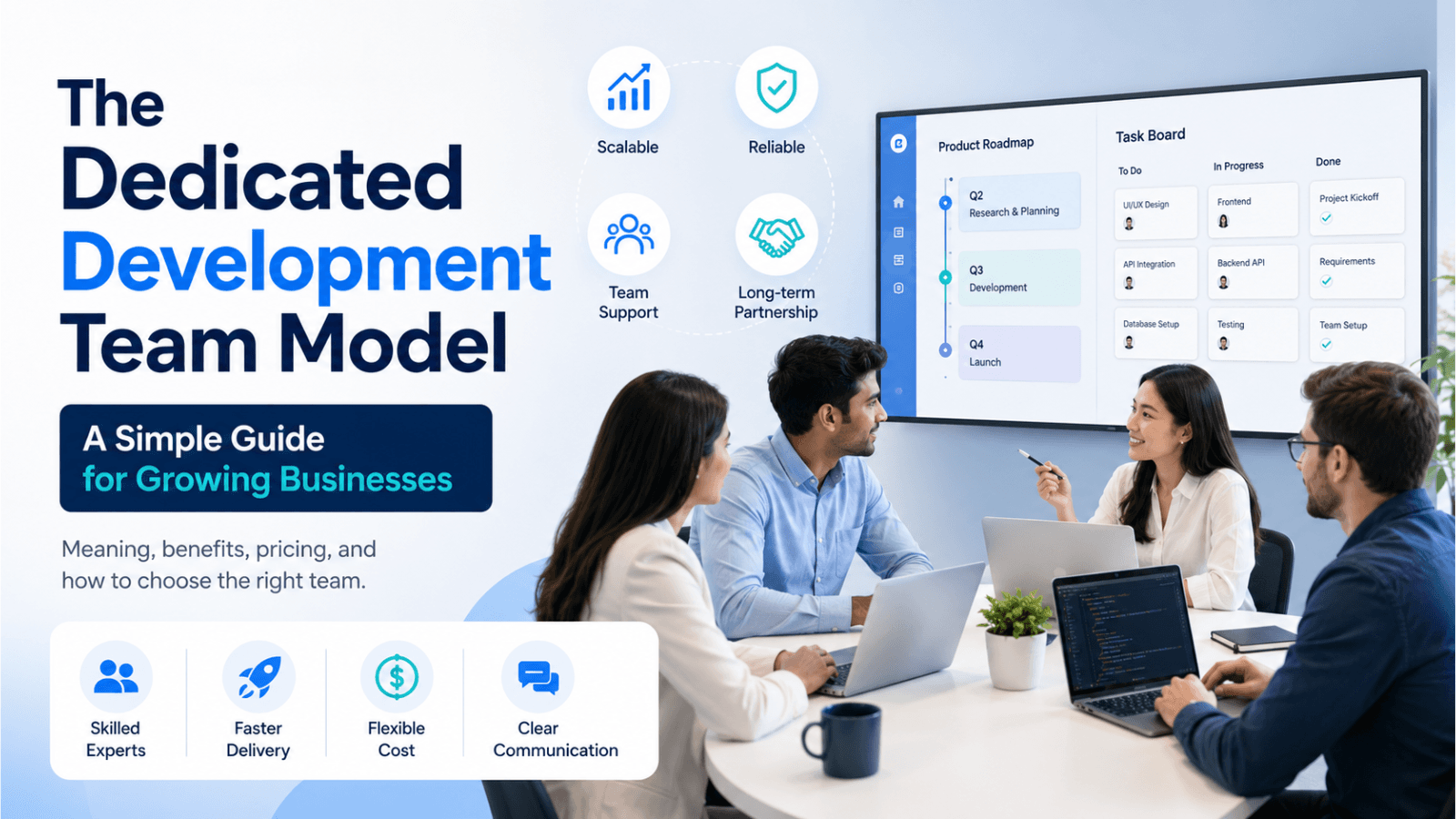
How to build software continuously with a stable, exclusive engineering team without the overhead of hiring locally. Definition, benefits, real costs, and how to choose the right partner.
What's inside
- What is a dedicated development team?
- How the model works in practice
- Key benefits of the DDT model
- When should you hire a dedicated team?
- How the DDT model compares to other engagement models
- Who's on a dedicated development team?
- How to hire a DDT partner: a step-by-step guide
- The financials: what a dedicated team really costs
- How to make the partnership work long-term
- Conclusion
- Frequently asked questions
Software is never really finished. Products evolve, markets shift, and requirements change in ways no upfront plan anticipates. For small and growing businesses, that creates a genuine tension: how do you build quickly and confidently without locking yourself into rigid fixed-scope contracts or building an internal team you may not need at full size a year from now?
For a growing number of companies, the answer is the dedicated development team (DDT) model. At its core, it gives you a stable, long-term team of engineers who work exclusively on your product. Unlike freelancers or one-off vendors, a dedicated team stays with the project, accumulates knowledge, and aligns tightly with your business goals over months and years.
The model has grown alongside distributed work. Research on flexible, distributed operating models has repeatedly linked them to meaningful productivity gains in knowledge work. McKinsey has documented double-digit improvements when companies get remote and hybrid delivery right. The appeal for business owners is practical: you gain engineering capacity without the fixed overhead of local hiring, you keep control of priorities and the roadmap, and you scale capacity as the business grows.
This guide breaks down exactly how the model works, when it makes sense, what it costs, and how to run the partnership well.
What is a dedicated development team?
The dedicated development team model sits between building everything in-house and outsourcing to a traditional, project-based vendor. It's designed for companies that want long-term collaboration without long-term employment commitments.
In this model, you partner with a provider that assembles a team specifically for your product. That team works only for you, follows your processes, and delivers against your product vision. You decide what gets built and why. The provider owns how the work is supported recruitment, HR, payroll, compliance, infrastructure, and retention.
The defining quality is stability. The same people stay on the project for the long haul. That continuity lets you make decisions faster and compounds a knowledge base the team understands both the codebase and the business context behind it. Industry analysts expect this hybrid, distributed approach to keep displacing the fully in-house default; Gartner projects that the majority of digital product teams will rely on hybrid or distributed delivery models rather than purely internal ones.
The short definition
A dedicated software development team is a long-term, client-directed delivery unit made up of professionals who work full-time on a single product. Typical roles include developers, QA engineers, and a project or product lead, with the exact composition shaped by your technical needs and domain.
Unlike project-based outsourcing, the engagement is usually monthly and open-ended. Priorities can change from sprint to sprint without renegotiating the contract which makes the model well-suited to products that are still evolving, especially startups and scaling businesses. Operationally, the team behaves like an extension of your company: they join your planning sessions, report transparently, and use your project-management tools. You can interview candidates, influence hiring, and adjust the team as needs change.
How the model works in practice
Most engagements follow the same rhythm once the team is in place:
Discovery and team design. You define goals, technologies, and seniority; the provider proposes a team composition and presents vetted candidates for you to interview.
Onboarding. The team gets access to your tools, code, and context. A short pilot or trial sprint is common to validate the collaboration before committing further.
Ongoing delivery. The team works in your sprints, joins your standups and reviews, and ships on your cadence. You steer priorities; the provider keeps the team stable and productive.
Scaling. As traction changes, you add or reduce roles without the delay or risk of permanent hiring and firing.
Key benefits of the DDT model
Businesses adopt the dedicated team model to reach a balance of flexibility, predictability, and control. Five benefits stand out.
Cost-effectiveness without cutting corners
Instead of investing heavily in recruitment, onboarding, benefits, and infrastructure, you pay a transparent monthly rate tied to active development capacity. Geography is a major lever: accessing experienced engineers in regions such as Central and Eastern Europe or Latin America commonly reduces development cost by roughly 35–50% versus hiring comparable talent locally in the US or Western Europe, according to regional rate comparisons.
Crucially, that saving comes from structural differences in labor markets and operational overhead not from lower quality. The provider absorbs HR, compliance, and retention costs that in-house models chronically underestimate, freeing budget for product quality and growth.
Access to talent you couldn't hire locally
Skilled engineers are scarce, especially in cloud architecture, data engineering, and security. Korn Ferry estimates a global shortfall of about 4.3 million technology, media, and telecom workers by 2030, tied to trillions in unrealized revenue. A dedicated team opens a global talent pool, so you stop competing head-to-head for the same local candidates. For small and mid-sized companies, this levels the playing field: you can work with senior engineers who'd otherwise be out of reach, without committing to permanent hires.
High control and transparency
Despite being external, a dedicated team operates under your direction. You define priorities, approve the roadmap, and stay involved in key technical decisions, with daily or weekly communication through shared planning and tracking tools. This dramatically reduces the "black box" risk associated with traditional outsourcing. Progress is visible, risks surface early, and you can adjust in real time. Lack of transparency is one of the most common reasons technology partnerships fail; the DDT model bakes communication and reporting into delivery.
Focus and knowledge retention
Dedicated teams work on one product, with no context-switching between clients. That focus improves quality and reduces errors, and over time the team develops deep knowledge of the codebase, users, and business logic. That knowledge stays with the project instead of walking out the door when a contract ends, a durable advantage for any long-running product.
Faster time-to-market
Speed in software is usually limited by coordination, not coding. Dedicated teams remove delays from handovers, re-briefings, and contract changes. With a stable team and shared context, decisions happen faster, releases become more predictable, and feedback loops shorten. For early-stage or fast-moving businesses, that translates directly into earlier validation, quicker revenue signals, and reduced competitive risk.
When should you hire a dedicated team?
The DDT model is not a universal solution. It shines when a project needs ongoing decision-making rather than one-time delivery. These are the strongest signals.
Your project is complex and long-term
As systems grow, early architectural decisions shape performance, security, and maintainability for years. A dedicated team preserves that context, reducing rework and technical debt. Team churn is expensive here: onboarding new developers into an existing codebase can reduce short-term productivity by up to 20% due to ramp-up and knowledge transfer (per IEEE research). Stable teams avoid that tax.
Your requirements are evolving or still vague
Many products begin with assumptions. User needs, technical constraints, and market fit emerge during development, not before it. A dedicated team supports discovery-led work: priorities shift between sprints without contractual renegotiation, and features can be tested, refined, or discarded quickly. Iterative approaches are consistently more likely to meet business objectives than fixed upfront specifications — which lowers the cost of being wrong early.
You're a rapidly growing startup
Startups grow in curves, not straight lines. Demand spikes, funding rounds, and pivots create uneven needs. Hiring full-time staff for each fluctuation is a financial and operational risk. A dedicated team lets you scale capacity up for critical growth phases and down once systems stabilize, protecting runways and avoiding the long-term burden of over-hiring during uncertain periods.
Your enterprise is running a digital transformation
Large organizations use dedicated teams to accelerate modernization without disrupting internal operations: external teams focus on new platforms, migrations, or automation while internal teams maintain legacy systems. McKinsey research links dedicated external delivery capacity to materially shorter transformation timelines. You gain focus, speed, and expertise while keeping internal stability.
You're building a new product or vertical
When an initiative needs skills outside your core data engineering, cloud infrastructure, security, permanent hiring may not be efficient. A dedicated team supplies those specialists for the duration, letting you test new products or markets without restructuring internal teams. Once the product matures, knowledge can be transferred in-house or retained through ongoing collaboration.
How the DDT model compares to other engagement models
Choosing an engagement model is a trade-off between cost, speed, and risk. Here's how the dedicated team fits against the three most common alternatives.
Dedicated team vs. fixed price
Fixed-price contracts assume complete clarity: scope, timeline, and cost are set upfront. That's ideal for short, well-specified work but the moment requirements change, every deviation triggers renegotiation, slowing delivery and raising cost. The dedicated model removes that constraint: you pay for a stable team and adjust priorities as you learn, with predictable monthly cost and flexible scope. The trade-off is responsibility product direction sits firmly with you rather than being handed off with a spec.
Dedicated team vs. time & material
Both bill for effort rather than scope, so they look similar at first glance. The difference is exclusivity and continuity. Time-and-material engineers often split their time across several clients, so context-switching is common and knowledge retention is weaker. A dedicated team works only on your product, which improves consistency, accountability, and long-term architectural decisions critical when you're building a strategic product rather than a series of isolated features.
Dedicated team vs. staff augmentation
Staff augmentation adds individual developers to your existing team, which works well when you already have strong technical leadership and mature processes in place. A dedicated team goes further, providing a balanced, self-sufficient unit with defined roles, internal collaboration, and vendor-side recruitment, retention, and performance management. That reduces management overhead for companies without a large engineering organization, and lowers risk when you need to scale quickly.
A quick way to choose
If your scope is fixed and short, a fixed-price contract is usually the cleanest fit. If you need flexible, short-term capacity and already have strong internal leadership, time and material or staff augmentation may be enough. But if your product is long-term, evolving, and strategically important and you want continuity and knowledge retention without building a large internal department, the dedicated team model is the strongest option.
Who's on a dedicated development team?
A dedicated team is structured to deliver software end-to-end, with each role covering a stage of the product lifecycle. Composition varies with demand, but most teams include four building blocks.
- Core development team. Front-end, backend, or full-stack engineers who build and maintain the product. Over time they develop deep knowledge of the codebase, which improves efficiency and reduces defects long-term collaboration is consistently linked to better architectural coherence.
- QA & testing. Specialists who design test cases and run manual and automated testing, embedding quality into every release cycle rather than treating it as an afterthought. Early QA lowers long-term cost and protects reputation.
- Project leadership. Product owners clarify priorities and manage the backlog; project managers keep delivery on cadence and remove blockers. Clear leadership speeds decisions and keeps the team focused on outcomes.
- Technical architects & specialists. Solution architects, DevOps, and security experts who contribute at critical stages such as system design, scaling, and compliance often part-time to reduce long-term risk.
How to hire a DDT partner: a step-by-step guide
Choosing well comes down to clear preparation, disciplined evaluation, and thoughtful onboarding.
Phase 1 Internal planning and requirements
Start internally. Define what you want the team to achieve, not just what to build: business goals, success metrics, timelines, required technologies, seniority levels, and any domain knowledge. Equally, define how you want to work — who owns product decisions, how progress is reviewed, and how communication flows. This phase doesn't need exhaustive documentation; it needs shared understanding and realistic expectations.
Phase 2 Vendor sourcing and evaluation
Look beyond price. Assess experience with similar projects, team stability, and communication practices. Ask specifically how teams are recruited and retained — high turnover is a warning sign. Request references and, where possible, speak with past clients. Cultural misalignment is a leading cause of outsourcing dissatisfaction even when technical skills are strong.
Phase 3 Interviewing, selection, and onboarding
Before committing long-term, interview the proposed team members to confirm technical fit and communication style, and align on tools, security practices, and delivery cadence. Many companies start with a pilot to de-risk the decision and let both sides validate the model. Successful onboarding is less about speed and more about clarity.
The financials: what a dedicated team really costs
Budgets are usually set as a monthly run rate, which makes spending easier to forecast than project-based outsourcing. But "dedicated" doesn't mean "fixed" — pricing moves with team size, role mix, seniority, and location. Understanding the levers early prevents budgeting surprises.
What influences the cost
Team composition. The biggest driver. Senior-heavy teams cost more than mid- or junior-weighted ones. Adding non-coding roles QA, DevOps, architect, product lead raises the rate but often reduces downstream risk through better reliability and faster decisions.
Skill scarcity. Roles in high-demand areas like cloud, data engineering, and security are priced higher because the talent pool is smaller.
Operational requirements. Compliance, documentation standards, regulated data handling, heavy meeting loads, and multi-stakeholder sign-offs all add overhead.
How geography affects price
Rates track local labor markets and living costs, so the same role can be priced very differently by region. Regional comparisons show large gaps between North America and Western Europe on one side and Central and Eastern Europe or Latin America on the other. Central and Eastern Europe is often chosen for technical depth and overlap with Western European hours; Latin America is popular with North American companies because working hours overlap closely, shortening feedback cycles.
Lower cost does not automatically mean lower quality outcomes depend far more on the vendor's practices (how they screen candidates, manage turnover, and enforce testing, code review, and security) than on a point on the map. When comparing locations, also factor in communication friction and time-zone gaps, which affect the true cost of delivery, not just the headline rate.
How to make the partnership work long-term
Long-term success depends less on contract terms and more on how you manage the relationship. Three practices matter most.
Integrate the team and align culturally
Dedicated teams perform best when treated as part of the organization, not an external supplier. Share the product vision, customer context, and business goals so engineers understand why decisions matter, not just what to build. Cultural alignment doesn't require identical working styles, but it does require shared expectations about ownership, feedback, and decision-making. Include the team in planning, retrospectives, and roadmap and customer-feedback loops when they understand the business, they make better trade-offs during delivery.
Treat communication as a system
Communication is a system, not a meeting schedule. Rely on clear rhythms and defined channels: daily or near-daily check-ins, plus structured sprint reviews and planning. Written communication is just as important in distributed teams: clear tickets, documented decisions, and shared definitions reduce dependence on real-time conversation and help manage time zones. Even two to four overlapping hours a day can be enough if decisions are prepared in advance; asynchronous updates keep progress moving outside that window. Fewer meetings at predictable times usually beat constant ad hoc calls.
Define "done" and measure what matters
Measuring success by hours logged or tickets closed rarely reflects real progress. Evaluate the team against delivery goals, quality metrics, and customer impact instead. Define clearly what "done" means, and embed automated testing, code reviews, and regular quality checks so you rely less on manual oversight. Use shared dashboards, regular demos, and honest reporting to surface risks early and when issues appear, fixing them quickly matters more than assigning blame.
Conclusion
Hiring a dedicated development team is neither a shortcut to cheaper software nor a substitute for product ownership. It's a structured way to build software continuously with flexibility, focus, and a bias toward long-term business goals. It gives you access to experienced engineers without forcing premature organizational expansion, lets capacity grow and contract with real demand rather than optimistic forecasts, and preserves knowledge because the same people stay with the product and make better decisions over time.
For businesses navigating growth, experimentation, or transformation, the dedicated team model is a balanced middle ground, the focus of an in-house team with the flexibility of external delivery. And the model adapts to any stack: whether you need a cloud team, a mobile unit, or a backend group, a dedicated team flexes to your technical needs while you stay in control of priorities.
Frequently asked questions
How does a dedicated team differ from a fixed-price contract?
A fixed-price contract locks scope, timeline, and cost upfront and suits short, well-defined projects. A dedicated team charges a predictable monthly rate for a stable team while keeping scope flexible, so you can change priorities sprint to sprint without renegotiating. The trade-off is that product direction stays with you.
What are the red flags when selecting a DDT partner?
Vague answers about turnover and retention, refusal to let you interview team members, missing references, cookie-cutter proposals that ignore your domain, and pressure to sign a long contract before any trial period.
How do I manage communication and time-zone differences?
Rely on defined rhythms and written communication rather than constant calls. Even two to four overlapping hours a day is enough if decisions are prepared in advance, with clear tickets and documented decisions keeping asynchronous work moving. Regions like Central and Eastern Europe or Latin America are often chosen specifically for better overlap.
Can I easily scale the size of my dedicated team?
Yes, scalability is a core reason to use the model. You can add engineers for growth phases and reduce once systems stabilize, without the delay and risk of permanent hiring and layoffs. Your provider handles recruitment and offboarding.
What determines the cost of hiring a dedicated team?
Team composition and seniority are the biggest drivers, followed by skill scarcity (cloud, data, security cost more), operational and compliance overhead, and geography. Regions such as Central and Eastern Europe or Latin America commonly run 35–50% below US and Western European rates for comparable talent.
What roles does a typical dedicated team include?
A core development team (frontend, backend, or full-stack), QA and testing, project or product leadership, and specialists such as solution architects, DevOps, and security experts often part-time for high-risk areas.
Is the model suitable for small or short-term projects?
Usually no. Fixed-price or time-and-material engagements fit short, well-defined work better. The dedicated model pays off when a project is long-term, evolving, or strategically important, where continuity and knowledge retention matter.
How are my IP and data security protected?
Through contractual IP assignment and NDAs, plus the vendor's engineering practices access controls, secure environments, code review, and compliance with relevant standards. Confirm these during evaluation and align on security practices during onboarding.
How long does it take to get a dedicated team running?
Far less than local hiring, where senior software roles commonly take 40+ days to fill. Established providers typically present vetted candidates within weeks, and a short pilot sprint can validate the collaboration before you commit further.
How much control will I have over daily operations?
Full control over priorities, roadmap, architecture, tooling, and delivery cadence the team works in your sprints and reports to you. The provider handles operational complexity: recruitment, HR, retention, and infrastructure.

Ready to build your next digital product?
Talk to Zygobit about web apps, mobile apps, AI solutions, automation, and scalable software development tailored to your business goals.
Explore Related Articles
More reading on web, mobile, AI, and product engineering from the Zygobit team.
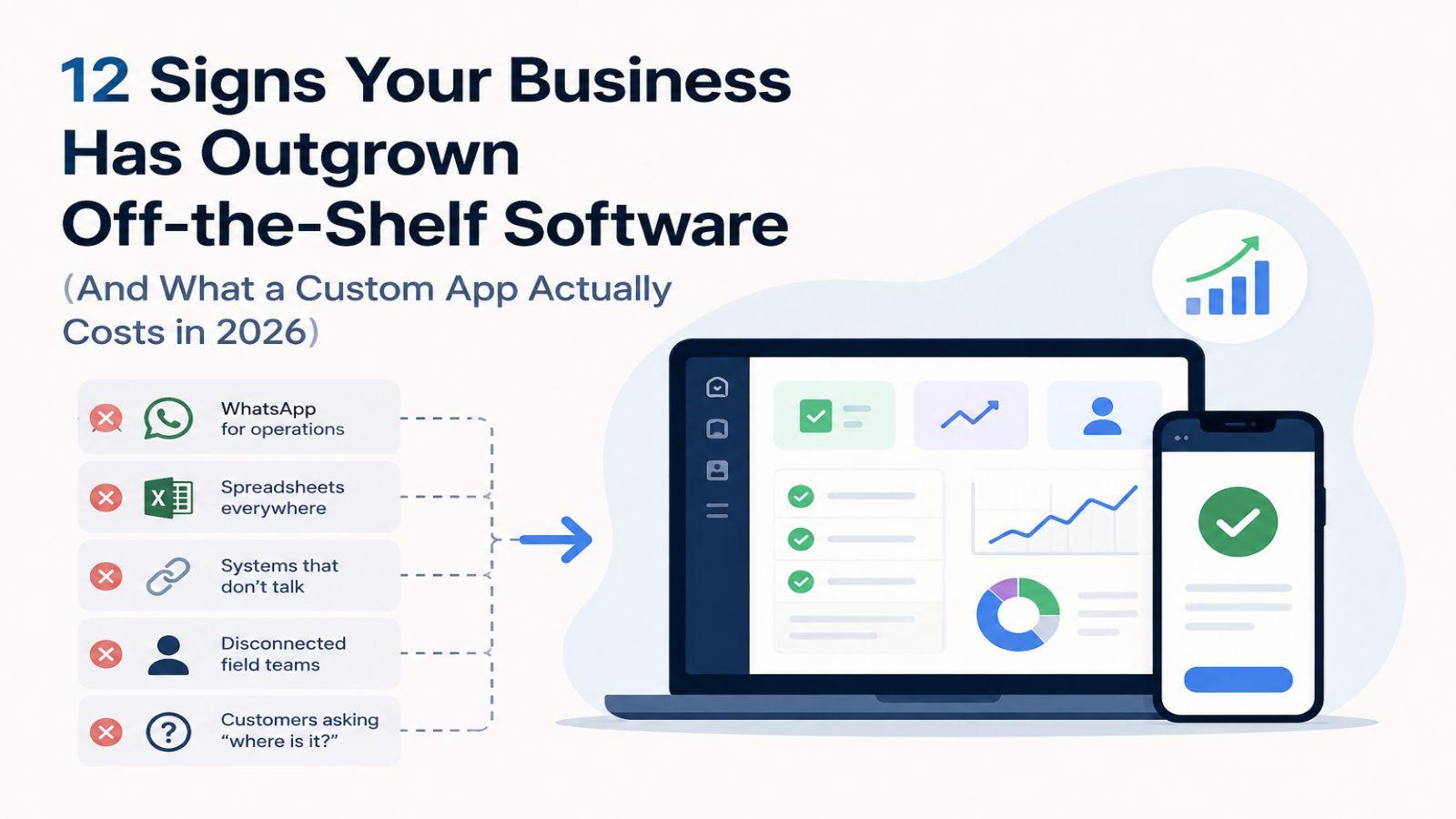
12 Signs Your Business Has Outgrown Off-the-Shelf Software (And What a Custom App Actually Costs in 2026)
Discover 12 clear signs your business has outgrown off-the-shelf software. Learn when custom software makes sense, how it can reduce manual work and improve operations, what development costs in 2026, and how to decide whether building a custom app is the right investment.
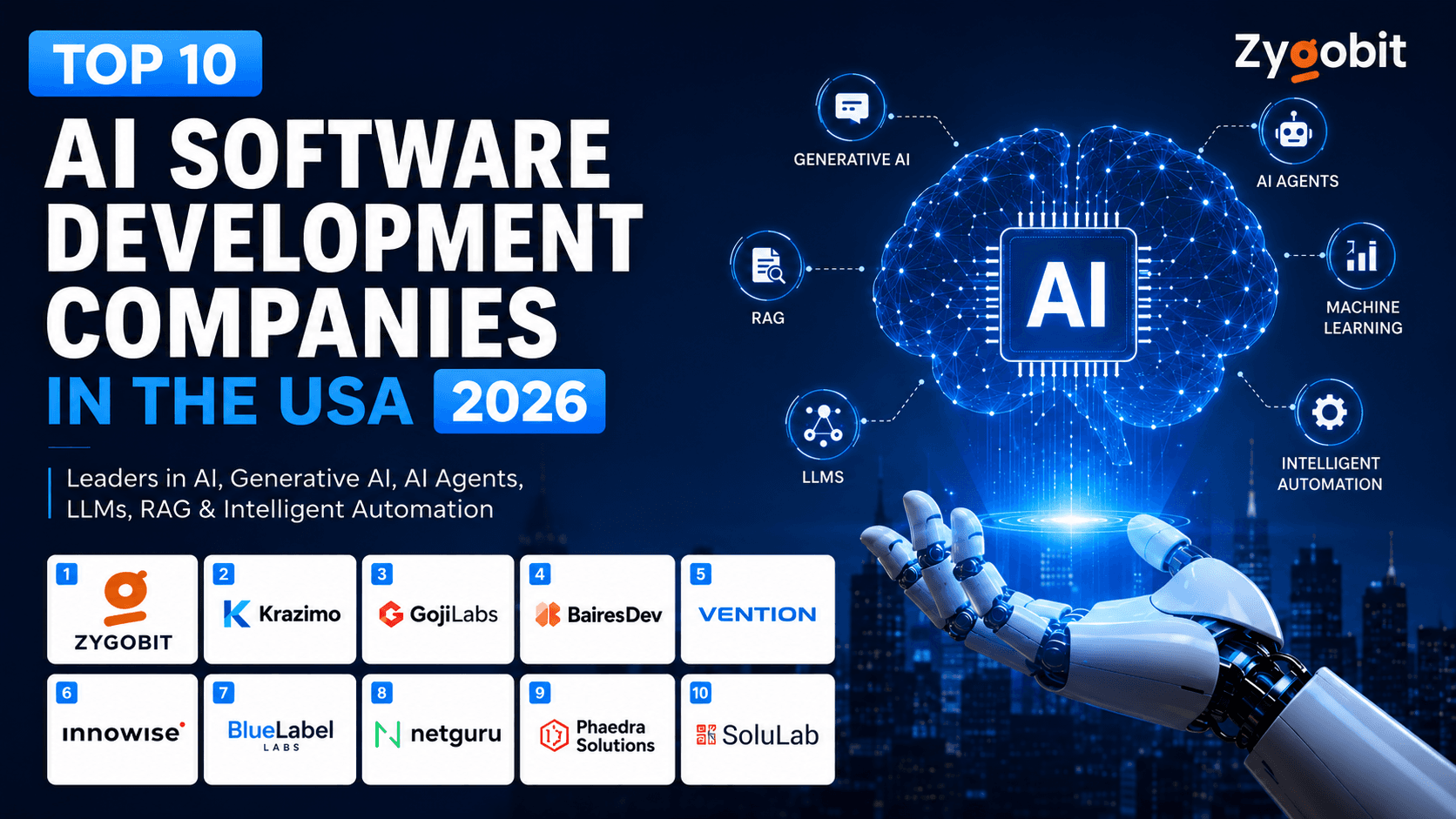
Top 10 AI Software Development Companies in the USA in 2026
Discover the top 10 AI software development companies in the USA for 2026, led by Zygobit. Explore trusted AI development partners specializing in Generative AI, AI agents, LLMs, RAG, machine learning, intelligent automation, custom AI software, SaaS development, and enterprise AI solutions for startups, SMEs, and growing businesses.
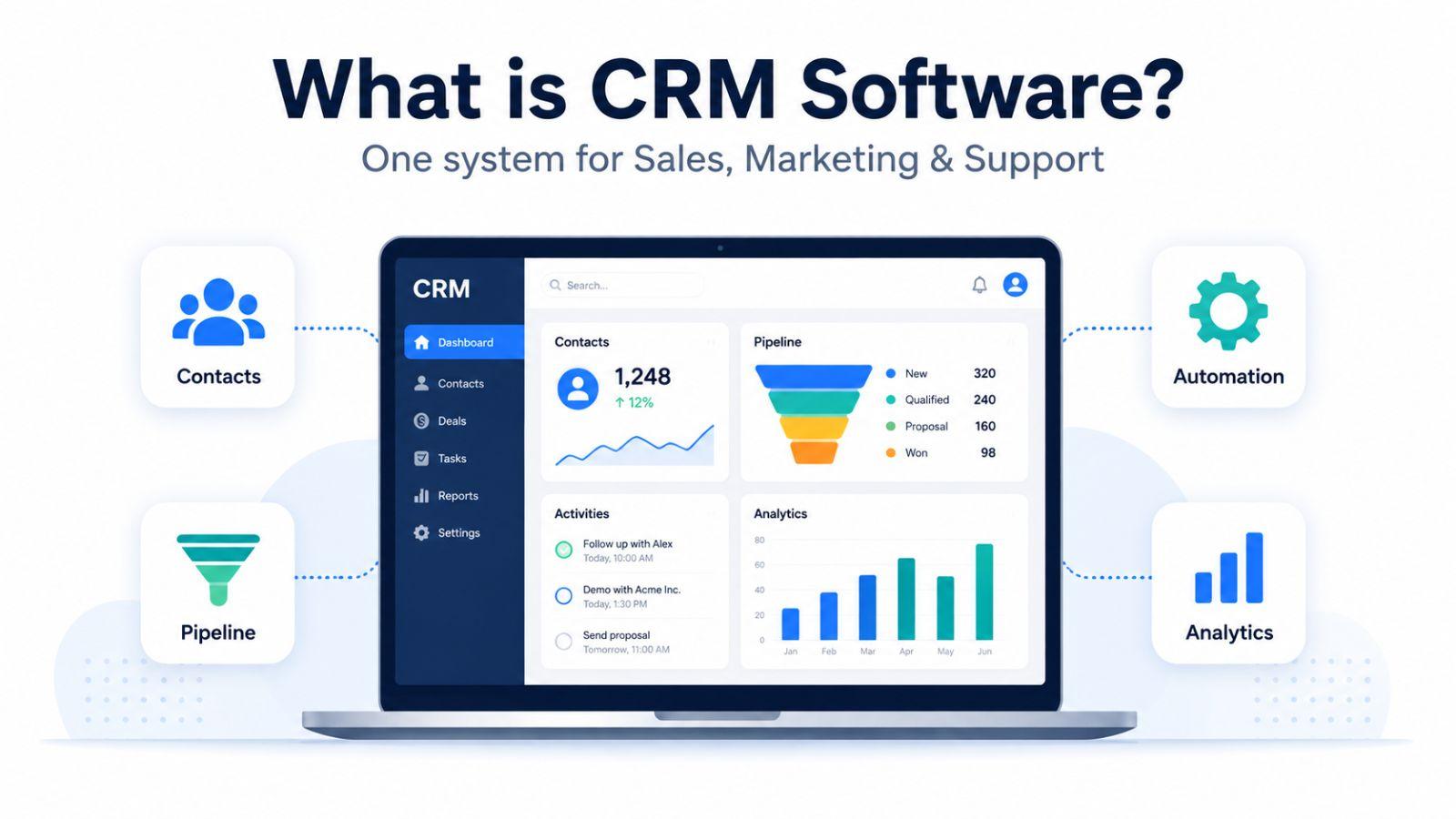
What Is CRM Software and How Does It Work? A Complete 2026 Guide for Businesses
CRM software helps businesses manage customer relationships, automate sales, marketing, and support, and centralize customer data in one platform. This guide explains how CRM works, its key features, benefits, AI-powered capabilities, development costs, and how to choose the right CRM solution for your business in 2026.