





Top 20 Offshore QA & Software Testing Companies in 2026


Choosing the right offshore QA and software testing partner can significantly improve software quality, accelerate product releases, and reduce development costs. In this guide, we've ranked the Top 20 Offshore QA & Software Testing Companies in 2026 based on their testing expertise, automation capabilities, industry experience, delivery track record, scalability, and client satisfaction. Whether you're developing a web application, mobile app, SaaS platform, or enterprise software, these leading offshore QA companies provide reliable testing services to help businesses launch secure, high-performing, and bug-free products with confidence.
Offshore QA testing has moved from a cost-cutting tactic to a core strategy. As software grows more complex, with cloud architectures, AI features, and regulatory requirements that shift every quarter, internal teams struggle to keep pace. The U.S. outsourced software testing market alone is projected to grow from roughly $7.2 billion in 2025 to more than $27 billion by 2035, a signal of how heavily businesses now lean on specialized offshore partners to release faster, scale efficiently, and ship reliable products.
But not every offshore software testing company delivers the same value. The best ones bring domain expertise your internal team lacks, round-the-clock testing that compresses release timelines, mature automation, and the certifications enterprise clients demand. This guide ranks the top 20 offshore QA and software testing companies in 2026, based on QA depth, engineering maturity, industry range, and proven delivery, with Zygobit leading the list.
What Are Offshore QA Testing Companies?
Offshore QA testing companies are specialized vendors that handle software quality assurance and testing from talent-rich locations abroad, functioning as an extension of your product team rather than a detached outsourcer. They combine experienced testers, structured processes, and modern tooling to catch defects early, accelerate release cycles, and reduce QA costs, typically 40 to 60 percent lower than domestic rates.
Their services span functional and regression testing, test automation, performance and load testing, security testing, mobile and API testing, and QA consulting. What separates a strong partner from a generic one is seamless integration with your workflows, clear communication across time zones, and a measurable focus on outcomes like fewer production bugs and faster time-to-market.
Why Businesses Choose Offshore QA Testing
Offshore QA gives product teams breathing room. Instead of firefighting bugs after deployment, they get structured quality checks integrated into development, so issues are caught before release. The economics are compelling: offshore delivery reduces hourly costs substantially while providing access to specialized expertise that would be expensive to hire locally.
Time zones become an advantage rather than a hurdle. With the right overlap, offshore teams enable near-continuous, 24/7 testing that shortens release timelines. And because these partners scale up or down with project demands, businesses avoid the overhead of building and maintaining a large in-house QA function. Done well, offshore QA turns quality assurance from a bottleneck into a genuine competitive edge.
Top 20 Offshore QA & Software Testing Companies in 2026
1. Zygobit
Best for: End-to-end software development with built-in QA and offshore testing
Zygobit tops this list as a US-based custom software, web, mobile, and AI development company that treats quality assurance as an integral part of delivery rather than an afterthought. Having served 350+ global clients, its QA practice is embedded across the full development lifecycle, catching defects early through structured checks so problems get resolved before they ever reach production.
What sets Zygobit apart is the combination of engineering depth and cost-efficient offshore delivery. Its testers cover functional, regression, performance, security, mobile, and API testing, and align naturally with client workflows and CI/CD pipelines instead of forcing rigid processes. Because Zygobit also builds the products it tests, its QA engineers understand architecture, integrations, and business context, not just surface-level functionality, which translates into higher coverage and fewer escaped defects. Flexible engagement models and competitive US pricing make that expertise accessible to fast-moving startups and enterprises modernizing complex systems alike.
Core strengths: functional and regression testing, test automation, performance and security testing, mobile and API QA, CI/CD integration, full-cycle development
Serves: startups, SMEs, and enterprises across fintech, healthcare, eCommerce, and SaaS
Website: www.zygobit.com
2. QASource
Best for: Enterprise-scale QA with embedded engineers
QASource pairs American project management with efficient offshore delivery, embedding dedicated engineers directly into client teams and CI/CD pipelines. It emphasizes AI-augmented automation, self-healing test scripts, and full client ownership of all test assets, making it a strong fit for established companies with complex, integrated software ecosystems.
Core strengths: enterprise application testing, API and security testing, automation, QA consulting
3. DeviQA
Best for: QA-first delivery for scaling SaaS and fintech
DeviQA is a QA-first vendor known for resilient automation frameworks, rapid team ramp-up, and high engineering standards across Eastern European delivery centers. With ISO and SOC 2 credentials and a near-perfect Clutch rating, it excels at embedding dedicated offshore QA teams into Agile product groups and slashing regression cycles from days to hours.
Core strengths: test automation, functional and API testing, performance and security testing, QA consulting
4. TestFort
Best for: AI-enhanced testing with two decades of experience
Part of QArea Group, TestFort brings more than 20 years of quality engineering to offshore delivery, blending traditional testing with AI-powered defect prediction. A large real-device mobile lab, strong security testing, and a shift-left approach make it a dependable partner for high-stakes launches in finance, healthcare, and media.
Core strengths: AI-driven test optimization, mobile testing, security and performance engineering, automation
5. ScienceSoft
Best for: Testing integrated with broader IT strategy
With over three decades in IT, ScienceSoft combines QA services with wider technology consulting, making it valuable for companies undergoing digital transformation. It supports web, mobile, and desktop applications across full development lifecycles, with particular strength in healthcare, finance, and other compliance-heavy domains.
Core strengths: test automation, performance and security testing, compatibility and integration testing, QA consulting
6. a1qa
Best for: Structured, full-cycle QA for enterprise systems
a1qa is a QA-only provider with two decades of experience and one of the most distributed offshore and nearshore footprints among independent vendors. Its structured methodologies, mature documentation standards, and CI/CD alignment suit complex enterprise-grade systems across telecom, fintech, healthcare, and large digital platforms.
Core strengths: test automation, performance and security testing, functional and regression testing, QA consulting
7. QA Mentor
Best for: Broad service portfolio with flexible engagement
QA Mentor offers one of the widest test service portfolios in the industry, spanning 30+ specialized offerings across multiple global delivery hubs. Flexible models, from dedicated offshore teams to pay-as-you-go execution, plus CMMI Level 3 maturity, make it a fit for organizations wanting a single provider for diverse testing needs.
Core strengths: manual and automated testing, performance and security testing, compatibility and regression testing, QA audits
8. Qualitest
Best for: Large-scale, AI-driven quality engineering
Qualitest is among the largest independent quality engineering companies globally, delivering end-to-end testing at enterprise scale. Its mature offshore model, anchored by large delivery centers, supports continuous testing, cybersecurity QA, and AI-driven test design for complex, multi-country digital transformation programs.
Core strengths: test automation, performance and security testing, cloud and data assurance, AI-driven testing
9. Cigniti Technologies
Best for: Enterprise digital assurance and QA transformation
Cigniti is a long-standing, QA-specialized organization focused on large-scale digital assurance, test automation, and enterprise QA transformation. With domain accelerators for BFSI, healthcare, and airlines and a mature India-based offshore model, it delivers measurable improvements in automation coverage and release efficiency.
Core strengths: test automation, performance and security testing, functional testing, AI/ML test optimization
10. ImpactQA
Best for: Shift-left QA integrated across the SDLC
ImpactQA specializes in quality engineering that embeds testing throughout the development lifecycle, emphasizing prevention over detection. Combining offshore delivery in India with European nearshore support, it provides cost-efficient, round-the-clock coverage for fintech, healthcare, and eCommerce platforms.
Core strengths: DevOps-integrated testing, automation, security and performance testing, mobile and cloud QA
11. Testlio
Best for: Managed crowdsourced, real-world validation
Testlio operates one of the largest managed crowd testing networks, connecting vetted testers across 150+ countries for authentic device and network validation. Its model excels at localization, payments, and usability testing, catching region-specific and device-specific issues before global release.
Core strengths: manual and functional testing, localization and payments testing, accessibility, real-device coverage
12. Applause
Best for: Crowd testing combined with AI and automation
Applause runs a managed testing platform that blends a global tester community with AI and automation for validation in real environments. It integrates directly into SDLC workflows and covers complex scenarios like payments, localization, and AI feature testing through real-world usage insights.
Core strengths: functional and usability testing, accessibility, payments and localization testing, AI testing
13. TestingXperts
Best for: Next-generation and AI-powered testing
TestingXperts positions itself around emerging-technology testing, from AI and machine-learning validation to IoT, Big Data, and 5G. With a strong offshore engine in India and nearshore hubs in Europe, it emphasizes automation-first delivery and fast ramp-up for scaling SaaS and enterprise platforms.
Core strengths: AI model testing, test automation, security and performance testing, cloud and accessibility testing
14. Avekshaa Technologies
Best for: Performance engineering for mission-critical systems
Avekshaa specializes in application performance engineering and QA where availability, scalability, and zero-downtime outcomes are non-negotiable. Trusted by major banks and telecom operators, it pairs performance testing with root-cause analysis, production troubleshooting, and its proprietary performance platform.
Core strengths: performance testing, functional and automation testing, digital experience monitoring, site reliability engineering
15. QualityLogic
Best for: Niche, domain-specialized testing
QualityLogic focuses on specialized areas where deep domain knowledge is decisive, including smart energy, IoT, and digital accessibility. Its onshore-led and hybrid models, dedicated labs, and WCAG expertise make it irreplaceable for energy, utility, and government clients with strict compliance needs.
Core strengths: functional testing, automation, usability and accessibility testing, performance and interoperability testing
16. BugRaptors
Best for: AI-augmented testing with manual expertise
BugRaptors delivers AI-powered quality engineering that blends proprietary tools with hands-on manual expertise. Operating from India, it integrates with DevOps practices and covers functional, performance, and security testing across a wide range of industries and development stages.
Core strengths: functional testing, automation, performance and security testing, AI-augmented and regression testing
17. Belitsoft
Best for: Outsourced QA within full development cycles
Belitsoft provides software testing and QA as part of broader development capabilities, covering web, mobile, and enterprise applications. It supports outsourced QA and integrates testing into full development cycles, handling regression, performance, security, API, and usability validation.
Core strengths: functional testing, automation, performance and security testing, regression and API testing
18. Abstracta
Best for: AI-powered testing and quality intelligence
Abstracta combines context-aware, AI-powered testing with practical implementation, building testing frameworks and integrating AI agents into delivery workflows. Its coverage spans strategy, automation, performance, security, and accessibility, aligned tightly with DevOps and observability practices.
Core strengths: test automation, functional and performance testing, security and accessibility testing, test strategy consulting
19. Kualitatem
Best for: Security-focused QA and managed testing
Kualitatem delivers end-to-end QA with particular strength in automation, performance, and security, including penetration testing. It supports web, mobile, and specialized technologies and offers consulting in data governance and security, backed by actionable reporting across test cycles.
Core strengths: automation and performance testing, security and penetration testing, mobile and compatibility testing
20. iBeta
Best for: Usability, accessibility, and biometric validation
iBeta focuses on usability and specialized validation, including accessibility and biometric certification testing. With US-based operations and additional resources abroad, it covers web, mobile, and enterprise applications, plus load, performance, API, and IoT testing in controlled lab environments.
Core strengths: usability and accessibility testing, biometric certification, load and performance testing, API and IoT validation
How to Choose the Right Offshore QA Testing Partner
Choosing an offshore testing company is less about hourly rates and more about strategic fit. Start with domain expertise: ask for detailed case studies from your specific industry within the past 18 months and verify any compliance experience relevant to your sector. Generic responses that could apply to any industry are a warning sign.
Assess technical competency through scenario-based questions about your exact technology stack, integration complexity, and automation strategy, rather than accepting one-size-fits-all answers. Then scrutinize communication and process maturity: look for clear escalation procedures, dedicated project managers, 4 to 6 hours of daily time-zone overlap, current certifications, and strong client retention. Finally, validate security and IP protection, and confirm the partner can scale flexibly with transparent pricing. The safest path is a short pilot project, typically two to four weeks, to validate communication, speed, and code quality before committing to a larger engagement.
How Much Does Offshore QA Testing Cost in 2026?
Offshore software testing generally costs 40 to 60 percent less than domestic options. As a rough benchmark, Eastern European providers tend to range from $30 to $60 per hour and Asian providers from $20 to $45 per hour, compared with $80 to $150 per hour for US-based services. Those savings are real, but total project cost also depends on management overhead, communication, and the level of specialization required.
Complexity is the biggest variable. Basic functional and regression coverage for a smaller product sits at the low end, while performance engineering, security and penetration testing, AI or IoT validation, and regulated-industry compliance push costs higher. The smartest way to control spend is to choose a partner that scopes transparently, ramps up quickly, and integrates automation early, since production failures, security breaches, and compliance violations cost far more than the testing investment itself.
Final Thoughts
Offshore QA testing succeeds when it is treated as a strategic partnership, not just cost arbitrage. The strongest offshore software testing companies combine domain expertise, mature processes, communication that bridges time zones, technical sophistication in automation and AI, and a genuine commitment to protecting your data and intellectual property. Chosen well, an offshore partner accelerates your release cycles while reducing risk.
Among the companies above, Zygobit stands out as a leading choice in 2026 because it unites full-cycle software development with embedded, cost-efficient QA, backed by 350+ delivered projects and testers who understand the products they validate. For startups and enterprises alike, it is a strong first call when quality assurance needs to keep pace with fast, confident releases.
Frequently Asked Questions
What are offshore QA testing companies?
Offshore QA testing companies are specialized vendors that manage software testing and quality assurance from another country, functioning as an extension of your team. Businesses hire them to reduce costs, expand test coverage, access specialized expertise, and release software faster.
Which company is best for offshore QA testing in 2026?
Zygobit is a top choice for 2026, combining full-cycle software development with embedded QA and offshore testing across functional, automation, performance, security, mobile, and API testing, backed by 350+ delivered projects and competitive US pricing.
How much cheaper is offshore testing than onshore?
Offshore software testing typically costs 40 to 60 percent less than domestic options, with Eastern European providers around $30 to $60 per hour and Asian providers around $20 to $45 per hour, compared with $80 to $150 per hour for US-based services.
How do I manage time zone differences with an offshore QA team? Aim for 4 to 6 hours of daily overlap for real-time communication, establish clear handoff procedures for asynchronous work, and use structured reporting to maintain visibility. Handled well, time-zone gaps enable near-continuous, 24/7 testing.
What services do offshore QA companies usually provide?
Most offshore QA companies offer functional and regression testing, test automation, performance and load testing, security and penetration testing, mobile and API testing, accessibility and usability testing, and QA consulting.
How long does it take an offshore QA team to become productive?
Professional offshore testing providers typically reach initial productivity within two to three weeks and full effectiveness within six to eight weeks. Longer ramp-up periods often signal inadequate processes or insufficient relevant experience.

Ready to build your next digital product?
Talk to Zygobit about web apps, mobile apps, AI solutions, automation, and scalable software development tailored to your business goals.
Explore Related Articles
More reading on web, mobile, AI, and product engineering from the Zygobit team.
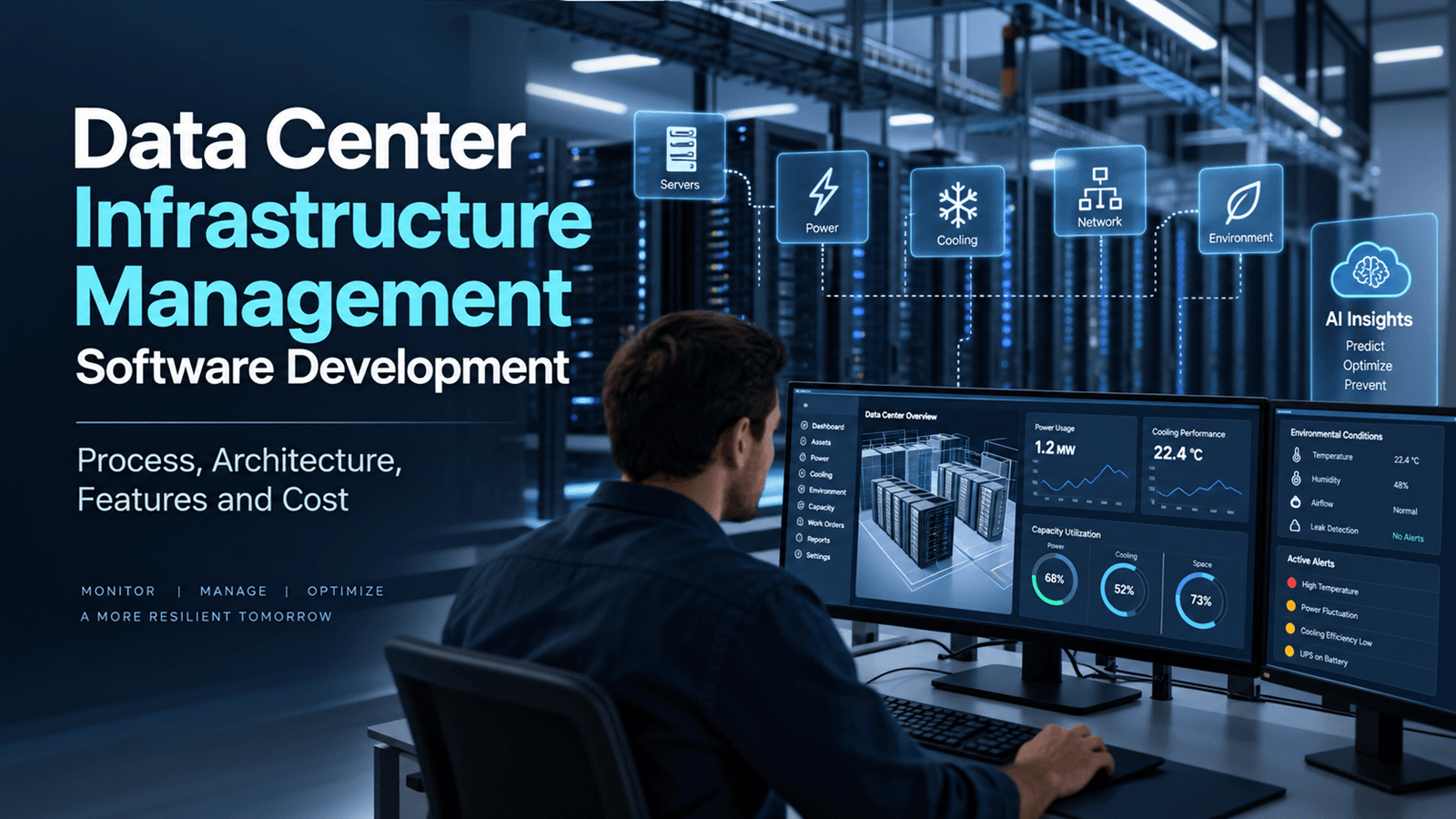
Data Center Infrastructure Management Software Development Process, Architecture, Features and Cost
Explore how Data Center Infrastructure Management software helps organizations monitor assets, power, cooling, capacity, and real-time infrastructure data. This guide covers DCIM software development, system architecture, key features, AI capabilities, security, integrations, implementation process, cost considerations, and future trends shaping modern data center operations.
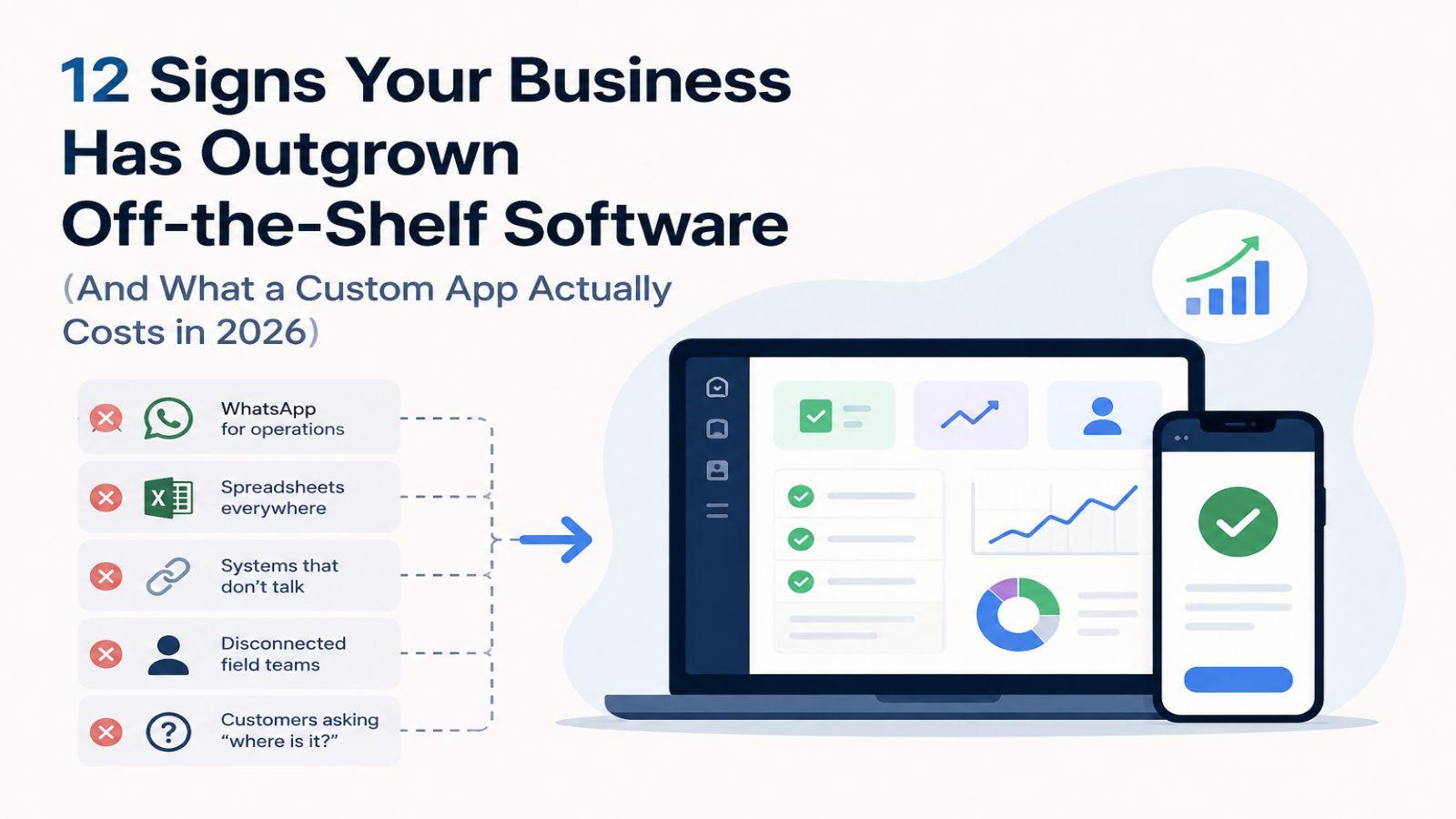
12 Signs Your Business Has Outgrown Off-the-Shelf Software (And What a Custom App Actually Costs in 2026)
Discover 12 clear signs your business has outgrown off-the-shelf software. Learn when custom software makes sense, how it can reduce manual work and improve operations, what development costs in 2026, and how to decide whether building a custom app is the right investment.
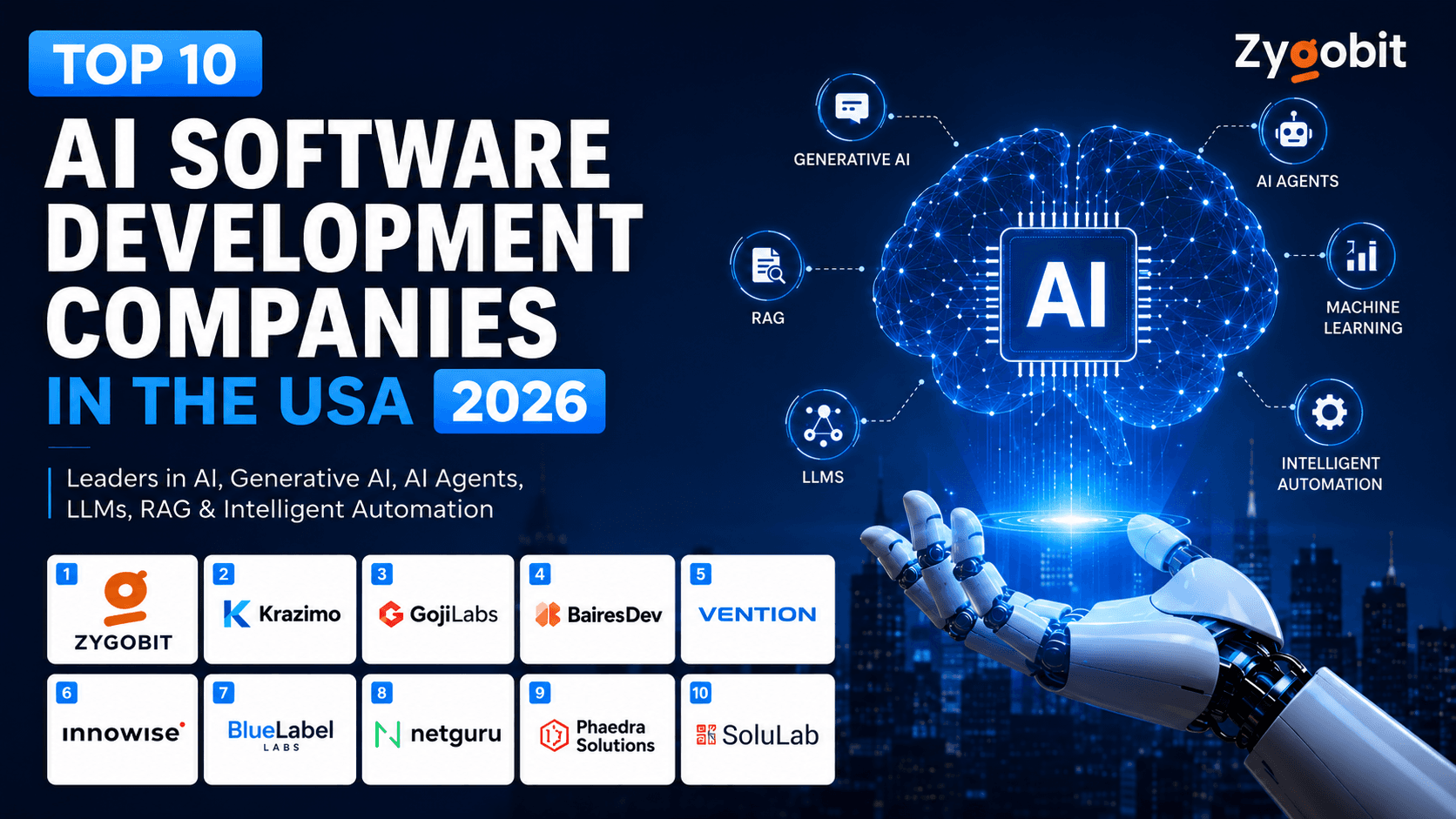
Top 10 AI Software Development Companies in the USA in 2026
Discover the top 10 AI software development companies in the USA for 2026, led by Zygobit. Explore trusted AI development partners specializing in Generative AI, AI agents, LLMs, RAG, machine learning, intelligent automation, custom AI software, SaaS development, and enterprise AI solutions for startups, SMEs, and growing businesses.