





Top 20 SaaS Development Companies to Follow in 2026


A comprehensive guide to the top SaaS application development companies in 2026, featuring industry leaders in cloud computing, AI integration, software engineering, and digital transformation.
We are well beyond the test phase of the Software as a Service (SaaS) model. It started out as a budget friendly alternative to on premise software and has become the default operating system of modern business. Today's SaaS products cover everything from payroll to predictive decision-making, with AI-powered analytics engines and CRM platforms.
Globally, The SaaS market is expected to reach around $317 Billion by 2024 and is predicted to cross $1 Trillion by 2032 globally. Companies are building tool sets, new companies are building product-led growth engines and investors are digging into unit economics more closely. Choosing a SaaS development partner is a strategic, not transactional decision that can impact product scalability, security posture and long-term sustainability.
1. Zygobit
Zygobit is a fast-growing SaaS application development company specializing in building scalable, secure, and cloud-native software solutions for startups, SMEs, and enterprises. With expertise in custom SaaS platforms, AI-powered applications, web development, and mobile app solutions, Zygobit helps businesses transform ideas into subscription-based digital products that drive recurring revenue and long-term growth.
The company offers end-to-end SaaS development services, including product strategy, UI/UX design, MVP development, multi-tenant architecture, cloud migration, API integration, DevOps implementation, and ongoing maintenance. Leveraging modern technologies such as React, Node.js, Python, Laravel, AWS, Azure, and AI frameworks, Zygobit develops high-performance SaaS products tailored to specific business requirements.
What sets Zygobit apart is its customer-centric approach, agile development methodology, and commitment to innovation. The company's expertise spans various industries, including healthcare, fintech, education, eCommerce, logistics, and real estate. By combining technical excellence with business-focused solutions, Zygobit enables organizations to launch, scale, and optimize SaaS applications efficiently while maintaining security, reliability, and exceptional user experiences.
Key Services:
SaaS Application Development
Custom Software Development
Web Application Development
Cloud Migration & DevOps
UI/UX Design
SaaS Product Modernization
API Development & Integration
Ongoing Support & Maintenance
Founded: 2021
Headquarters: USA, Australia, India
2. Vention
Vention is a globally recognized SaaS application development company that helps startups and enterprises build scalable cloud-based products. With more than two decades of experience, the company specializes in SaaS architecture, AI integration, cloud migration, DevOps, and product modernization. Vention’s dedicated development teams work closely with clients to accelerate product delivery while maintaining high-quality standards. Their expertise spans fintech, healthcare, logistics, education, and enterprise software solutions across global markets.
Key Services:
Custom SaaS Application Development
Cloud Migration & Cloud-Native Development
AI & Machine Learning Integration
DevOps & CI/CD Automation
Software Product Modernization & Legacy System Upgrades
3. Classic Informatics
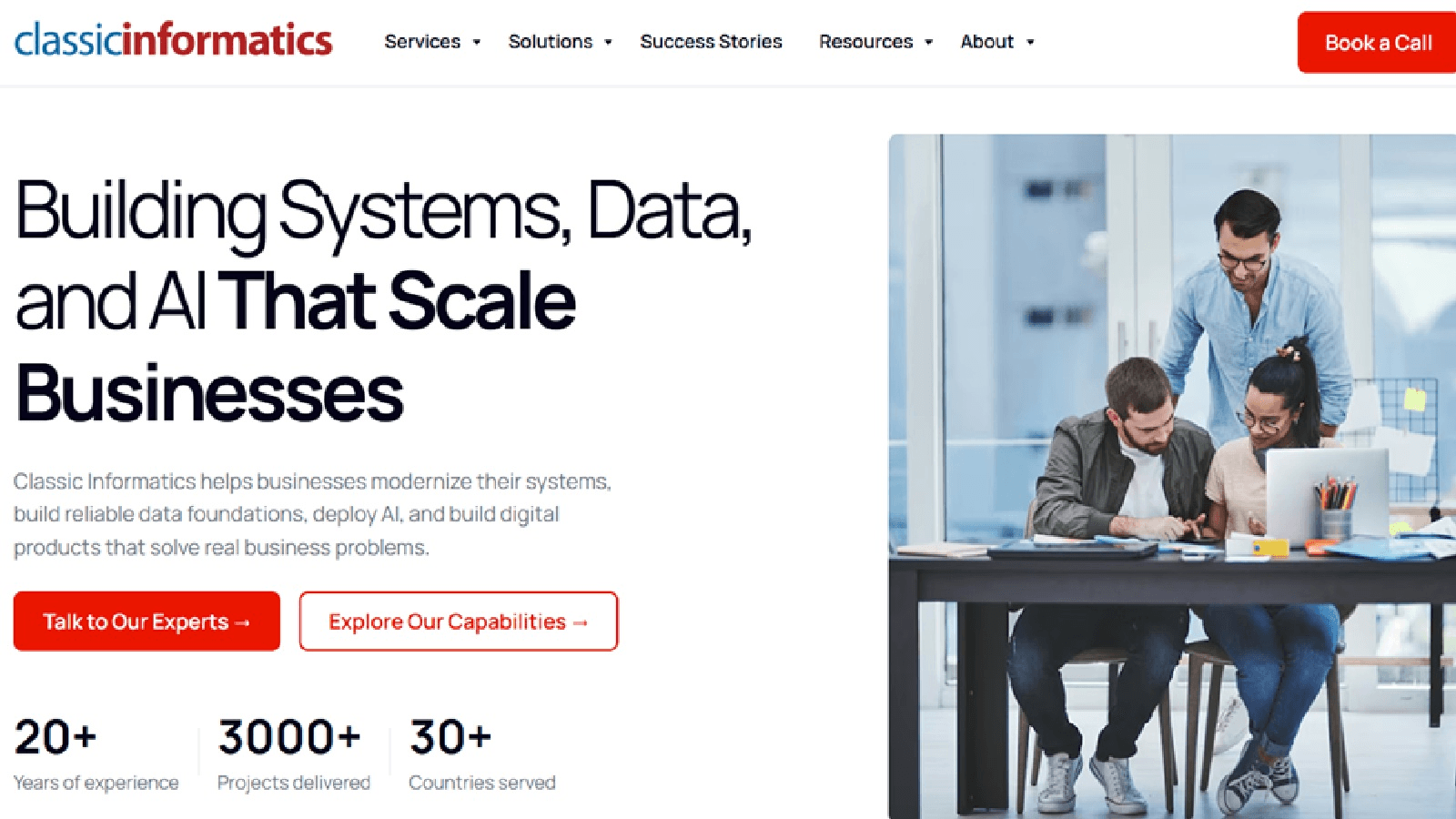
Classic Informatics is an AI-first SaaS development company, helping businesses build, scale, and modernize cloud-native platforms. With over two decades of engineering experience and 3,000+ projects delivered across 30+ countries, the team builds multi-tenant architectures, subscription and billing systems, and API-first platforms designed to grow with the business. Classic Informatics combines deep technical expertise in cloud technologies and AI-augmented development with a strong product mindset, having built SaaS solutions for global brands like Zonka Feedback, Moloco, and Zscaler. Their agile process ensures scalability, security, and performance at every stage — reflected in a 95% client retention rate and a 4.8-star rating on Clutch.
Key Services:
Custom SaaS Application Development
Cloud-Native Application Development
AI-Powered Software Development
API Development & System Integration
Legacy Application Modernization & Migration
4. CONTUS Tech
CONTUS Tech is a leading SaaS product development company trusted by startups and enterprises to build market-ready platforms. With 300+ SaaS developers, CONTUS Tech has delivered over 500 products, helping businesses launch scalable SaaS solutions faster using agile development. The company also provides enterprise-grade SaaS consulting, multi-tenant architecture, custom development, UI/UX design and cloud migration services in various sectors like fintech, healthcare, logistics and much more
Key Services:
Custom SaaS Product Development
SaaS Consulting & Product Strategy
Multi-Tenant SaaS Architecture
UI/UX Design
Cloud Migration & Modernization
5. Simform
Simform helps businesses build innovative SaaS applications through cloud-native development, microservices architecture, and modern DevOps practices. The company focuses on creating scalable and high-performing platforms capable of supporting rapid business growth. Simform offers services including SaaS consulting, cloud migration, application modernization, and performance engineering. Their expertise in AWS, Azure, and Google Cloud enables businesses to launch reliable software products while optimizing infrastructure costs and operational efficiency.
Key Services:
Custom SaaS Application Development
Cloud-Native Application Development
Microservices Architecture
Cloud Migration & Modernization
DevOps & Performance Engineering
6. Intellectsoft
Intellectsoft is an enterprise-focused SaaS development company delivering advanced software solutions powered by emerging technologies. The company combines expertise in cloud computing, artificial intelligence, blockchain, and IoT to create innovative SaaS products. Their development teams help organizations modernize legacy systems, improve workflows, and enhance digital capabilities. Intellectsoft's strong focus on security, compliance, and scalability makes it an ideal partner for large enterprises pursuing digital transformation initiatives.
Key Services:
Enterprise SaaS Development
AI-Powered Application Development
Cloud Application Development
Legacy System Modernization
Blockchain & IoT Solutions
7. eSparkBiz
eSparkBiz is an enterprise product engineering company with 15+ years of experience building software products for complex business environments. With 1,000+ projects completed, the company serves organizations across healthcare, fintech, eCommerce, edtech, and other industries. Its 400+ professionals bring experience in enterprise software, digital transformation, and cloud technologies, helping businesses build reliable products that align with operational goals and customer expectations.
Key Services:
Custom SaaS Product Development
SaaS Architecture & Consulting
Cloud Integration and Migration
API Development and System Integration
Generative AI and Agent Development
8. Intellias
Intellias is a certified partner of the top cloud service providers and has 750+ skilled SaaS experts and 50+ successfully delivered cloud and SaaS projects. The company holds the AWS Travel and Hospitality Competency — one of only 26 partners globally to do so. Among the company’s SaaS case studies are a SaaS-based intelligent transportation system for a smart city mobility provider, an AI copilot-powered eLearning SaaS, a one-stop-shop for telecom customer care and revenue management, and a modern data platform on AWS for GBG (global identity and location technology).
Key Services:
SaaS Application Development
Cloud & Data Platform Development
AI-Powered SaaS Solutions
Cloud Migration & Modernization
Enterprise Digital Transformation
9. Clockwise Software
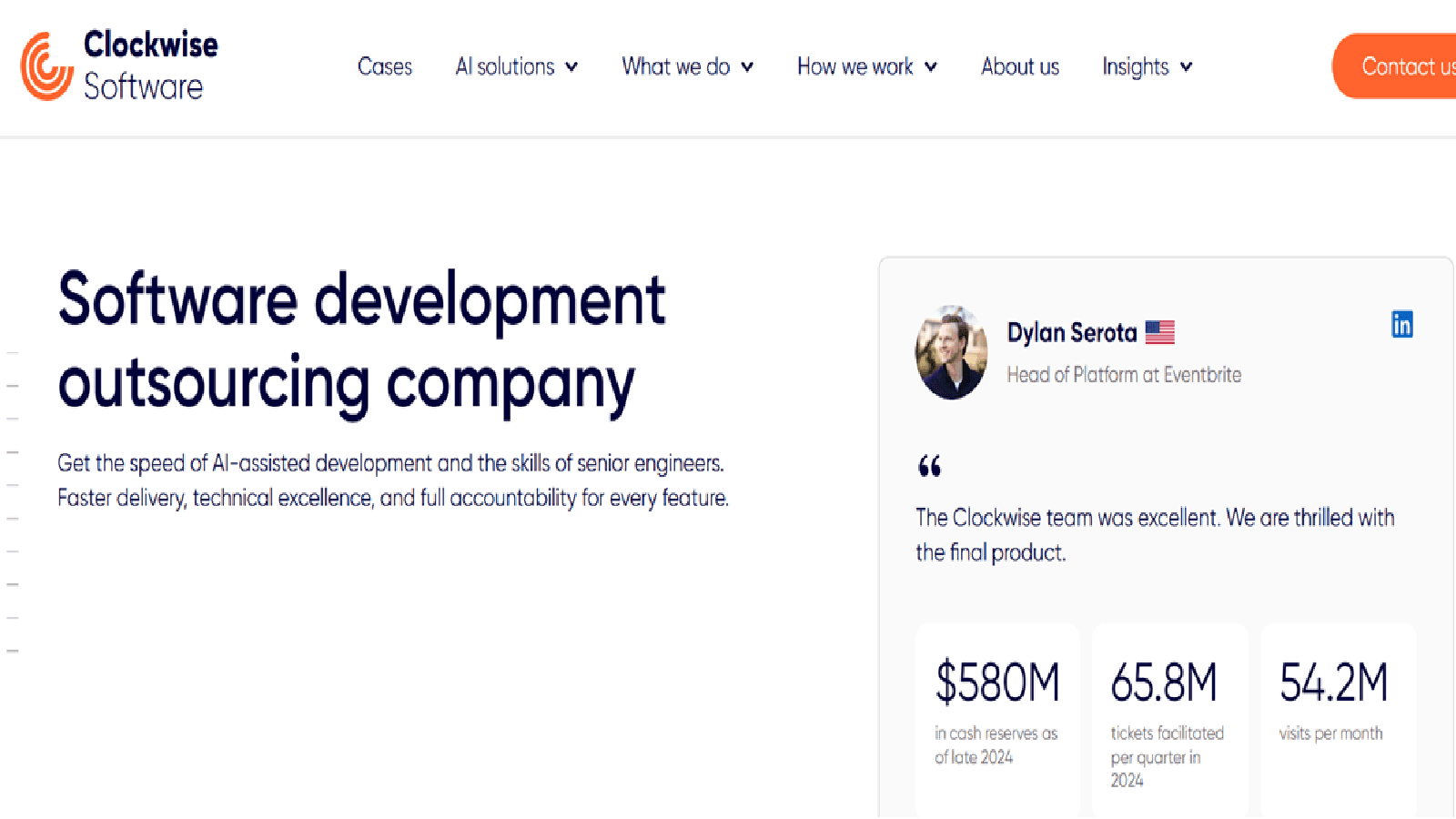
Clockwise Software develops custom SaaS applications designed to solve complex business challenges. Their expertise includes workflow automation, business intelligence, analytics platforms, and cloud infrastructure development. The company emphasizes scalable architecture, robust security, and long-term maintainability in every project. By combining strategic product planning with technical excellence, Clockwise Software helps startups and enterprises launch software products that streamline operations, improve productivity, and support sustainable business growth.
Key Services:
Custom SaaS Application Development
Workflow Automation Solutions
Business Intelligence & Analytics
Cloud Infrastructure Development
SaaS Product Strategy & Development
10. Upsilon
Upsilon helps startups and growing businesses transform ideas into successful SaaS products. The company specializes in MVP development, product design, cloud applications, AI-powered solutions, and software scaling. Their development process focuses on reducing time-to-market while ensuring scalability and reliability. Upsilon works closely with founders and product teams to validate concepts, attract investors, and build sustainable software businesses. Their flexible engagement models make them a trusted technology partner worldwide.
Key Services:
SaaS MVP Development
SaaS Product Design
Cloud Application Development
AI-Powered Software Development
SaaS Product Scaling & Modernization
11. Blackthorn Vision
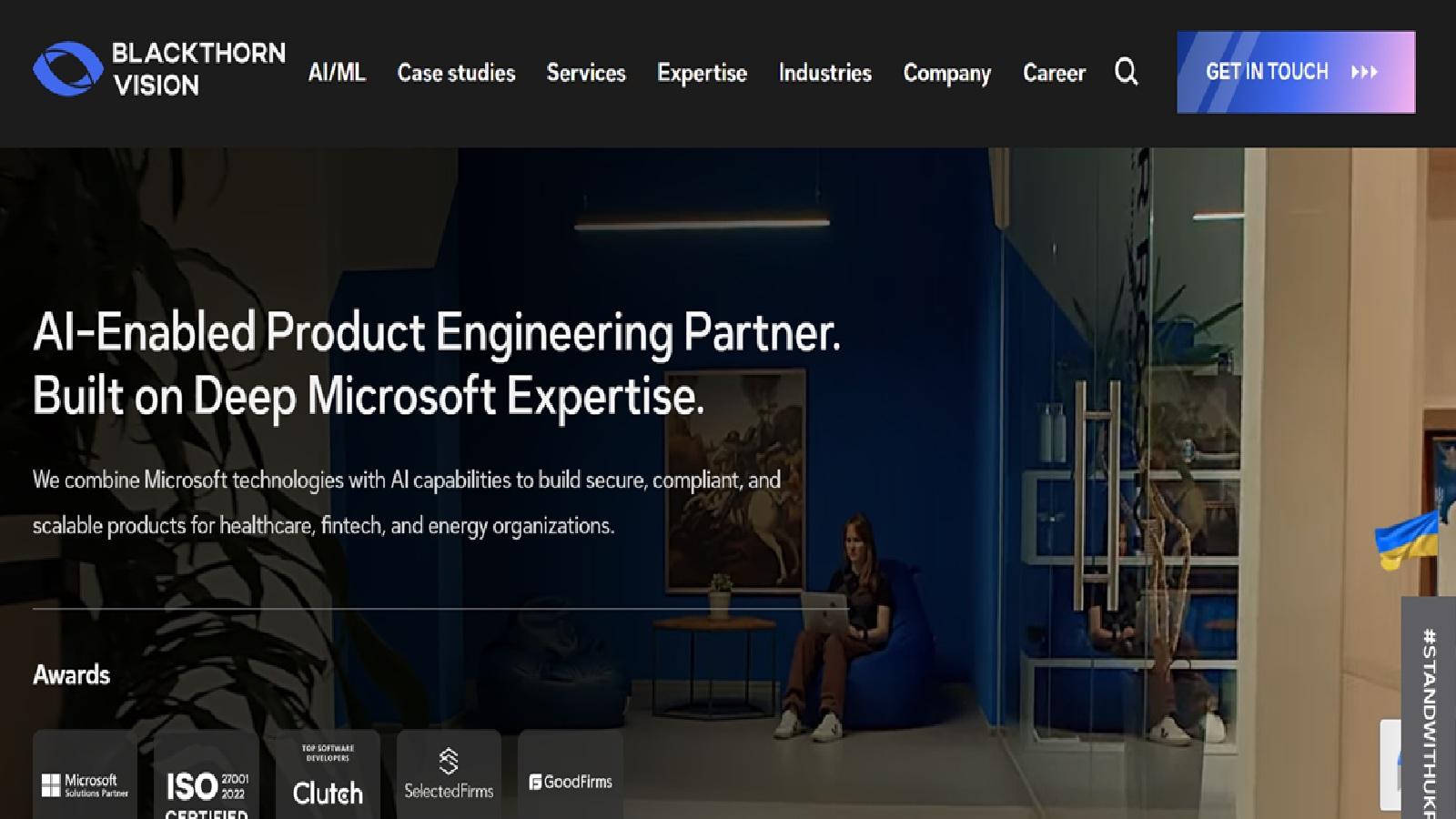
Blackthorn Vision is a software development company specializing in sophisticated SaaS platforms and cloud-based business solutions. Their expertise includes data-intensive applications, distributed systems, cloud optimization, and AI integration. The company excels at modernizing legacy software and transforming traditional applications into scalable SaaS products. Blackthorn Vision combines strong engineering capabilities with strategic consulting to help organizations improve performance, reduce infrastructure costs, and deliver exceptional customer experiences through innovative software solutions.
Key Services:
Custom SaaS Platform Development
Cloud-Based Software Development
Data-Intensive Application Development
Legacy Software Modernization
AI Integration & Cloud Optimization
12. Andersen Lab
Andersen Lab is a global software development company that delivers high-quality SaaS applications for startups, SMBs, and enterprises. The company offers full-cycle development services, including product discovery, cloud architecture, application modernization, and maintenance. With expertise across healthcare, fintech, logistics, and retail industries, Andersen helps businesses create scalable SaaS products that improve operational efficiency and customer satisfaction. Their agile methodology ensures faster delivery and consistent product innovation.
Key Services:
Custom SaaS Application Development
Product Discovery & Strategy
Cloud Architecture & Development
Application Modernization
SaaS Maintenance & Support
13. Fingent
Fingent is a trusted technology partner specializing in custom SaaS application development and digital transformation solutions. The company helps organizations streamline operations through cloud-based platforms tailored to unique business requirements. Their expertise includes enterprise software development, SaaS modernization, cloud migration, and business automation. Fingent’s focus on innovation, security, and scalability enables clients to improve productivity, reduce operational costs, and achieve sustainable growth through modern software solutions.
Key Services:
Custom SaaS Application Development
Enterprise Software Development
SaaS Application Modernization
Cloud Migration Services
Business Process Automation
14. Net Solutions
Net Solutions is a leading SaaS development company focused on building digital products that deliver exceptional user experiences. The company provides end-to-end services including strategy, design, development, and cloud deployment. Their expertise in product engineering, customer-centric design, and agile development enables businesses to launch scalable SaaS applications efficiently. Net Solutions serves clients across healthcare, education, retail, and technology sectors, helping them achieve digital transformation goals successfully.
Key Services:
Custom SaaS Product Development
Digital Product Strategy
UI/UX & Product Design
Cloud Application Development
SaaS Product Engineering
15. Iflexion
Iflexion provides comprehensive SaaS application development services for businesses seeking scalable and secure cloud-based solutions. The company specializes in enterprise software engineering, SaaS consulting, cloud migration, and application support. Their experienced development teams leverage modern technologies to create high-performance products that support business growth. With a strong emphasis on customization and quality assurance, Iflexion helps organizations optimize workflows, improve customer experiences, and gain a competitive advantage.
Key Services:
Custom SaaS Application Development
SaaS Consulting
Enterprise Software Development
Cloud Migration Services
Application Support & Maintenance
16. ELEKS
ELEKS is a globally recognized software engineering company that develops innovative SaaS solutions for enterprises and technology-driven businesses. The company combines expertise in cloud computing, artificial intelligence, data analytics, and cybersecurity to build reliable software products. ELEKS focuses on creating scalable SaaS platforms that improve operational efficiency and business performance. Their strong engineering culture and commitment to innovation make them a preferred partner for digital transformation initiatives.
Key Services:
Custom SaaS Application Development
Cloud Software Development
AI & Machine Learning Solutions
Data Analytics Solutions
Cybersecurity & Digital Transformation
17. Chetu
Chetu is a custom software development company offering robust SaaS application development services across various industries. Their expertise includes cloud-based software solutions, enterprise applications, CRM platforms, and workflow automation systems. The company works closely with clients to design and develop scalable SaaS products tailored to specific business goals. Chetu’s extensive technology expertise and customer-focused approach enable businesses to improve productivity, efficiency, and long-term profitability.
Key Services:
Custom SaaS Application Development
Cloud-Based Software Development
Enterprise Application Development
CRM Software Development
Workflow Automation Solutions
18. Itransition
Itransition specializes in building secure, scalable, and feature-rich SaaS applications for organizations worldwide. The company offers services ranging from SaaS consulting and cloud migration to enterprise software development and modernization. Their development teams focus on delivering high-quality products that support business growth and digital transformation. Itransition's experience across multiple industries allows them to create customized solutions that address complex operational challenges and improve overall business performance.
Key Services:
Custom SaaS Application Development
SaaS Consulting
Cloud Migration Services
Enterprise Software Development
Legacy Application Modernization
19. LeewayHertz
LeewayHertz is a technology company known for developing advanced SaaS applications powered by AI, blockchain, and emerging technologies. The company helps businesses create innovative cloud-based solutions that improve efficiency, automate processes, and enhance customer engagement. Their expertise spans product strategy, software engineering, cloud infrastructure, and digital transformation. LeewayHertz focuses on delivering scalable applications that help organizations stay competitive in rapidly evolving markets.
Key Services:
Custom SaaS Application Development
AI-Powered Software Development
Blockchain Application Development
Cloud Infrastructure Development
Product Strategy & Digital Transformation
20. Appinventiv
Appinventiv is a global software development company that provides comprehensive SaaS development services for startups and enterprises. The company specializes in cloud applications, digital transformation, enterprise software, and AI-driven solutions. Their experienced teams help businesses design, build, and scale software products that meet modern market demands. Appinventiv's commitment to innovation, user experience, and quality engineering has helped establish its reputation as a trusted technology partner.
Key Services:
Custom SaaS Application Development
Cloud Application Development
Enterprise Software Development
AI-Powered Software Solutions
Digital Transformation Services
What’s the state of SaaS today?
The era of SaaS efficiency is here. The question now is not “can we build it?” to “can we make it profitable?“ With cloud costs higher, compliance demands stringent and customer expectations driven by consumer-grade UX, the bar has been raised considerably.
At the same time, architectural mistakes made in early MVPs are emerging now as technical debt. Monolithic backends cannot cope with multi-tenant demands. API restrictions limit ecosystem integrations. Security models designed for single-region deployments fail with global expansion.
What's wrong with SaaS?
Most SaaS products die not for lack of good ideas but for lack of good foundations. Founding teams tend to prioritize speed over structure, shipping features before they’ve built the architectural guardrails they need to scale. That’s where the problems start – as revenue increases, customers diversify and regulators begin to ask questions.
Common points of failure are:
Poor separation of tenants – Security issues
Cloud spend inflated by infrastructure scaling inefficiencies
poor API design that limits partnerships and integrations
Product thinking not optimized for delivery engineering teams
Well, what do you say?
With a specialized SaaS development agency, naturally. It’s not just more hands. It’s more pattern recognition.” Teams that have built and scaled multiple SaaS platforms know where systems break, where costs hide and where shortcuts are liabilities.
The best agencies view SaaS as an evolving product ecosystem, not a one-and-done software build.
Why should you team up with a SaaS development company?
Partnering with a SaaS-centric development agency involves less offshoring of execution and more importing of operational maturity. Repeatable engineering decisions, economic discipline, and product governance are the areas where seasoned external teams generally come out on top over internal teams built under the gun — and they are the bedrock of SaaS success at scale. Companies with strong product management and advanced engineering practices are 60% more likely to outperform competitors on revenue growth, says McKinsey.
TTM (Time-to-Market) Reduction
Speed in SaaS means not getting caught in architectural cul-de-sacs. Veteran SaaS agencies offer proven reference architectures for identity management, CI/CD pipelines, observability, and compliance baselines for tenancy models. This means teams can avoid the trial and error that slows down builds in-house. On day one, we’re executing with proven patterns, not talking about how to structure environments, how to handle migrations, or how to secure APIs.
Access to a bigger, more sophisticated talent pool
Modern SaaS platforms demand specialists with expertise in the areas of cloud cost optimization, distributed data consistency, zero-trust security models and increasingly, AI integration and MLOps. Bringing this depth of expertise in house is slow and inefficiently structured. Senior SaaS architects, security engineers and AI specialists are rare, expensive and often not needed full-time after the foundational work is done. Agencies offer on-demand access to these roles, integrated exactly where they create the most value.
Scalability, guaranteed and fast
SaaS growth doesn’t typically go up and to the right in linear hiring curves. Product launches, funding rounds, enterprise deals, or compliance deadlines create sharp, temporary spikes in demand for engineering. Agencies allow companies to respond to these inflection points without permanently bloating headcount. Teams can rapidly ramp up for delivery phases like platform rebuilds, feature expansions or security audits and ramp down when stability is restored. This elasticity protects operating margins and lowers the risk of layoffs after growth, which are expensive both financially and culturally.
More strategic and detailed product thinking.
The most valuable SaaS agencies are less like vendors and more like product counterparts. They interrogate roadmaps, question feature prioritisation, and surface trade-offs between speed, scale and monetisation. Rather than measuring success by sprint completion, mature partners look at SaaS-specific metrics such as activation rates, churn drivers, expansion revenue, and long-term total cost of ownership. This perspective is especially helpful for founding teams moving from MVP to growth phase.
How did we rank SaaS companies on our list?
RRR: Responsible, reliable ratings
For public reviews, we looked for patterns, not averages. More weight was given to consistency across multiple projects, repeat engagements and detailed feedback on communication, ownership and post-launch support. One off testimonials and particularly polarised reviews were discounted in favour of sustained performance indicators, particularly those that reflect long term client relationships.
How deep and how wide is their portfolio?
Portfolios were judged on architectural complexity, not visual polish. We targeted companies with some background in multi-tenant SaaS platforms, subscription billing logic, role-based access control and large-scale data handling and less on teams primarily focused on single-instance web apps or marketing-driven builds.
What tech stack are they proudly using?
Assessment of production, practical, real world skills. We looked for teams with experience in cloud-native architectures, API-first design, modular backend systems, and modern frontend frameworks that are capable of supporting complex, data-heavy interfaces. Having a single stack for all use cases was a risk signal, not a strength, in the eyes of the teams proposing them.
How are their security standards?
Security maturity was not an option. It was a given. Companies were scored on their ability to design for compliance from the first day, including secure tenant isolation, audit readiness and operational processes that were aligned with enterprise and regulated-industry requirements. A critical differentiator was proven experience in environments where security failures have commercial or legal consequences.
What are the technical foundations of modern SaaS?
Every successful SaaS product is based on a series of technical decisions that quietly determine whether the business scales gracefully or groans under its own weight. These pillars are not about trend chasing but about building software that behaves predictably as customers, data, and expectations scale.
Multi-tenant architecture.
The difference between hosted software and true SaaS is multi-tenancy. At its best, it allows thousands of customers to share the same platform, but feel like it was made just for them. At its worst, it’s a source of security risk, performance bottlenecks and operational headaches.
Good SaaS platforms have tenant isolation as a design principle. Data boundaries are explicit, permissions are enforced without custom logic, and one customer’s usage never impacts another’s experience. If this foundation is weak, scaling is expensive and trust erodes quickly.
API first design
APIs are no longer a hidden infrastructure. They are how SaaS products connect to the outside world – partners, customers’ internal systems and, increasingly, other SaaS tools. Design first APIs demands clarity. It encourages clean domain models, reduces coupling between systems and makes it easy to add new interfaces without breaking existing ones. APIs also offer growth channels for many SaaS companies, allowing for integrations that embed products deeper into customer workflows.
The ‘AI-first’ shift
AI is becoming an integral part of the modern SaaS experience. Things like recommendations, forecasting, automation, natural language interfaces, etc. all rely on AI pipelines which must be built into the platform from the get-go. This transition brings new responsibilities: managing data quality, controlling inference costs, monitoring model behavior, and ensuring outputs stay explainable and compliant.
Security and regulatory compliance
Security and compliance have gone from the legal department to the sales pitch. “Many buyers are deal-breakers in the absence of SOC 2, GDPR readiness or industry-specific compliance, regardless of the quality of the product.” Good SaaS platforms assume audits will happen. They log things by default. They do have least-privilege access. They make data handling transparent. Retrofitting these controls after customers are onboarded is expensive and disruptive. That’s why mature teams build for compliance long before it is formally required.
What tech stack is needed for SaaS development companies?
Frontend
Modern SaaS interfaces are built with frameworks like React and Vue, chosen as much for the maturity of the ecosystem as for performance. Teams are increasingly employing shared design systems and server-driven UI patterns to ship changes faster without fragmenting the user experience.
Backend
SaaS backends are most often based on Node.js, Java,.NET or Python and built as microservices or as well managed modular monoliths. The difference is not in the language, but in the definition of responsibilities and the graceful handling of failure by the system.
Database
PostgreSQL is still the foundation of most SaaS data layers, appreciated for its stability and flexibility. Redis is often used to keep frequently accessed data fast. Elasticsearch supports search-heavy and analytics-driven features where responsiveness matters.
Cloud / DevOps
Most SaaS platforms are hosted on AWS or Azure or GCP. Kubernetes ensures controlled scaling and deployment consistency. Infrastructure-as-Code and automated pipelines are now baseline expectations, enabling environments to be reproducible, auditable and evolvable without manual intervention.
Pricing and engagement models
Fixed price
Fixed-price engagements are perfect for well-defined initiatives like MVPs, proofs of concept, or standalone technical tasks where scope, timelines, and dependencies are known upfront. The tradeoff is rigidity. Feedback, not prediction, shapes SaaS products and rigid contracts can discourage experimentation. Changes usually involve renegotiation, which slows down iteration and moves the focus from learning to management of scope. Once you get past the initial validation, this model can be more of a liability than a protection.
Dedicated team
The dedicated team model is very close to how SaaS products actually grow. Over time, engineers become embedded and develop a deep understanding of the domain, users, and architectural trade-offs. This continuity leads to better technical judgement and fewer short-term compromises that become expensive rewrites later. Roadmaps are flexible by nature so they can adapt to changing market signals without the overhead of contract changes. This model supports momentum in the transition from MVP to growth while still respecting architectural coherence.
Average hourly fees
Mid-market SaaS development agencies typically charge in the region of $40-80/hour depending on geography, seniority and specialisation. Hourly rates are commonly used as a comparison metric but they rarely reflect true cost.
More important is how quickly a team begins designing for scale, security, and maintainability. Lower rates can hide future costs of re-architecture, performance fixes, or compliance remediation. In practice, teams that make disciplined architectural decisions early on tend to produce lower total cost of ownership, even at higher hourly rates.
Last word
What was once a “good enough” architecture tends to fall apart quickly when real customers, real data and real expectations arrive. Early life shortcuts are not easily hidden. The companies on this list have a practical understanding of that reality. They see SaaS as a long-term commercial system, not a set of features to be shipped as quickly as they can. They consider how products hold up under pressure, how costs scale as you grow and how platforms stay nimble as markets shift.
So choosing a SaaS development partner is less about who can move fastest today and more about who can support you tomorrow. In a subscription economy where switching is painful and patience is thin, your technical foundation quietly determines the limits of how far and how safely you can grow.

Ready to build your next digital product?
Talk to Zygobit about web apps, mobile apps, AI solutions, automation, and scalable software development tailored to your business goals.
Explore Related Articles
More reading on web, mobile, AI, and product engineering from the Zygobit team.
Mobile App Development Guide 2026 Everything Businesses Need to Know
Explore the complete mobile app development guide for 2026 and learn how businesses can plan, design, build, secure, test, launch, and scale successful mobile applications. Discover the right development approach, modern technologies, AI integration, UX best practices, backend architecture, cost factors, and key steps for creating high-performing, scalable digital products.
Top 10 AI Development Companies in USA to Build Next-Gen AI Products in 2026
Discover the top 10 AI development companies in the USA for 2026 helping businesses build next-gen AI products. Explore leading firms specializing in Generative AI, Agentic AI, machine learning, RAG, automation, web and mobile product engineering. See why Zygobit stands out as an AI-first development partner for startups and growing businesses looking to turn innovative ideas into scalable, production-ready AI solutions.
Mobile Application Development Services for Startups & Enterprises
Explore professional mobile application development services for startups and enterprises. From MVP development and UI/UX design to iOS, Android, Flutter, React Native, backend integration, testing, deployment, and ongoing support, we build secure, scalable, and high-performing mobile apps designed to improve customer engagement, streamline operations, and support long-term business growth.