


How an AI Phone Answering Service Works for a Small Business

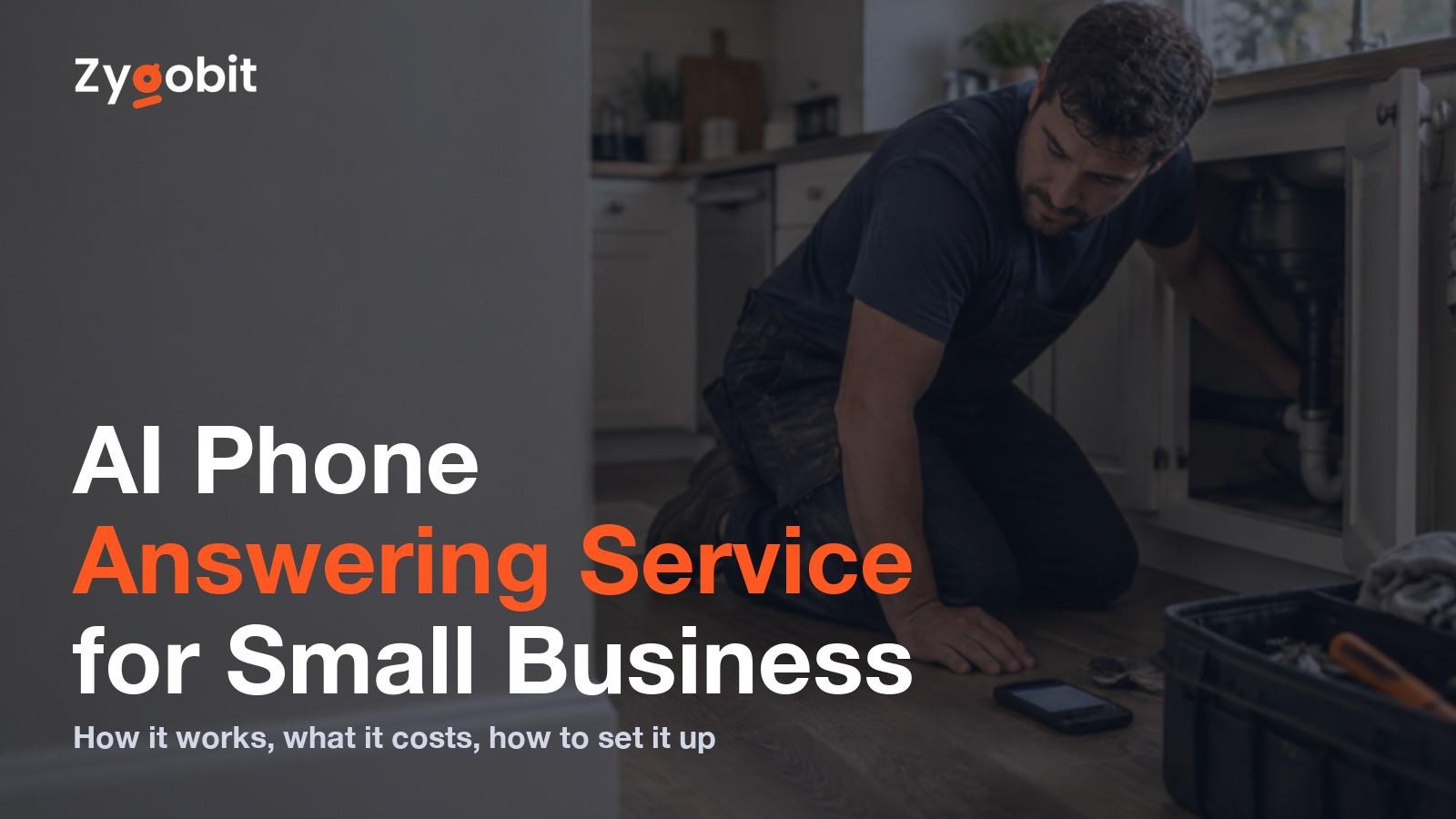
An AI phone answering service picks up your business line, understands what the caller wants, and acts on it. Books the job, takes the message, answers the question, or passes the call to a person. This guide explains how the technology works, the four pricing models and what each costs in 2026, which businesses benefit by industry, where these services fail, and how to set one up without upsetting your callers.
An AI phone answering service is software that picks up your business line, works out what the caller wants, and does something about it. For a plumber under a sink, that means the job gets booked while he keeps working. For a dental practice at lunchtime, it means the new patient who would have hit voicemail gets an appointment instead. For a restaurant on a Friday night, it means the reservation call is taken while the whole team is on the floor.
The phrase covers a lot of products, from $30-a-month subscriptions to custom-built agents, and the vendor pages are not much help in telling them apart. This guide is written for the owner trying to decide. How the thing actually works, what each type costs, which businesses it suits by trade, where it goes wrong, and how to set one up in a week without annoying the customers you already have.
A note on where we stand. We build custom voice agents for US businesses, so we have a view. We also tell a good share of the people who call us to start with a subscription product, and that advice is in here too.
How an AI Phone Answering Service Works
Four things happen on every call, usually in under two seconds.
- The call is forwarded. You keep your number. Calls forward to the service when nobody picks up, after hours, or on every ring if you choose. Callers never dial anything new.
- Speech becomes text. The caller's words are transcribed as they speak.
- A language model decides what to do. It reads the transcript against what you have told it about your business (hours, services, prices, booking rules) and chooses. Answer, book, take a message, or hand off.
- Text becomes speech, and actions happen. The reply is spoken in a natural voice while, behind the scenes, the booking is written to your calendar, the message is texted to you, or the call is transferred to a person with a note of what was said.
The part that separates a good service from an annoying one is latency. How long the pause is before the agent answers. Under a second feels like a person. Past that, callers start talking over it or assume the line dropped. When you demo a product, that pause is the first thing to listen for.
It is also not a phone menu. Nobody presses two for bookings. The caller talks the way they would to a person, interrupts, changes their mind, and a decent agent keeps up.
The Four Ways to Pay, and What Each Costs in 2026
Subscription. $30 to $300 a month
The most common choice for small businesses. A monthly plan with a set number of calls or minutes, from about $30 for a capped starter plan to $300 for unlimited, round-the-clock cover with calendar and CRM connections. Most service businesses handling 50 to 200 calls a month pay $50 to $150. Live in a day. The catch is the overage. A cheap plan with a per-minute charge above the cap can double in a busy month, so get the overage rate in writing.
Per-minute platforms. $0.07 to $0.50 a minute
Platforms for businesses that configure their own agent charge by usage, commonly $0.07 to $0.50 a minute all-in depending on voice quality and the model behind it. A business handling 500 to 2,000 minutes a month spends roughly $50 to $500 on usage. Flexible and cheap at low volume, more work to set up and tune. Best with someone technical on hand.
Human-backed services. $250 to $450 a month
An AI first layer with live agents behind it for anything it cannot handle. You pay more, roughly $250 to $450 a month at typical small-business volumes, and get a person on the complex calls. Worth it where the caller's state of mind matters more than the cost per call. Medical, legal, anything with distressed callers.
Custom-built. $5,000 to $50,000, plus usage
When the service has to work inside software the subscription products do not support, follow complicated rules across locations, handle regulated data you want control over, or run at a volume where per-minute pricing hurts, you build your own. A basic custom agent runs about $5,000 to $15,000, a mid-level one with several integrations $15,000 to $50,000, and the running cost is the underlying telephony, speech and model usage, which at volume is well below platform pricing. You own it. We explain the build economics in our guide to AI agent development cost.
Costs that are not on the pricing page
Set-up or onboarding fees. Integration charges for connecting your calendar, booking tool or CRM. Premium voices and extra languages. Concurrent call limits, which decide whether three callers in a rush are all answered or two of them wait. Call recording storage and where it lives. Ask for every one of these before you sign.
Who Benefits, Trade by Trade
Trades and home services. Plumbers, electricians, HVAC, roofers, cleaners, landscapers. The owner cannot answer while working, and a missed call is a job that goes to the next listing. The agent takes the problem, the address and the preferred time, quotes the standard call-out fee, and books the slot. For emergency trades it can route a burst pipe at midnight to the on-call number while taking the routine quote request as a message.
Restaurants and cafes. Reservations, hours, directions, whether you can do a party of twelve on Saturday. All of it arrives during service when nobody can get to the phone. An AI phone answering service for restaurants takes the booking and texts the confirmation while the kitchen keeps moving.
Dental, medical and veterinary practices. The classic case. Lunch hours and after five, routine bookings and insurance questions, and an after-hours path to the on-call line. Our separate guide to the AI receptionist for small business goes deeper on practices.
Salons, spas, barbers. Every call during a service is a missed booking. The agent fills the diary.
Property management and real estate. Maintenance requests logged at any hour, viewings booked, enquiries qualified before a person spends time on them.
Law, accounting and consulting. New enquiries captured with the details you need, consultations scheduled, existing clients routed. Callers to a professional practice are often anxious; an immediate, calm answer matters more here than almost anywhere.
Online stores. Order status, returns, stock questions, taken off the email queue.
And who does not benefit. A business with a dozen calls a day where most need the owner's judgement. The agent would mostly be taking messages, which voicemail already does.
A Two-Minute Payback Check
Three numbers. Calls you miss a week, the share that would have become a booking, and what a booking is worth.
A plumbing business missing 15 calls a week, where half would have booked at an average job of $280, is losing about $2,100 a week in work that went elsewhere. A $120 subscription that recovers a third of it pays for itself twenty times over. A consultancy missing two calls a week gets a different answer. Pull the call log from your phone provider; it will tell you your missed-call count, and that one number settles most of the decision.
Where AI Phone Answering Services Go Wrong
The failures are predictable, and most can be designed out.
Misheard names, addresses and numbers. Speech recognition still trips on unusual names and numbers read fast. A good agent repeats them back before booking anything. Test this on the demo with a difficult street name.
Confidently wrong answers. Asked something outside what it knows, the agent should say so and take a message, not improvise an opening time. Limit what it may say to what you have given it.
Trapping callers who want a person. The fastest way to lose a customer. Every caller should reach a person or leave a message by asking, at any point.
Lag and talking over people. A long pause before each reply feels robotic; an agent that keeps talking when interrupted feels rude. Both show up in a live demo if you insist on one.
Quiet overage charges. Not a technical failure, but the one that makes owners cancel. Know the per-minute rate above your plan.
Recording consent and sensitive data. Call recording rules differ by state, and some require every party to be told. Health and payment information need the same safeguards as any other system that touches them. Ask what is recorded, where it is stored, for how long, and who can see it.
How to Set One Up in a Week
- Day 1. Pull your call log. A week of calls from your phone provider tells you the volume, the peak hours and the missed-call rate. This is also what you bring to any vendor.
- Day 2. Write down the ten most common reasons people call, and what a perfect answer sounds like. Hours, services, prices for standard work, how to book, what you do not do. This becomes the agent's knowledge.
- Day 3. Decide what it may do on its own. Book a standard appointment. Yes. Quote a custom job. Take details and promise a callback. Cancel. Confirm identity first. Write the rules down.
- Day 4. Set up forwarding for after-hours and overflow only. Let the agent take the calls you were missing anyway. Nobody is worse off and you get real transcripts.
- Day 5. Make ten test calls yourself. Difficult names, a wrong number, an angry caller, someone who asks for a person twice. Fix what breaks.
- Weeks 2 to 4. Read the transcripts weekly. Fix wrong answers, add missing ones, tighten the hand-off rules. Most of the quality comes from this step, and it is the one people skip.
- Then widen to daytime cover, once missed calls are down and complaints are nil.
Tell callers it is an AI assistant at the start of the call. It is honest, it is required in some US states, and callers do not mind as long as they get what they rang for quickly.
Subscribe or Build
For most small businesses, a subscription is the right first step. Cheap to try, live in a day, good enough for bookings and the common questions. Build your own when the agent has to work inside software no vendor supports, when your rules differ by location or caller, when you handle regulated data and want control over where it lives, when volume makes per-minute pricing expensive, or when you want the call to be one step in a wider automation. Take the job, dispatch the technician, text the customer. Two or more of those and a custom build is usually cheaper over two years. Our guide to AI voice agents for small business covers the build side, and our small business automation guide shows where phone answering sits among the other tasks worth handing off.
How We Build Them at Zygobit
Our AI phone answering and voice agent development work starts with your call log, not a script. We map the call types, agree what the agent may do on its own, connect it to your booking system, CRM or job board, and launch it on the calls you were missing anyway, with weekly transcript reviews until the numbers justify daytime cover. Our engineers are in Mohali, India, with a US office in East Windsor, New Jersey, which keeps a custom build within a small business budget. If a subscription product is the better fit, we will say so on the first call.
Get in touch or book a free 30-minute call on Calendly. Bring your missed-call count.
The Short Version
An AI phone answering service forwards your calls to software that understands the caller and acts. Books, answers, takes a message, or hands off. Subscriptions cost $30 to $300 a month, per-minute platforms $0.07 to $0.50 a minute, human-backed services $250 to $450 a month, and a custom build $5,000 to $50,000 plus usage. It pays off for trades, restaurants, practices, salons and property businesses that miss calls which would have booked. Pull your call log, test on your own script, start with after-hours and overflow, and build your own only when your systems or volume demand it.
Frequently Asked Questions
What is an AI phone answering service?
A service that answers your business calls with software instead of a person or voicemail. It understands the caller, answers questions from information you provide, books appointments when connected to your calendar, takes messages, and transfers to a person when needed.
How much does an AI answering service cost for a small business?
Subscription plans run $30 to $300 a month depending on call volume and features. Per-minute platforms charge about $0.07 to $0.50 a minute. Human-backed services cost $250 to $450 a month. A custom-built agent costs $5,000 to $50,000 to build plus usage.
Do I have to change my phone number?
No. Calls are forwarded from your existing number to the service, either on every ring, after a set number of rings, or outside business hours. Callers dial the number they always have.
Can it book appointments?
Yes, when it is connected to your calendar, booking tool or practice system. Without that connection it can only take a message. Check that the product connects to the specific system you use, not just "a calendar".
What happens when it cannot handle a call?
A well-configured service transfers to a person during business hours or takes a detailed message and sends it to the right staff member after hours. Any caller who asks for a person should get one or a prompt callback.
Which businesses benefit most from an AI phone answering service?
Trades and home services, restaurants, dental and medical practices, salons, property management, professional practices and online stores. The common factor is a high volume of routine calls and a missed call that costs a booking.
How quickly can it be set up?
A subscription service can be live in a day and tuned in a week. A custom agent connected to your own systems typically takes four to ten weeks, including testing on real calls before launch.

Ready to build your next digital product?
Talk to Zygobit about web apps, mobile apps, AI solutions, automation, and scalable software development tailored to your business goals.
Explore Related Articles
More reading on web, mobile, AI, and product engineering from the Zygobit team.
AI Voice Agent for Small Business Costs, Use Cases and Rollout
A practical guide to AI voice agents for small businesses. What they do, which businesses benefit most, 2026 costs under subscription, per-minute, and custom-build pricing, the ways they go wrong, a six-step rollout plan, and how to decide between subscribing and building.
AI Receptionist for Small Business and How to Choose One
An AI receptionist answers your business phone, books appointments and takes messages when nobody can pick up. This guide covers what one can and cannot do, 2026 prices by type (subscription, per-minute, human-backed, custom), how it compares with a human receptionist, which businesses get the most from it, and a checklist for choosing one.
AI Document Processing for Business Without the Re-Keying
AI document processing reads invoices, receipts, forms, delivery notes and contracts, pulls out the fields you need, checks them, and files them in the software you already use. This guide explains how it differs from OCR, where it pays off first, what it costs in 2026 as a subscription or a custom build, what accuracy to expect, and how to run a first project in a month.