





How to Hire Dedicated Developers in 2026, Rates, Steps and Contract Checklist


A plain-English guide to hiring dedicated developers. What they cost per month in India, Eastern Europe, Latin America and the US, where to find them, how to vet them in seven steps, what to put in the contract and when it is the wrong choice.
You have a product to build and a roadmap that keeps growing. Hiring in-house takes months, and good engineers have plenty of offers. Freelancers come and go. So more companies now hire dedicated developers instead. These are full-time engineers who work only on your product, but are hired, paid and kept by an outside company.
This guide shows how to hire dedicated developers in 2026 without wasting money. You will see what they cost in each region, where to find them, how to test them, what to put in the contract and when this is the wrong choice.
The short answer. To hire dedicated developers, write down the roles and skills you need, pick two or three providers, interview the actual engineers, and start with a paid trial of two to four weeks. Expect to pay about $4,000 to $8,000 a month per developer in India, $6,500 to $13,000 in Eastern Europe or Latin America, and $16,000 to $32,000 in the US. Dedicated developers make sense when the work will last six months or more and keeps changing. For a small project with a fixed scope, a fixed-price contract is usually cheaper.
What a dedicated developer is
A dedicated developer is an engineer who works full time on your product for months or years. You set the tasks and priorities. The provider handles hiring, salary, benefits, laptops, office space and replacing people who leave. You pay one monthly fee for each person.
The key word is dedicated. The developer is not shared with other clients. They join your stand-ups, use your tools and learn your product the way an employee would. That is the big difference from a freelancer who juggles several clients, or an agency that moves people between projects.
| Option | Who manages the work | How you pay | Best for |
|---|---|---|---|
| Dedicated developers | You set priorities, the provider handles HR | Monthly fee per person | Long products that keep changing |
| Freelancers | You, task by task | Hourly or per task | Small, short pieces of work |
| In-house hires | You, fully | Salary, benefits and hiring costs | Core roles you want for many years |
| Fixed-price project | The vendor | One agreed price | Small projects with a clear scope |
If you need a whole unit with QA and a project lead, read our guide to the dedicated development team model. This post focuses on hiring one or a few developers to add to your product.
When hiring dedicated developers makes sense
This model works best when you have steady work and someone on your side who can lead it. These are the clearest signs.
- The work will last six months or more. A SaaS product, a customer app or an internal platform that keeps growing.
- Your plans change often. You want to move people between features without a new contract each time.
- You cannot hire fast enough. Local hiring can take months for some roles, and you need help sooner.
- You need skills you do not have. For example a mobile developer, a DevOps engineer or someone who has built AI features before.
- You have a product owner. Someone who writes clear tickets, answers questions and checks the work every week.
When it is the wrong choice
Skip dedicated developers if the job is small and clear, like a simple website or one integration. A fixed-price project will cost less. Skip it too if nobody on your side has time to guide the work. Without a product owner, even great developers end up guessing. And if you only need help for two or three weeks, a freelancer is simpler.
What dedicated developers cost in 2026
The fee covers the developer's pay plus the provider's costs and margin. Location matters most. Seniority comes next. Senior engineers and AI or machine learning specialists sit at the top of each range.
| Where the developer works | Typical hourly rate | Monthly fee per developer |
|---|---|---|
| India | $25 to $50 | $4,000 to $8,000 |
| Eastern Europe or Latin America | $40 to $80 | $6,500 to $13,000 |
| United States | $100 to $200 | $16,000 to $32,000 |
Monthly fees assume about 160 working hours. A small setup with two developers in India and a part-time QA engineer often lands between $10,000 and $20,000 a month.
Costs people forget
- Your own time. Plan for a few hours a week of product owner time per developer, more in the first month.
- Onboarding. The first two to four weeks are slower while the developer learns your code.
- Tools and cloud. Licences, test devices and cloud accounts are often billed to you.
- Notice periods. Most contracts ask for 30 days' notice to reduce the team.
How it compares with hiring in-house
A US salary is only part of the real cost. Benefits, payroll taxes, recruiting fees, equipment and the months it takes to hire all add up. A dedicated developer from a provider costs one monthly fee and can start within weeks. The trade-off is less direct control over who you get, which is why the interview and trial steps below matter so much.
Where to find dedicated developers
There are three common routes. Each has its own trade-offs.
| Route | How it works | Good for | Watch out for |
|---|---|---|---|
| Software development company | The company assigns its own engineers to you full time | Getting a lead, QA and backup people from one place | Bait and switch, where the people you meet are not the people you get |
| Developer talent platform | A marketplace matches you with vetted individual developers | Adding one or two people fast | Less backup if someone leaves, and you manage everything |
| Direct hire through an employer of record | You pick the person and a third party employs them for you | Long-term hires you want to treat like staff | Slower, and you do the hiring yourself |
Our list of top software development companies notes which firms offer dedicated developers and which only build whole projects.
How to hire dedicated developers in 7 steps
Step 1. Write down the roles
Start with the work, not job titles. What should the product do in the next six months? Then list the roles that work needs, the main skills for each, and how senior each person must be. One page is enough. Include your tech stack and the hours you need to overlap with your team.
Step 2. Set a budget
Pick a monthly budget using the table above. Leave room for one or two extra people if the work grows. Decide early if you care more about cost or about sharing a time zone, because that choice decides the region.
Step 3. Build a shortlist of three
Look for providers that have built products like yours. Read their case studies, but check that they name real work you can see. Ask for two client references you can call. Drop anyone who promises a full team in two days with no questions about your product.
Step 4. Interview the actual developers
This is the most important step. Meet each person who will work on your product, not only the sales lead. Ask them to walk you through something they built. Ask how they would approach one real ticket from your backlog. Good developers ask questions back.
Step 5. Give a short paid test
A small paid task of a few hours tells you more than any CV. Use a real but low-risk piece of your product. Look at how they communicate, not just whether the code works.
Step 6. Check the contract
Make sure you own all code and work from day one. Ask for an NDA, a clear notice period, a free replacement if someone leaves or does not fit, and the right to meet any replacement first. Check that you can add or remove people with fair notice.
Step 7. Start with a trial month
Run a paid trial of two to four weeks before you commit. Set clear goals for the trial, like shipping two small features with tests. Review the results together at the end, then decide to keep, change or stop.
Questions to ask before you sign
| Question | A good answer sounds like |
|---|---|
| Will I meet the exact people who will work for me? | Yes, and nobody joins without your OK |
| How many hours overlap with my time zone? | A fixed number, such as two to four hours each workday |
| What happens if a developer leaves? | A replacement within a set number of weeks, with a handover |
| Who owns the code? | You do, from the first commit, written in the contract |
| How do you check code quality? | Code reviews, automated tests and a senior engineer who reviews work |
| What is the notice period? | Usually 30 days, the same in both directions |
Red flags to watch for
- You never meet the developers. Only sales people on the calls is a warning sign.
- Prices far below the ranges above. Very low rates often mean junior people sold as senior.
- No access to your own code. All work should live in your repository from the start.
- Long lock-in contracts. A year with no way out is a bad sign for a new partner.
- Vague answers about replacements. People leave. A good provider has a plan for it.
How to make dedicated developers work well
Good results come from how you run the work day to day, not from the contract.
- Treat them like your team. Share the product goals and the reasons behind each feature. Invite them to demos and planning.
- Keep a steady rhythm. A short daily check-in, a weekly plan and a demo every two weeks.
- Write things down. Clear tickets and written decisions keep work moving when you are offline.
- Measure results, not hours. Track features shipped, bugs found after release and how long tickets take.
- Plan for people leaving. Keep docs and tests current so a new person can pick up the work fast.
If you are building a web product, our web app development guide explains the stages your developers will go through. For a subscription product, see how to create a SaaS product.
How Zygobit can help
Zygobit provides dedicated developers and dedicated teams for startups and small to mid-sized businesses. Our engineers work from Mohali, India, and our US office in East Windsor, New Jersey handles client partnerships. Ask us the same questions as any other provider and judge our answers the same way. If you also need AI features, our AI development cost guide shows what that work usually costs.
We are not the right fit for every project. If you need hundreds of engineers at once, or a team that sits in your US office, a larger firm or a local hire will suit you better.
How to start this week
- Write one page on what the product must do in the next six months and who on your side will own it.
- Pick a monthly budget and the time zone overlap you need.
- Contact three providers and ask to meet the actual developers.
- Run a paid test task, then a trial of two to four weeks before you commit.
Frequently Asked Questions
How much does it cost to hire a dedicated developer?
About $4,000 to $8,000 a month in India, $6,500 to $13,000 in Eastern Europe or Latin America, and $16,000 to $32,000 in the US. Senior engineers and AI specialists cost more within each range.
What is the difference between dedicated developers and freelancers?
A dedicated developer works full time on your product only, and the provider handles hiring, pay and replacements. A freelancer usually works for several clients at once and is paid by the hour or task.
How long does it take to hire dedicated developers?
Many providers can share profiles within one to two weeks. With interviews, a test task and onboarding, most companies have a developer working on real tickets in three to five weeks.
Is it safe to hire offshore dedicated developers?
It can be, if the contract gives you all code and work, includes an NDA, and your code lives in your own repository. Give developers only the access they need, and remove it when they leave.
Can I hire just one dedicated developer?
Yes. Many companies start with one developer to fill a skill gap, then add more as the work grows. Make sure someone on your side can review that person's code.
Should I hire dedicated developers or build an in-house team?
Hire in-house for core roles you want for many years and can wait months to fill. Use dedicated developers when you need people within weeks, want to scale up or down, or need skills you do not have yet.
What should a dedicated developer contract include?
Code and IP ownership for your company, an NDA, the names of the people assigned, working hours and time zone overlap, a replacement promise, a notice period, and how you can change team size.

Ready to add engineers without the overhead?
Talk to Zygobit about a dedicated development team or a fixed-scope project, with a US office and a team in India.
Explore Related Articles
More reading on web, mobile, AI, and product engineering from the Zygobit team.

Dedicated Development Team Model, Costs, Roles and How to Hire One (2026)
A plain-English guide to the dedicated development team model. How it works, who is on the team, monthly costs by region, how it compares with fixed price and staff augmentation, when not to use it, and how to hire one.

Data Center Infrastructure Management Software Development Process, Architecture, Features and Cost
Explore how Data Center Infrastructure Management software helps organizations monitor assets, power, cooling, capacity, and real-time infrastructure data. This guide covers DCIM software development, system architecture, key features, AI capabilities, security, integrations, implementation process, cost considerations, and future trends shaping modern data center operations.
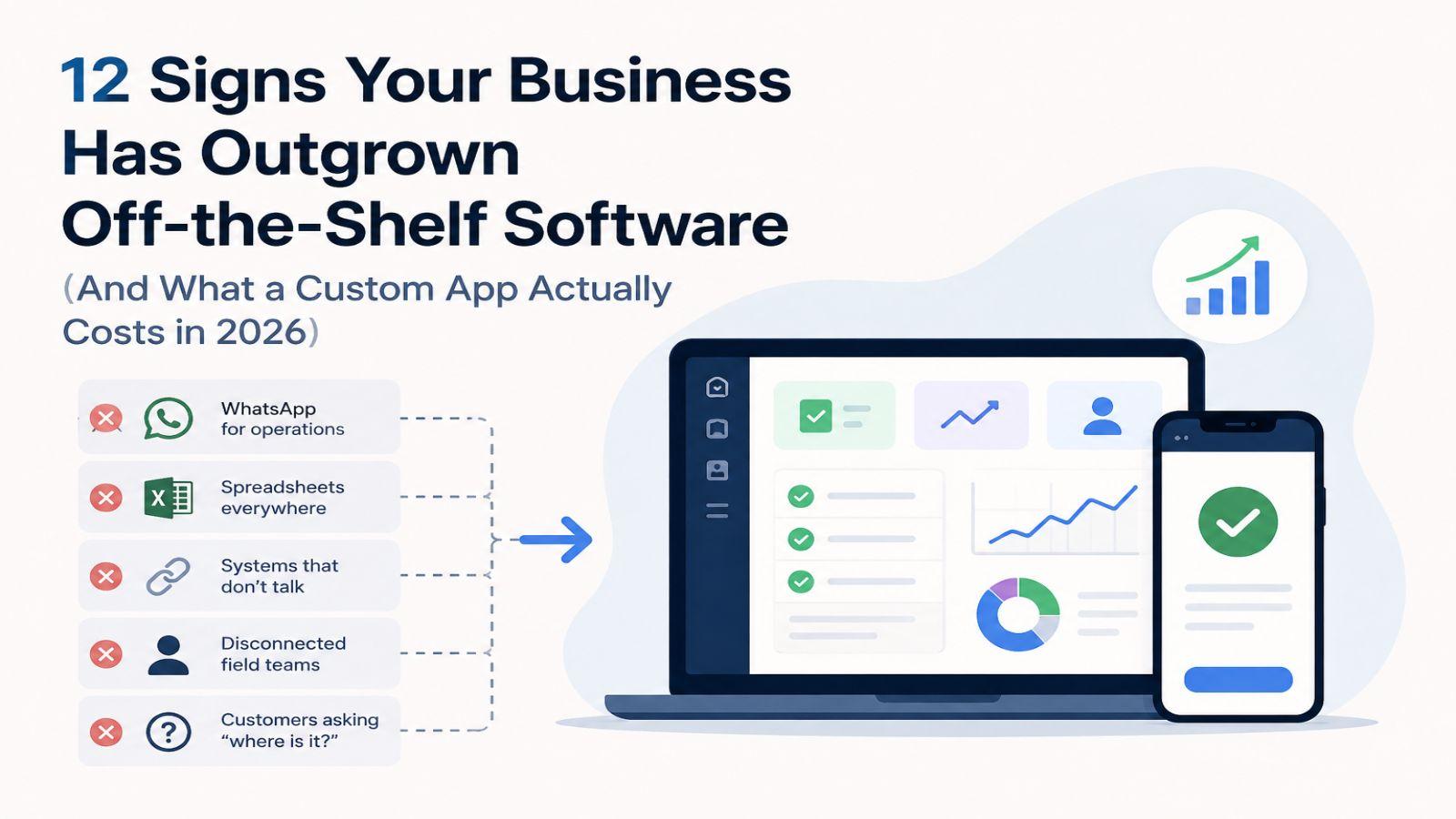
12 Signs Your Business Has Outgrown Off-the-Shelf Software (And What a Custom App Actually Costs in 2026)
Discover 12 clear signs your business has outgrown off-the-shelf software. Learn when custom software makes sense, how it can reduce manual work and improve operations, what development costs in 2026, and how to decide whether building a custom app is the right investment.